 11 citations
,
September 2011 in “British Journal of Dermatology”
11 citations
,
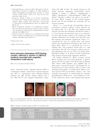
September 2011 in “British Journal of Dermatology” New ABCA12 gene mutations were linked to a skin condition with scaling and hair loss, and a treatment helped with hair loss in a related case.
 1 citations
,
January 2016 in “Journal of Microbial & Biochemical Technology”
1 citations
,
January 2016 in “Journal of Microbial & Biochemical Technology” This study found that the free androgen index (FAI) is a superior marker of hyperandrogenism in men with premature androgenetic alopecia compared to DHEAS and testosterone levels.
 August 1995 in “Journal of The European Academy of Dermatology and Venereology”
 New therapy helps treat hair loss.
 August 1995 in “Journal of The European Academy of Dermatology and Venereology”
 New therapy helps treat hair loss.
 110 citations
,
October 2013 in “The Journal of Sexual Medicine”
110 citations
,
October 2013 in “The Journal of Sexual Medicine” This study found that testosterone therapy in trans men increased facial and body hair growth while the prevalence and severity of acne peaked at 6 months but were primarily mild after long-term treatment.
 86 citations
,
June 2017 in “Stem cell investigation”
86 citations
,
June 2017 in “Stem cell investigation” This study reported that using human follicle stem cells isolated from hair bulge areas increased hair density by about 29% over baseline in patients with androgenetic alopecia, with significant improvements observed 23 weeks after the last treatment.
 66 citations
,
February 2009 in “British Journal of Dermatology”
66 citations
,
February 2009 in “British Journal of Dermatology” This study found that the prevalence of androgenetic alopecia in Chinese men was lower than in Caucasian men, similar to Korean men, and most commonly presented as type III vertex.
 51 citations
,
January 2012 in “Annals of Dermatology”
51 citations
,
January 2012 in “Annals of Dermatology” This review discusses characteristics of androgenetic alopecia in Asian patients and includes algorithmic management guidelines, but reports no new clinical findings.
 49 citations
,
January 2004 in “Dermatology”
49 citations
,
January 2004 in “Dermatology” This study found that men with a paternal history of hair loss were significantly more likely to experience hair loss themselves.
 46 citations
,
September 2010 in “Southern Medical Journal”
46 citations
,
September 2010 in “Southern Medical Journal” This review discusses low-level light therapy for androgenetic alopecia and female pattern hair loss, noting minimal clinical evidence on its efficacy and the need for more controlled studies.
 39 citations
,
March 2007 in “Journal of Cosmetic Dermatology”
39 citations
,
March 2007 in “Journal of Cosmetic Dermatology” This study in identical twin males with androgenetic alopecia found that dutasteride significantly improved hair growth compared to placebo over one year.
 36 citations
,
January 1998 in “Journal of Dermatological Treatment”
36 citations
,
January 1998 in “Journal of Dermatological Treatment” This study developed a standardized questionnaire to measure patient-perceived changes in hair growth and appearance, which showed significant favoring of active treatment over placebo in a clinical trial for male androgenetic alopecia.
 33 citations
,
October 2004 in “Archives of Dermatological Research”
33 citations
,
October 2004 in “Archives of Dermatological Research” This study suggests that a larger prostate is associated with a higher prevalence of androgenetic alopecia, although the prostate size did not correlate with alopecia severity.
 28 citations
,
March 1987 in “Journal of The American Academy of Dermatology”
28 citations
,
March 1987 in “Journal of The American Academy of Dermatology” This study observed that two out of twelve patients showed hair growth without the usual shedding after hair transplant surgery when treated with topical minoxidil, suggesting its potential as an adjunctive therapy during recovery.
 24 citations
,
January 2018 in “Journal of Visualized Experiments”
24 citations
,
January 2018 in “Journal of Visualized Experiments” In this study, 23 patients with androgenetic alopecia were treated with non-activated autologous platelet-rich plasma (A-PRP) administered through interfollicular injections, but the abstract provides no results of the treatment's effectiveness.
 23 citations
,
June 2006 in “Journal of Investigative Dermatology”
23 citations
,
June 2006 in “Journal of Investigative Dermatology” Men with baldness have higher levels of specific proteins, suggesting local hormone production may play a role in hair loss.
 20 citations
,
December 2008 in “PubMed”
20 citations
,
December 2008 in “PubMed” In this study, treatment with finasteride 1 mg/day for five years significantly reduced the likelihood of further visible hair loss in men with androgenetic alopecia compared to placebo.
 19 citations
,
June 2019 in “Clinical Drug Investigation”
19 citations
,
June 2019 in “Clinical Drug Investigation” This study concluded that platelet-rich plasma injections significantly improved hair density, thickness, and scalp inflammation in both male and female pattern hair loss, with better outcomes in lower-grade cases.
 19 citations
,
May 2017 in “Dermatologic Surgery”
19 citations
,
May 2017 in “Dermatologic Surgery” Combining platelet-rich plasma with 5% minoxidil solution improves hair regrowth in androgenetic alopecia patients.
 19 citations
,
February 2008 in “Archives of Dermatological Research”
19 citations
,
February 2008 in “Archives of Dermatological Research” This study observed that mast cells and increased collagen and elastic fibers in the scalp may contribute to male pattern hair loss, but additional research is needed for further understanding.
 16 citations
,
January 2014 in “International Journal of Trichology”
16 citations
,
January 2014 in “International Journal of Trichology” This study found that male Indian patients under 30 with early androgenetic alopecia were more likely to have metabolic syndrome compared to age-matched controls.
 13 citations
,
February 2020 in “Clinical, Cosmetic and Investigational Dermatology”
13 citations
,
February 2020 in “Clinical, Cosmetic and Investigational Dermatology” In this study, men with androgenetic alopecia had lower BMI and waist-to-hip ratios than controls, but no significant association with hypertension or other lifestyle factors was observed.
 13 citations
,
May 2015 in “Journal of The American Academy of Dermatology”
13 citations
,
May 2015 in “Journal of The American Academy of Dermatology” This study found that oral minoxidil 5 mg daily significantly improves hair growth in men with androgenetic alopecia, although common side effects include hypertrichosis and pedal edema.
 7 citations
,
February 2016 in “Arab journal of urology”
7 citations
,
February 2016 in “Arab journal of urology” This study found that patients with androgenetic alopecia had a higher incidence of metabolic syndrome and benign prostatic hyperplasia compared to those without the condition.
 5 citations
,
December 2018 in “Journal of Cosmetic Dermatology”
5 citations
,
December 2018 in “Journal of Cosmetic Dermatology” This study found that after treatment with platelet-rich plasma, male androgenetic alopecia patients showed significant improvements in hair count, hair diversity, and reduction in certain dermoscopic features.
 4 citations
,
September 2019 in “Journal of Cosmetic Dermatology”
4 citations
,
September 2019 in “Journal of Cosmetic Dermatology” This study found that follicular unit extraction megasession resulted in high patient satisfaction without infections for treating severe androgenetic alopecia, offering a promising one-stage option compared to multi-stage hair transplants.
 3 citations
,
March 2016 in “Phytotherapy Research”
3 citations
,
March 2016 in “Phytotherapy Research” In laboratory tests, this study found that a novel natural composition targeting 5-alpha reductase and inflammatory pathways reduced disease-related markers in androgenetic alopecia and benign prostatic hyperplasia more effectively than finasteride.
 3 citations
,
July 1990 in “Acta dermato-venereologica”
3 citations
,
July 1990 in “Acta dermato-venereologica” This case report describes hair regrowth in a 73-year-old male who had been bald for decades, which might be associated with the antiandrogenic effects of spironolactone.
 2 citations
,
January 2008 in “Journal of Pakistan Association of Dermatology”
2 citations
,
January 2008 in “Journal of Pakistan Association of Dermatology” This study found that among men with male pattern hair loss, taking 1mg of finasteride daily for two years slowed hair loss progression and increased hair growth.
 1 citations
,
May 2015 in “Journal of The American Academy of Dermatology”
1 citations
,
May 2015 in “Journal of The American Academy of Dermatology” This study concluded that oral minoxidil 5 mg daily was effective in enhancing hair growth in men with androgenetic alopecia, with minor side effects such as hypertrichosis and pedal edema.