 6 citations
,
September 2018 in “Journal of Dermatological Treatment”
6 citations
,
September 2018 in “Journal of Dermatological Treatment” This review examines the FDA's 510(k) approval process for low-level laser therapy devices used in treating androgenetic alopecia and reports no new clinical findings.
November 2024 in “Dermatology Online Journal” This review found promising evidence for the efficacy of certain laser and light-based therapies in treating various forms of alopecia, such as low-level light therapy for androgenetic alopecia and excimer laser for alopecia areata, but emphasized the need for further understanding of these treatments.
 March 2010 in “Cosmetic Dermatology”
 Hair straightening methods have advanced to improve effectiveness and reduce damage, but still rely on heat and chemicals.
2 citations
,
January 1986 in “PubMed” This study measured elemental content in anagen hair fibers of Caucasian people aged 10-69 and found average levels of sulfur, zinc, calcium, and chlorine, establishing a baseline for future research.
 December 2025 in “Journal of Education Health and Sport”
 This study reports that LED phototherapy is gaining popularity as a safe and effective non-invasive method for treating various skin conditions, enhancing skin rejuvenation, wound healing, and inflammation modulation, and is increasingly integrated into clinical protocols for conditions like acne vulgaris and signs of aging.
 April 2018 in “The journal of investigative dermatology/Journal of investigative dermatology”
 This study found that in a mouse model of Focal Dermal Hypoplasia, treatment with lithium carbonate improved skin disease symptoms compared to controls, though disease severity varied and posed interpretation challenges.
 December 2023 in “Research Journal of Pharmacy and Technology”
 In this study, Hibiscus rosa-sinesis flower extract was found to contain 0.33% quercetin according to HPTLC analysis and 0.37% according to HPLC. Heavy metals measured were within acceptable limits, supporting the standardization of the plant material for efficacy and safety testing.
15 citations
,
September 2014 in “Dermatologic surgery” This study found that diode laser reduced axillary hair more effectively but with greater pain than intense pulsed light, with both methods producing lasting and safe results.
 December 1998 in “Acta Crystallographica Section C-crystal Structure Communications”
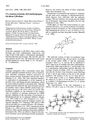
 This study describes the molecular conformation and intermolecular interactions in the crystalline structure of the compound C24H31BrO4.
 26 citations
,
April 1999 in “Dermatologic Clinics”
26 citations
,
April 1999 in “Dermatologic Clinics” This article reviews the basics of hair follicle biology, laser/tissue interactions, and hirsutism and hypertrichosis causes, discussing the long-pulsed alexandrite laser's role in hair reduction without reporting new clinical results.
![Benzo[c]quinolizin-3-ones: A Novel Class of Potent and Selective Nonsteroidal Inhibitors of Human Steroid 5α-Reductase 1](/images/assets/ff6e6cbe-cb9c-4d11-87ef-671d28ffd4fa/small/15506.jpg) 28 citations
,
September 2000 in “Journal of Medicinal Chemistry”
28 citations
,
September 2000 in “Journal of Medicinal Chemistry” This study identified novel compounds as selective inhibitors of the type 1 isoenzyme of 5α-reductase, displaying promising potential for treating DHT-dependent disorders such as acne and androgenic alopecia.
18 citations
,
March 2009 in “Skin pharmacology and physiology” This study found that sunlight exposure causes significant structural and chemical damage to hair, including cuticle loss, cortex damage, and discoloration, with water playing a major role in discoloration of brown hair.
 24 citations
,
March 2015 in “Dermatologic Surgery”
24 citations
,
March 2015 in “Dermatologic Surgery” This review discusses the modest efficacy of home-use laser and light devices for conditions like hair removal and acne, noting limited evidence and a lack of robust trials.
 February 2023 in “Frontiers in Bioengineering and Biotechnology”
 This review discusses the potential of optical techniques for diagnosing and treating oxidative stress-related hepatic ischemia-reperfusion injury, highlighting the need for non-invasive diagnostic methods and the anti-oxidative potential of optical therapies; it reports no new clinical results.
 5 citations
,
September 2005 in “Dermatologic Surgery”
5 citations
,
September 2005 in “Dermatologic Surgery” This study reports that using LED polarized magnification in hair transplant recipient sites can reduce eye strain and improve ease of site creation, but offers no graft placement advantage over traditional methods.
 15 citations
,
January 2020 in “RSC advances”
15 citations
,
January 2020 in “RSC advances” In this study, researchers developed a new Supported Ionic Liquid Phase palladium catalyst that showed effectiveness in aminocarbonylation reactions for synthesizing pharmaceutical compounds like CX-546 and a precursor of Finasteride, though results were sensitive to substrate variations and prompted palladium leaching concerns.
27 citations
,
July 1993 in “The journal of investigative dermatology/Journal of investigative dermatology” January 2011 in “Zhongguo xin yao zazhi” This study developed a new method for synthesizing finasteride that eliminates the need for expensive and toxic chemicals, achieving high purity and a 24.2% yield.
 May 2019 in “The Journal of Sexual Medicine”
 This study found no baseline factors that predicted flibanserin efficacy for HSDD, though low testosterone or use of hormonal contraceptives were associated with reduced efficacy.
October 2012 in “Sax's Dangerous Properties of Industrial Materials”  9 citations
,
January 1999 in “Journal of Liquid Chromatography & Related Technologies”
9 citations
,
January 1999 in “Journal of Liquid Chromatography & Related Technologies” This article discusses using high performance liquid chromatography to optimize mobile phase composition for separating synthesis products of Finasteride, without reporting new clinical results.
January 2006 in “Analytical chemistry, an Indian journal” This study developed two sensitive spectrophotometric methods to accurately determine finasteride in pure and tablet forms, demonstrating linear response and compliance with ICH guidelines.
 September 2012 in “Dermatologic Surgery”
 This article reviews the use of laser and light technologies in hair treatments, highlighting their potential and challenges, but provides no new clinical findings.
 11 citations
,
August 2007 in “Bioorganic & Medicinal Chemistry Letters”
11 citations
,
August 2007 in “Bioorganic & Medicinal Chemistry Letters” This study found that among the tested analogs, compound 4e was the most effective in inhibiting wax esters in vivo in the Golden Syrian hamster ear model.
 February 2026 in “Chromatographia”
 This study used advanced chromatographic and mass spectrometric techniques to develop a method for reliably detecting 17 hair growth compounds in consumer products, aiming to enhance regulatory compliance and ensure consumer safety against illicit compounds.
August 2025 in “Marine Drugs” This study evaluated a new composite material made from PLA, ALG, ZnS, and HT for blood-contacting applications, finding it improved surface characteristics and displayed anticoagulant properties and high biocompatibility with no genotoxic effects on blood and skin cells.
 July 2026 in “Journal of the Pakistan Medical Association”
 This study found that combining topical eflornithine with triple diode laser treatments in women with hirsutism led to a more rapid and nearly complete reduction of terminal hair after 6 months, though the intergroup differences were not significant at 6- and 12-month follow-ups.
 4 citations
,
January 2016 in “Journal of analytical & bioanalytical techniques”
4 citations
,
January 2016 in “Journal of analytical & bioanalytical techniques” This study evaluated a hair growth gel with Hibiscus rosa sinensis, Eclipta alba, and Solanum nigrum extracts, demonstrating consistent homogeneity, 5 α-reductase inhibitory activity, and no skin irritation.
 14 citations
,
March 2012 in “Lasers in Surgery and Medicine”
14 citations
,
March 2012 in “Lasers in Surgery and Medicine” This study concluded that low-level fluence 810 nm diode laser therapy was generally well tolerated, safe, and effective for long-term hair reduction in a small sample of patients with various skin types.