 2 citations
,
April 2019 in “Dermatologic Therapy”
2 citations
,
April 2019 in “Dermatologic Therapy” A patient with alopecia had hair regrowth with tofacitinib but developed a skin reaction, choosing to continue the treatment despite the side effect.
March 2022 in “Institutional Repositories DataBase (IRDB)” This system overview describes the UTokyo Repository's role in storing and providing online access to digital resources from the University of Tokyo, reporting no new empirical findings or research results.
 April 2018 in “Journal of Investigative Dermatology”
 In this first-in-human study, BLZ-100, an intraoperative fluorescent imaging agent, was administered to 21 patients before skin cancer surgery and was found to be well tolerated without serious adverse effects, suggesting its potential to help distinguish cancerous from non-cancerous tissue based on fluorescence.
 16 citations
,
June 2009 in “Dermatologic Surgery”
16 citations
,
June 2009 in “Dermatologic Surgery” This abstract does not contain research results or findings.
6 citations
,
July 2025 in “Cancer Medicine” This study reported that ZSYY001, a nanoparticle formulation of polymeric micellar paclitaxel, showed promising antitumor activity and was safe and well-tolerated in preclinical models and a phase I trial, without acute hypersensitivity reactions at doses up to 390 mg/m².
 3 citations
,
July 2019 in “Supportive Care in Cancer”
3 citations
,
July 2019 in “Supportive Care in Cancer” The lotion CG428 did not show effectiveness in treating permanent hair loss in breast cancer survivors.
January 2011 in “The Chinese Journal of Dermatovenereology” This study found that shorter GGN repeat lengths (≤23) in the androgen receptor gene are associated with androgenetic alopecia among Chinese males, whereas two specific SNPs studied were not present in this population.
January 2016 in “ISBN: 978-84-608-9184-0”  January 2015 in “DOAJ (DOAJ: Directory of Open Access Journals)”
 This study developed a precise and simple HPLC method for estimating tamsulosin and finasteride simultaneously in pharmaceutical forms, demonstrating good precision and potential usefulness for combined dosage analysis.
 8 citations
,
January 2023 in “RSC Advances”
8 citations
,
January 2023 in “RSC Advances” This article reviews advancements in carbon dots for tissue engineering and regenerative medicine, highlighting challenges and future directions without presenting new clinical findings.
 1 citations
,
May 2017 in “The Journal of Internal Korean Medicine”
1 citations
,
May 2017 in “The Journal of Internal Korean Medicine” This case study reports that a patient receiving Bojungikki-tang alongside chemotherapy showed improvement in hair loss despite ongoing treatment, suggesting a potential benefit for chemotherapy-induced alopecia.
 88 citations
,
August 2019 in “Nature communications”
88 citations
,
August 2019 in “Nature communications” In this study, researchers identified a specific T cell receptor associated with carbamazepine-induced severe cutaneous adverse reactions, demonstrating its potential for therapeutic development in patients with the HLA-B*15:02 genotype.
July 2024 in “Journal of Investigative Dermatology” In these two clinical trials, DS-2325a, a KLK5 inhibitor, was found to be generally safe and well tolerated in healthy volunteers, with mild and non-serious adverse events, suggesting its potential for further development as a treatment for Netherton Syndrome.
 5 citations
,
February 2014 in “Journal of Liquid Chromatography & Related Technologies”
5 citations
,
February 2014 in “Journal of Liquid Chromatography & Related Technologies” This study successfully developed and validated a reverse-phase HPLC method for accurately determining finasteride and tamsulosin simultaneously in bulk and pharmaceutical formulations.
 April 2016 in “The Journal of Sexual Medicine”
 This report analyzed an FDA adverse event database and aimed to evaluate and describe post-finasteride syndrome potentially related to dutasteride, but it does not report new clinical findings.
January 2018 in “Journal of analytical, bioanalytical and separation techniques” May 2019 in “Journal of clinical oncology” This Phase 1 study reported that topical application of BPM31543 was safe and well-tolerated in patients receiving taxane-based chemotherapy, with some experiencing less than 50% hair loss, suggesting potential efficacy in reducing chemotherapy-induced alopecia, although no maximum tolerated dose was identified.
 February 2009 in “Journal of The American Academy of Dermatology”
 Most patients with Tuberous sclerosis had neurological or skin issues, and over half had psychiatric problems.
January 2010 in “Journal of Clinical Dermatology” January 2019 in “The Chinese Journal of Dermatovenereology”  March 2026 in “Zenodo (CERN European Organization for Nuclear Research)”
 This source describes a collection of geometric medicine formulations aimed at comprehensive hair restoration and permanent hair removal, with claimed simulation results indicating complete baldness reversal and effective hair removal, but results are sourced from theoretical and simulation-based findings without reported clinical trials.
 2 citations
,
June 2005 in “Clinical Oncology”
2 citations
,
June 2005 in “Clinical Oncology” This case report documents new hair growth in a 57-year-old man with androgenic alopecia after receiving gefitinib treatment for non-small-cell lung cancer.
 1 citations
,
April 2017 in “Journal of Investigative Dermatology”
1 citations
,
April 2017 in “Journal of Investigative Dermatology” This study found that the novel IPC analog SIG-1451 may inhibit inflammatory cytokine release in cell-based assays relevant to allergic dermatitis.
 8 citations
,
May 2017 in “Singapore Medical Journal”
8 citations
,
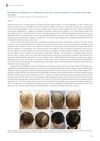
May 2017 in “Singapore Medical Journal” A Korean woman with complete hair loss regrew her hair after taking tofacitinib, with no side effects.
 November 2022 in “Journal of Investigative Dermatology”
 Among men with androgenetic alopecia, this study found that taking 5 mg of KX-826 twice daily significantly increased hair count compared to a placebo, with the treatment being well-tolerated and no serious adverse effects reported.
8 citations
,
June 1981 in “Clinica Chimica Acta”  2 citations
,
April 2017 in “Journal of Investigative Dermatology”
2 citations
,
April 2017 in “Journal of Investigative Dermatology” In this study, tofacitinib treatment led to significant hair regrowth in 60% of patients with moderate-to-severe alopecia areata, suggesting potential for JAK inhibitors in treating this condition.
July 2021 in “Belarusian State Pedagogical University repository (Belarusian State Pedagogical University)” In this study, PMC was identified as a promising plant for nourishing hair, with effective hair growth promotion and 5α-reductase inhibition observed in both laboratory and animal studies for androgenetic alopecia treatment.
June 2021 in “SWU eJournals System (Srinakharinwirot University)” The study found that cyproterone acetate could be released over 15 days using coconut oil mixed with certain wax inhibitors, though further safety studies are needed.

The document's conclusion cannot be determined as the content is not available.