23 citations
,
January 1996 in “Software Engineering and Knowledge Engineering” This study hypothesizes a possible association between certain endocrine abnormalities and 11q-syndrome, emphasizing the importance of early diagnosis and management to improve patient quality of life.
6 citations
,
September 2018 in “International Journal of Molecular Sciences” This study found that intramuscular injections of a PRP-derivative in healthy beagle dogs did not result in statistically significant changes in lumbar muscle tissue or IGF-1 blood concentration, suggesting the treatment may be safe at therapeutic doses.
 38 citations
,
June 2016 in “Nanomedicine: Nanotechnology, Biology and Medicine”
38 citations
,
June 2016 in “Nanomedicine: Nanotechnology, Biology and Medicine” In this study, the RADA-PRG hydrogel enhanced SKP proliferation, survival, and gene expression, effectively supporting hair follicle regeneration in mice.
This study found that extracellular Granzyme B contributes to skin aging and impaired healing in ApoE knockout mice by degrading essential extracellular matrix components like decorin and fibronectin.
November 2001 in “CRC Press eBooks” This article discusses the potential for transplanting follicles from the occiput of the scalp in AGA patients, noting that these hairs tend to remain terminal and non-miniaturized for life.
 2 citations
,
October 2021 in “bioRxiv (Cold Spring Harbor Laboratory)”
2 citations
,
October 2021 in “bioRxiv (Cold Spring Harbor Laboratory)” This study reported the first paleogenomic data from Korea, revealing genetic diversity in ancient Koreans from the Gimhae region, with evidence of admixture between northern-Chinese Iron Age populations and Japanese-Jomon-related ancestry.
47 citations
,
May 1994 in “Experimental Brain Research” This study observed that innervation of the mystacial pad in rats by fine-caliber axons is more extensive and complex than previously described, with distinct differences in labeling patterns depending on the tracer and survival time.
 22 citations
,
October 2019 in “International Journal of Nanomedicine”
22 citations
,
October 2019 in “International Journal of Nanomedicine” This study suggests that the hydrogel nanoparticle formulation of hair growth-promoting compounds may enhance hair follicle penetration and induce hair growth in tested models, demonstrating its potential as a hair growth treatment.
 62 citations
,
March 2008 in “American Journal of Human Genetics”
62 citations
,
March 2008 in “American Journal of Human Genetics” This study located a potential genetic link for androgenetic alopecia on chromosome 3q26, marking an early step in identifying new susceptibility genes for male pattern baldness.
 January 2005 in “Translational and Clinical Pharmacology”
 HDMHG0401-10 improves hair loss in men with androgenetic alopecia and has no major side effects.
 2 citations
,
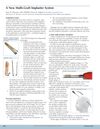
May 2018 in “International Society of Hair Restoration Surgery”
2 citations
,
May 2018 in “International Society of Hair Restoration Surgery” The new system makes hair transplants faster and more precise.
May 2022 in “Hormones and behavior” This study found that hair cortisol levels in black-tailed prairie dogs, influenced by factors like predation risk and lactation, were associated with reproductive success, supporting the Cort-Adaptation hypothesis.
This article reviews current understanding of Hutchinson–Gilford Progeria Syndrome and suggests RNA-based treatments show promise, but no new clinical findings are reported.
 8 citations
,
September 2024 in “BMC Genomics”
8 citations
,
September 2024 in “BMC Genomics” In this study, researchers found that the novel gene circCFAP20DC enhances the proliferation of goat follicular granulosa cells by activating the RB pathway, facilitating their progression from the G1 to S phase during follicular development.
 May 2025 in “Annals of surgical case reports & images.”
 Certain gut bacteria may protect against hair loss, while others may increase the risk.
 4 citations
,
May 2002 in “Therapeutische Umschau”
4 citations
,
May 2002 in “Therapeutische Umschau” AGA treated with finasteride, minoxidil, and hair transplantation.
 January 2016 in “Faculty Opinions – Post-Publication Peer Review of the Biomedical Literature”
 A substance called prostaglandin D2 is found more in bald scalps and it stops hair from growing. Blocking its receptor could potentially treat hair loss.
2 citations
,
January 2011 in “Feed Review” This study found that weanling pigs fed a diet supplemented with 0.029% iron glycine chelate showed improved growth performance and better hair color compared to those receiving ferrous sulfide.
 September 2010 in “Hair transplant forum international”
 This article discusses the evolving speciality of hair transplant surgery and reports no new clinical findings; it emphasizes the need for innovative organizational approaches.
 1 citations
,
June 2023 in “Advances in therapy”
1 citations
,
June 2023 in “Advances in therapy” In a real-world registry study, ripretinib showed effectiveness with a median progression-free survival of 7.70 months and a tolerable safety profile in Chinese patients using it as a fourth-line treatment for advanced GIST, particularly benefiting those with non-gastric tumors.
September 2025 in “Cosmetics” This study found that using a pharmacogenetic panel with 26 SNPs can improve treatment outcomes for androgenetic alopecia, as overall response rates to minoxidil, finasteride, and dutasteride were high, and specific genetic markers predicted poor responses to these drugs.
 April 2026 in “Zenodo (CERN European Organization for Nuclear Research)”
 This study presented a reproducibility package supporting an exploratory secondary analysis of miRNA dysregulation and aging-related target enrichment in female pattern hair loss, based on a comparison of three scalp samples from affected women to five healthy controls using public dataset GSE106780.
3 citations
,
September 2013 in “Journal of the American Academy of Dermatology” This report details two patients with Hutchinson-Gilford Progeria syndrome who exhibited generalized shiny skin in infancy and had a novel mutation in the LMNA gene.
 April 2026 in “Zenodo (CERN European Organization for Nuclear Research)”
 In this study, researchers conducted an exploratory re-analysis of miRNA dysregulation and aging-related target enrichment in female pattern hair loss using data from public GEO dataset GSE106780. The findings are preliminary and should be interpreted as candidate-level results due to the small sample size.
January 2006 in “Chinese Journal of Dermatology” This study suggests that polymorphisms in the androgen receptor gene's GGC repeat and the combined CAG-GGC triplet repeats are associated with androgenetic alopecia among Han men in Eastern China.
64 citations
,
March 2004 in “The journal of investigative dermatology/Journal of investigative dermatology” This study describes GPRC5D's unique expression pattern in tissues that produce hard keratin, with retinoic acid inducing its expression in hair bulb cells and affecting keratin gene regulation.
 12 citations
,
September 2024 in “Frontiers in Immunology”
12 citations
,
September 2024 in “Frontiers in Immunology” This study found that metabolism-related genes significantly impact the prognosis and metastasis in breast cancer, and the development of prediction models may guide personalized therapeutic strategies.
 10 citations
,
January 2020 in “Advances in Dermatology and Allergology”
10 citations
,
January 2020 in “Advances in Dermatology and Allergology” This study suggests that the gene rs27647 polymorphism may play a role in the pathogenesis of severe acne vulgaris in post-adolescent male patients.
March 2025 in “Journal of Cosmetic Dermatology” In this case study, a 29-year-old woman with Pseudopelade of Brocq, a type of scarring alopecia, showed significant hair density improvement following a combination of scalp reduction surgery and concentrated growth factor injections postoperatively, which addressed scar complications and inflammation.
 November 2025 in “Open Repository of the University of Porto (University of Porto)”
 This report covers an internship at a pharmacy and hospital where multiple pharmaceutical activities were examined, including the preparation of individualized medication and the comparison of drugs for hypercholesterolemia treatment.