
This study revealed that IP-PA1, derived from Pantoea agglomerans, promoted hair growth in mice and increased certain growth factor expressions in human cell cultures, suggesting a unique mechanism compared to traditional hair growth treatments.
5 citations
,
January 2001 in “Journal of dermatological science” In this study, researchers found that the G(S)alpha subunit is strongly expressed in neonatal mouse hair follicles, indicating it may play a role in initiating follicle growth.
 March 2024 in “Plant physiology”
 This study found that the transcription factor GLABRA 2 inhibits ethylene production, regulating root hair growth in Arabidopsis under nutrient deficiency conditions.
6 citations
,
October 2023 in “Animal Biotechnology” This study found that a 22-bp InDel polymorphism in the FGF7 gene was significantly associated with growth traits in goats, with genotypes ID and/or II linked to better growth compared to genotype DD, indicating its potential as a molecular marker in breeding programs.
January 2005 in “Belarusian State Pedagogical University repository (Belarusian State Pedagogical University)” In this study, a 0.5% addition of TPGS to topical minoxidil solutions increased hair growth in mice, but higher concentrations reduced this benefit.
 15 citations
,
November 1994 in “International Journal of Dermatology”
15 citations
,
November 1994 in “International Journal of Dermatology” This study found that while the combination of oral propranolol and intradermal injections in guinea pigs led to psoriasiform changes, it did not fully mimic psoriasis.
January 2021 in “Springer eBooks” Combining PRP with other treatments can improve hair loss outcomes.
 2 citations
,
May 2017 in “International journal of pharmacy and pharmaceutical sciences/International Journal of Pharmacy and Pharmaceutical Sciences”
2 citations
,
May 2017 in “International journal of pharmacy and pharmaceutical sciences/International Journal of Pharmacy and Pharmaceutical Sciences” This review discusses genetic mutations associated with Hutchinson-Gilford progeria syndrome and reports no clinical results; the authors emphasize the importance of cardiovascular monitoring in management.
1 citations
,
February 2023 in “Digestive Diseases and Sciences” This study observed that 46% of gastroparesis patients reported hair loss, which was associated with more severe gastroparesis symptoms and weight loss, and multivitamin treatment improved hair loss in 40% of these patients.
 5 citations
,
November 2017 in “Asian journal of pharmaceutical and clinical research”
5 citations
,
November 2017 in “Asian journal of pharmaceutical and clinical research” This study found that water fractions of Angiopteris evecta stimulated hair growth in male rabbits, suggesting potential alopecia treatment benefits pending further research in humans.
 15 citations
,
August 2017 in “International Journal of Molecular Medicine”
15 citations
,
August 2017 in “International Journal of Molecular Medicine” This study reported that Panax ginseng extract significantly inhibited DKK-1-induced catagen-like changes in human hair follicles by promoting cell proliferation and reducing apoptosis, suggesting it may help mitigate hair loss associated with DKK-1.
 April 2018 in “Radiotherapy and Oncology”
 Prostaglandin helps regenerate hair follicles after radiation damage.
 11 citations
,
June 2017 in “Journal of cell science”
11 citations
,
June 2017 in “Journal of cell science” In this study, researchers found that AGD1 is crucial for membrane recruitment during root hair development in Arabidopsis thaliana, with its pleckstrin homology domain essential for targeting specific plasma membrane regions.
October 2013 in “한국생물공학회 학술대회” Poly-γ-glutamic acid may help reduce hair loss.
 January 2023 in “Journal of animal science/Journal of animal science ... and ASAS reference compendium”
 This study found that the novel culture condition gHFEM, which includes Y-27632 and bFGF, optimally promotes the proliferation and pluripotency of goat hair follicle stem cells in vitro.
 105 citations
,
December 2009 in “Archives of dermatology”
105 citations
,
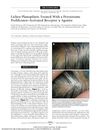
December 2009 in “Archives of dermatology” This overview discusses primary cicatricial alopecias, focusing on lichen planopilaris, and highlights the challenges in treatment and the progressive nature of hair loss despite symptom management, without providing new clinical results.
 September 2025 in “Journal of Maxillofacial and Oral Surgery”
 This study found that combining PRP with concentrated growth factors was more effective than PRP alone in promoting hair regrowth for patients with androgenetic alopecia.
110 citations
,
January 2014 in “Journal of Controlled Release” Phospholipid-coated nanoparticles penetrate hair follicles better than others, especially in pig ears.
 7 citations
,
December 2008 in “Journal of Dermatological Science”
7 citations
,
December 2008 in “Journal of Dermatological Science” Progranulin overexpression leads to shorter, thinner hair and increased cell death in mouse hair follicles.
 138 citations
,
November 2015 in “Journal of Pharmacology and Experimental Therapeutics”
138 citations
,
November 2015 in “Journal of Pharmacology and Experimental Therapeutics” This review discusses the mechanisms associated with protoporphyrin IX in living cells and reports no clinical results; the authors emphasize its potential in cancer diagnosis and the risks of toxicity.
 1 citations
,
January 2023 in “Journal of Drugs in Dermatology”
1 citations
,
January 2023 in “Journal of Drugs in Dermatology” This review discusses Graham-Little Piccardi-Lasseur syndrome, a rare dermatosis with limited treatment options, emphasizing the importance of early diagnosis through physical exam and dermoscopy, but reports no new results.

This chapter reviews current and future strategies for identifying ligands and functions of orphan G protein-coupled receptors, but it reports no new experimental results.
216 citations
,
June 2015 in “PLANT PHYSIOLOGY” This study found that OsPHR3 overexpression in rice led to significant tolerance to low-phosphorus stress and normal growth under normal conditions, suggesting its potential for improving phosphorus uptake efficiency.
 10 citations
,
August 2020 in “Journal of Bioscience and Bioengineering”
10 citations
,
August 2020 in “Journal of Bioscience and Bioengineering” This study reports that using activated platelet-rich plasma releasate in the preparation of bioengineered hair follicle germs enhanced follicular gene expression and significantly improved hair regeneration in vitro.
July 2025 in “Journal of Investigative Dermatology” Upadacitinib effectively treats pyoderma gangrenosum.
1 citations
,
October 2025 in “International Journal of Molecular Sciences” This study found that zebrafish with a mutation in the GDP-fucose biosynthesis gene exhibited enhanced and faster regeneration of mechanosensory hair cells, implicating the importance of this gene and Notch signalling regulation in hair cell regeneration mechanisms.
58 citations
,
January 2015 in “Journal of the American Academy of Dermatology” Pioglitazone may help treat lichen planopilaris, but more research is needed.
85 citations
,
May 2009 in “Hippocampus” This study found that progesterone enhances the survival of newborn neurons in the hippocampus of adult male mice, which is associated with improved spatial learning and memory.
 July 2018 in “Hair transplant forum international”
 This study observed significant variation in platelet concentrations across four different platelet-rich plasma (PRP) systems, suggesting that PRP system choice may affect treatment outcomes for hair growth.
 June 2023 in “GSC Advanced Research and Reviews”
 This review covers the history, symptoms, and treatment progress for Hutchinson-Gilford Progeria Syndrome, noting that while no cure exists, understanding its molecular mechanism may improve future treatment strategies.