6 citations
,
December 2015 in “International journal of immunopathology and pharmacology” A novel mutation in the SLC39A4 gene was identified in an infant with mild, incomplete acrodermatitis enteropathic symptoms, suggesting genetic testing is beneficial even without the full symptom triad.
9 citations
,
March 2022 in “Journal of Chemical Information and Modeling” This study identified a series of novel β-glucuronidase inhibitors that may help mitigate adverse effects of first-line anti-cancer drugs by targeting gut bacteria, based on virtual high-throughput screening findings.
March 2023 in “Mağallaẗ wāsit li-l-ʿulūm wa-al-ṭibb” This case report details a family in Iraq with biotin deficiency, highlighting improved outcomes in surviving children following diagnosis and lifelong biotin supplementation.
2 citations
,
January 2024 in “Revista Paulista de Pediatria” In this case report, researchers described a 6-year-old girl with severe mandibuloacral dysplasia type A, noting unique physical deformities and a rare homozygous LMNA gene mutation not commonly associated with the condition.
115 citations
,
December 1996 in “PubMed” This study observed that the intestinal absorption of selenium varies depending on its chemical form, with selenomethionine being absorbed efficiently and selenium as selenodiglutathione or selenodicysteine being absorbed faster than selenite.
89 citations
,
January 2020 in “PubMed” This review discusses biotinidase deficiency, noting that biotin treatment from birth can prevent symptoms, but acknowledges the complexity and need for further understanding due to late-onset cases with varied clinical findings.
 1 citations
,
January 2023 in “Journal of Drugs in Dermatology”
1 citations
,
January 2023 in “Journal of Drugs in Dermatology” This review discusses Graham-Little Piccardi-Lasseur syndrome, a rare dermatosis with limited treatment options, emphasizing the importance of early diagnosis through physical exam and dermoscopy, but reports no new results.
9 citations
,
January 1975 in “Munich Personal RePEc Archive (Ludwig Maximilian University of Munich)” This report describes a case of Rothmund-Thomson type congenital poikiloderma, noting minor skin changes, hair loss, and slightly elevated lysine and cystine in the urine.
135 citations
,
October 1997 in “Journal of biological chemistry/The Journal of biological chemistry” This study suggests that trichohyalin is modified by peptidyl-arginine deiminase before being cross-linked by TGase 3, allowing the formation of rigid structures in hair follicle cells.
 84 citations
,
December 2018 in “Genetics in Medicine”
84 citations
,
December 2018 in “Genetics in Medicine” This article reviews evidence- and consensus-based recommendations for using pegvaliase in adults with PKU and reports no new clinical results.
 1 citations
,
July 2022 in “Clinical and Experimental Dermatology”
1 citations
,
July 2022 in “Clinical and Experimental Dermatology” This study suggests that arginine and cysteine deficiency is not present in women with chronic telogen effluvium, indicating that amino acid supplementation may be unnecessary in nutrient-replete populations.
August 2025 in “Animal nutrition” This study found that supplementing with 1.5% α-ketoglutaric acid significantly improved the performance, hair follicle density, and antioxidant capacity in Rex rabbits, potentially by enhancing the Wnt signaling pathway and reducing amino acid catabolism.
 January 2011 in “Yearbook of Dermatology and Dermatologic Surgery”
 Hair relaxers are linked to reduced cystine levels and potential hair damage.
January 2010 in “Chinese Journal of Dermatovenereology of Integrated Traditional and Western Medicine” This study found a novel nonsynonymous genetic variant in the hHb1 gene of a family with monilethrix, which differs from ten previously reported pathogenic mutations.
 October 2011 in “Journal of dermatology”
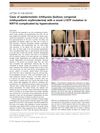
 A man with a rare skin condition and a new gene mutation developed high calcium levels due to his treatment.
14 citations
,
February 1991 in “FEBS Letters” This study found that introducing rat ornithine transcarbamylase gene into spf-ash mice improved liver and intestinal enzyme activity and normalized some metabolic indicators.
July 2024 in “Journal of Investigative Dermatology” This study found that systemic treatment with DS77754007, a KLK5 inhibitor, improved skin symptoms in a mouse model of Netherton Syndrome more effectively than certain antibody treatments, suggesting KLK5 inhibition as a promising therapeutic approach for this condition.
21 citations
,
June 1991 in “Journal of Inherited Metabolic Disease” This case report observed that a selenium-deficient diet in a child with propionic acidaemia led to macrocytosis and hair abnormalities, which improved with selenium supplementation.
November 2025 in “Contact Dermatitis” This study reported a case of acute kidney injury and toxic contact dermatitis in a 25-year-old woman following exposure to a glyoxylic acid-containing hair straightening product, highlighting glyoxylic acid's potential role in cutaneous and renal complications and underscoring the need for stronger regulation and awareness.
 2 citations
,
May 2022 in “Research Square (Research Square)”
2 citations
,
May 2022 in “Research Square (Research Square)” This study demonstrates that the amino-terminally shortened KGF-1 variant with 135 residues maintains biological activity, suggesting it may serve as an alternative to the original KGF-1 for certain therapeutic applications.
 9 citations
,
March 1968 in “The BMJ”
9 citations
,
March 1968 in “The BMJ” In their 1957 study, Neuman and Neuman suggested that magnesium deficiency may inhibit the ion exchange process required for calcium ions to enter extracellular fluid, potentially affecting calcium mobilization.
November 2025 in “Journal of Diabetes Investigation” In this case study, a man with Werner syndrome and diabetes saw improved glycemic control and insulin resistance with dapagliflozin, suggesting its potential usefulness for managing diabetes in similar patients.
 7 citations
,
February 2010 in “British Journal of Dermatology”
7 citations
,
February 2010 in “British Journal of Dermatology” A woman with a rare autoimmune disorder had a blister on her eye and unique immune reaction, which was effectively treated with medication.
45 citations
,
January 1977 in “Advances in experimental medicine and biology” Hair follicles have an enzyme that converts arginine to citrulline in proteins.
January 2026 in “Animal Genetics” This study investigated a Labrador Retriever with paw pad hyperkeratosis and identified a unique de novo heterozygous missense variant in the GJB6 gene, suggesting its potential role in the condition, analogous to Clouston syndrome in humans, although differences between species may provide further insights.
29 citations
,
October 2019 in “Journal of dermatological science” This review explores how cell and mouse models have contributed to understanding the mechanisms of human aging, particularly focusing on Hutchinson-Gilford Progeria Syndrome, and reports no new clinical results.
March 2026 in “Journal of Enzyme Inhibition and Medicinal Chemistry” This review examines the development and challenges of using PROTACs, a targeted protein degradation strategy, to treat cancer by degrading specific proteins like PARPs and GPX4, highlighting issues such as target diversification and bioavailability.
January 2025 in “Journal of College of Physicians And Surgeons Pakistan” In this case report, a 36-year-old woman with GAPO syndrome underwent successful XEN gelatin micro-stent implantation in both eyes to control primary open-angle glaucoma that was unresponsive to medical treatment, marking the first documented use of this minimally invasive glaucoma surgery in such a patient.
2 citations
,
April 2008 in “PubMed” This study identified the c.1204G to A (p.E402K) mutation in the hHB6 gene as a cause of monilethrix in a Chinese family, highlighting the gene's role in the condition.
 October 2023 in “Case reports in dermatological medicine”
 In this case report, a 45-year-old Jordanian woman was diagnosed with Clouston syndrome, an autosomal-dominant disorder characterized by alopecia and nail dystrophy due to a mutation in the GJB6 gene, though she lacked the typical palmoplantar keratoderma.