33 citations
,
October 2020 in “Frontiers in Cell and Developmental Biology” In this study, researchers found that during zebrafish telencephalon regeneration, the lesioned hemisphere showed distinct gene expression changes and activated Wnt/β-catenin signaling early after injury, suggesting this pathway's significant role in recovery.
 7 citations
,
August 2017 in “PloS one”
7 citations
,
August 2017 in “PloS one” This study found that NIH hairless mice exhibit abnormalities in hair growth and immune-related pathways, with Pik3r1 and Pik3r3 identified as key genes for further investigation.
 1 citations
,
January 2022 in “BMC Genomic Data”
1 citations
,
January 2022 in “BMC Genomic Data” In this study, researchers found that androgen receptor activation in dermal papilla cells mainly affected the focal adhesion pathway and downregulated caveolin-1 gene expression, which could help identify new therapeutic targets for testosterone-related diseases.
1 citations
,
February 2016 in “Cell Transplantation” In this study, researchers found that hair follicles and dermal fibroblasts, including dermal papilla cells, supported sustained hair growth in transplanted murine models, with RNA-seq analysis revealing active signaling pathways and gene expression patterns.
 April 2026 in “Experimental & Molecular Medicine”
 This study used integrated single-cell chromatin and transcriptomic analyses in developing mouse skin to uncover gene networks involved in skin lineage specification and identified Mef2c+ upper fibroblasts as potential precursors to certain muscle-like structures, with cross-species findings in human skin.
September 2025 in “Animals” This study identified novel genetic variations in the KRTAP22-2 gene among eight sheep breeds but found no association between these genotypes and wool fibre traits, indicating possible species-specific differences compared to goats.

Among females with nonclassical 21-hydroxylase deficiency, this study found that low-dose glucocorticoid treatment improved fertility outcomes by increasing pregnancy and live birth rates while reducing miscarriage rates.
 January 2018 in “bioRxiv (Cold Spring Harbor Laboratory)”
 This study identified a new cis-regulatory element in the mouse Hr gene that influences its expression in skin and brain cells, highlighting a complex molecular network involved in hair follicle formation.
 19 citations
,
May 2006 in “Clinical and Experimental Dermatology”
19 citations
,
May 2006 in “Clinical and Experimental Dermatology” This study identified a novel insertion mutation in the hairless gene that may contribute to the development of congenital atrichia with papular lesions in a Pakistani family.
 178 citations
,
October 2001 in “Genes & Development”
178 citations
,
October 2001 in “Genes & Development” This study found that the mammalian hairless gene encodes a corepressor protein that interacts with thyroid hormone receptors, providing insights into hair loss syndromes in humans and mice.
 24 citations
,
November 2008 in “Arquivos Brasileiros de Endocrinologia & Metabologia”
24 citations
,
November 2008 in “Arquivos Brasileiros de Endocrinologia & Metabologia” In this study, mutations in the vitamin D receptor were identified in Brazilian children with rickets and alopecia, leading to impaired receptor activation and reduced 24-hydroxylase expression.
 16 citations
,
February 2018 in “BMC Genomics”
16 citations
,
February 2018 in “BMC Genomics” This paper reviews genome-based personalized medicine developments using Web services for analyzing SNPs in reproductive potential but reports no new clinical findings.
 9 citations
,
March 2018 in “European journal of dermatology/EJD. European journal of dermatology”
9 citations
,
March 2018 in “European journal of dermatology/EJD. European journal of dermatology” This study in a Pakistani family identified a novel ST14 gene variant as the likely genetic cause of autosomal recessive ichthyosis with hypotrichosis syndrome.
 5 citations
,
January 2016 in “Genetics and molecular research”
5 citations
,
January 2016 in “Genetics and molecular research” In this study, a specific SNP in the A2M gene of Murrah buffaloes was significantly associated with increased fat production and higher fat and protein percentages in milk.
 2 citations
,
August 2020 in “Scientific reports”
2 citations
,
August 2020 in “Scientific reports” This study identified genes potentially involved in the development and differentiation of skin appendages in Atelerix albiventris, noting significant enrichment of immune-related genes in hair-type tissues.
 94 citations
,
April 2002 in “The Journal of clinical endocrinology and metabolism/Journal of clinical endocrinology & metabolism”
94 citations
,
April 2002 in “The Journal of clinical endocrinology and metabolism/Journal of clinical endocrinology & metabolism” This study describes the first case of female pseudohermaphroditism due to a novel homozygous glucocorticoid receptor gene mutation, indicating possible pre- and postnatal virilization in affected females.
 October 2025 in “Animal Bioscience”
 This review summarizes the application of genome wide association studies and selection signature analyses in sheep and goat breeding in China, highlighting genomic regions that influence traits like reproductive performance and body size.
 8 citations
,
July 2024 in “PLoS ONE”
8 citations
,
July 2024 in “PLoS ONE” In a comparative genomic study, researchers observed significant genetic differences among the three chemical races of the alga Botryococcus braunii, leading them to propose reclassifying these races as distinct species based on their unique genomic characteristics.
 85 citations
,
June 2015 in “Scientific Reports”
85 citations
,
June 2015 in “Scientific Reports” This study applied semantic text-mining to identify phenotypes linked to over 6,000 diseases, demonstrating that these phenotypes can accurately identify known disease-associated genes, creating a human disease network based on phenotypic similarity.
 20 citations
,
July 2017 in “Scientific Reports”
20 citations
,
July 2017 in “Scientific Reports” This study found that a novel missense mutation in the vitamin D receptor caused hereditary 1,25-dihydroxyvitamin D-resistant rickets with alopecia by disrupting protein function, highlighting the importance of DNA binding in hair development.
 16 citations
,
May 2000 in “Endocrinology”
16 citations
,
May 2000 in “Endocrinology” This study identified a new gene, mrp4, in mice, which suggests it may have a unique role in the growth and development of hair follicles in the ears and tails.
9 citations
,
June 2017 in “American journal of ophthalmology. Case reports” This case report identifies a novel CDH3 gene mutation associated with hypotrichosis with juvenile macular dystrophy in a 13-year-old Turkish girl, highlighting implications for future genetic analysis and counseling.
 3 citations
,
March 2010 in “Dermatologica Sinica”
3 citations
,
March 2010 in “Dermatologica Sinica” This study reports the first case of atrichia with papular lesions in a Taiwanese family without a detectable mutation in the HR gene.
 1 citations
,
March 2022 in “bioRxiv (Cold Spring Harbor Laboratory)”
1 citations
,
March 2022 in “bioRxiv (Cold Spring Harbor Laboratory)” This study examined wool traits in Angora rabbits using low-coverage whole genome sequencing, identifying six QTLs and a gene, FGF10, linked to fiber growth and diameter, suggesting a cost-effective approach for complex trait analysis in genomic breeding.

This study constructed a genomic map of copy number variations in fine-wool sheep, revealing their potential impact on traits like growth, nutrient metabolism, and susceptibility to selection pressures.
 13 citations
,
November 2009 in “Journal of Dermatological Science”
13 citations
,
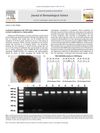
November 2009 in “Journal of Dermatological Science” This article discusses various dermatological studies cited by previous authors and reports no new clinical results.
 52 citations
,
October 1999 in “Developmental Dynamics”
52 citations
,
October 1999 in “Developmental Dynamics” This study found that the hairless gene in mice has a more extensive role in development than previously thought, as indicated by its expression in various tissues and associated abnormalities in hr/hr mutants.
 May 2020 in “bioRxiv (Cold Spring Harbor Laboratory)”
 This study found that hair-type tissues in hedgehogs show higher enrichment of immune-related genes compared to spine-type tissues, suggesting that spines evolved to protect against injuries and infections.
 35 citations
,
November 2020 in “Experimental Dermatology”
35 citations
,
November 2020 in “Experimental Dermatology” This study found that upper wound fibroblasts are crucial for hair follicle regeneration during wound healing and suggests that these cells, along with papillary fibroblasts, migrate within the wound.
 17 citations
,
June 2019 in “BMC genomics”
17 citations
,
June 2019 in “BMC genomics” This study cataloged several long non-coding RNAs and microRNAs in cashmere goat dermal papilla cells, suggesting these non-coding RNAs may play a role in hair follicle stem cell activation and hair growth.