4 citations
,
July 2023 in “Frontiers in Microbiology” HGF combined with ADA is highly accurate for diagnosing tuberculous pleural effusion, especially in younger females.
44 citations
,
September 2016 in “American Journal Of Pathology” This study identified a subpopulation of neural crest-derived progenitor cells in human corneal endothelial tissue from normal and Fuchs endothelial corneal dystrophy donors, which may have potential for future cell therapy development.
November 2025 in “Clinical and Translational Medicine” This study found that cell-free RNA, particularly DNAJB9, shows potential as a biomarker for diagnosing and prognosing female androgenetic alopecia using a machine learning model.
1 citations
,
August 2023 in “Journal of Investigative Dermatology” Farudodstat may help treat alopecia areata by protecting hair follicles.
 June 2019 in “Reactions Weekly”
  13 citations
,
February 2007 in “British Journal of Dermatology”
13 citations
,
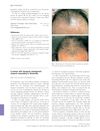
February 2007 in “British Journal of Dermatology” EF and PXE not closely related.
1 citations
,
May 2024 in “Communications Biology” This study found that Dab2 conditional knockout mice experienced delayed hair follicle cycles and reduced hair follicle stem cell activity, suggesting Dab2's crucial role in regulating stem cell activation and anti-aging process in hair follicles.
July 2020 in “Journal of Tissue Engineering and Reconstructive Surgery”  January 2025 in “Dermatology Reports”
 This case report describes a 61-year-old Italian man with a rare, localized variant of junctional epidermolysis bullosa linked to the R795X mutation in the COL17A1 gene, highlighting the importance of precise diagnosis for effective management of rare genetic disorders.
16 citations
,
July 1996 in “Journal of Investigative Dermatology” This study identified the FGF5:c.578C>T variant as linked to long hair in Akitas in Japan and suggests that genetic testing could help improve their breeding practices and welfare.
 August 2025 in “BMC Pregnancy and Childbirth”
 In this study, prenatal ultrasonography was found to be a valuable tool for screening ectodermal dysplasia during pregnancy, and a new EDA gene variant associated with X-linked hypohidrotic ectodermal dysplasia was identified, aiding in more accurate diagnoses and reproductive decision-making.
 April 2023 in “Journal of Investigative Dermatology”
 This study found that dimethyl fumarate improved delayed wound healing in Il36rn-/- mice by reducing neutrophil extracellular trap formation and oxidative stress.
June 2026 in “Journal of Dermatological Science” This study found that a topical formulation containing DMG-Na significantly improved hair loss parameters in people experiencing hair loss, suggesting its potential effectiveness for such conditions.
 March 2025 in “Frontiers in Pharmacology”
 This study developed a hydrogel dressing incorporating angelica polysaccharides, demonstrating enhanced wound healing properties in a mouse model by promoting rapid hemostasis, tissue healing, and new blood vessel formation compared to Tegaderm™ film.
 April 2023 in “Journal of Investigative Dermatology”
 This study demonstrated that a combination of four types of honey significantly improved hair integrity, porosity, and surface roughness after exposure to UV-A and pollution stress.
January 1988 in “Toxicological Sciences” In this study, a single oral dose of 2,3,4,7,8-pentachlorodibenzofuran in male Fischer rats led to dose-dependent toxicity, resulting in weight loss, hepatotoxicity, and mortality.
 18 citations
,
January 2008 in “Journal of The American Academy of Dermatology”
18 citations
,
January 2008 in “Journal of The American Academy of Dermatology” This study found that the proteins GDNF, NTN, GFRα-1, GFRα-2, and c-Ret are differentially expressed during various stages of the human hair follicle cycle, with potential implications for hair biology.
27 citations
,
September 2013 in “The FASEB Journal” This study reports that the loss of the protein Memo in mice leads to a reduced lifespan and suggests that Memo is a key regulator of FGFR signaling and vitamin D production.
 86 citations
,
August 2011 in “Toxicological sciences”
86 citations
,
August 2011 in “Toxicological sciences” In this study, researchers found that TCDD exposure accelerated differentiation and altered gene expression in human epidermal cells, indicating the epidermal barrier as a target of TCDD-activated AHR.
November 2022 in “Journal of Investigative Dermatology” This study generated a transcriptomic map of human hair follicle compartments, providing a database for identifying compartment-specific gene expression which may aid in developing targeted treatments for hair follicle disorders.
March 2026 in “World Rabbit Science” This study found that overexpression and knockdown of DKK4 influence genes involved in hair follicle growth and development in Angora rabbits and identified specific SNPs in DKK4 associated with wool quality, notably showing that the TT/GG haplotype combination relates to higher fibre diameters.
50 citations
,
February 2013 in “BMC evolutionary biology” This study found that the Hr gene loss and positive selection for the FGF5 gene in cetaceans likely contributed to hair loss as these animals adapted to aquatic environments.
October 2021 in “The journal of investigative dermatology/Journal of investigative dermatology” This study found that mechanical disruption of the desmosomal cadherin Dsg3 in hair follicle stem cells activates them from quiescence, highlighting its role as a key regulator of stem cell quiescence and epithelial niche integrity.
 11 citations
,
June 2017 in “Journal of cell science”
11 citations
,
June 2017 in “Journal of cell science” In this study, researchers found that AGD1 is crucial for membrane recruitment during root hair development in Arabidopsis thaliana, with its pleckstrin homology domain essential for targeting specific plasma membrane regions.
4 citations
,
January 2017 in “Acta dermato-venereologica” A new EDA gene mutation was found in a Chinese family with a specific skin disorder.
16 citations
,
July 2018 in “Experimental Dermatology” This study suggests that the transcription factor Gata6 plays a role in maintaining the structure of the upper hair follicle and may be implicated in conditions marked by its abnormal expansion, such as acne or cystic diseases.
15 citations
,
March 2007 in “BioTechniques” This study introduced a new in vivo angiogenesis assay using Gelfoam implanted in ND-GFP transgenic mice to efficiently identify angiogenesis stimulators and inhibitors through GFP visualization.
 1 citations
,
June 2022 in “Chinese medical journal/Chinese Medical Journal”
1 citations
,
June 2022 in “Chinese medical journal/Chinese Medical Journal” This study identified two novel mutations in the CDH3 gene causing HJMD in a Chinese patient, expanding the genetic and phenotypic understanding of the disorder.
31 citations
,
December 2016 in “Anais Brasileiros de Dermatologia” This review discusses the fibrogenic effects of TGFβ1, the regulatory role of PPAR, and the potential involvement of DHEA in frontal fibrosing alopecia, but reports no new clinical results.