2 citations
,
June 2021 in “Sultan Qaboos University medical journal” This case report presents three sisters with familial frontal fibrosing alopecia, making it the 25th documented familial case, with treatment results observed in one sister.
17 citations
,
May 2005 in “Hair transplant forum international” This study evaluated the effectiveness of follicular units and growth factors derived from autologous platelet-rich plasma in improving hair growth and density in 23 male patients with pattern hair loss.
This study found that a modified scaffold with VEGF165 genetically modified hair follicle stem cells significantly promoted blood vessel growth and wound healing in rats, suggesting its potential as a skin substitute in clinical settings.
 14 citations
,
June 2021 in “British journal of dermatology/British journal of dermatology, Supplement”
14 citations
,
June 2021 in “British journal of dermatology/British journal of dermatology, Supplement” This paper presents consensus guidelines for standardized diagnostic criteria and assessment methods for frontal fibrosing alopecia to improve clinical research and data collection globally.
 1 citations
,
May 2021 in “International Journal of Dermatology”
1 citations
,
May 2021 in “International Journal of Dermatology” This article presents the surgical technique of long hair follicular unit excision (FUE) in hair transplantation and reports procedural and outcome data for 134 patients, without evaluating clinical outcomes.
 126 citations
,
April 2006 in “International Journal of Dermatology”
126 citations
,
April 2006 in “International Journal of Dermatology” This study found that frontal fibrosing alopecia and lichen planopilaris have similar histopathological features, but FFA exhibits more prominent apoptosis and less inflammation with spared interfollicular epidermis.
 August 2026 in “ACTA MEDICA IRANICA”
 This study found that women with female pattern hair loss exhibited hormonal imbalances, with the Free Androgen Index being a particularly effective diagnostic marker.
16 citations
,
April 2020 in “JAMA dermatology” More inflammation leads to faster and worse hair loss in women with frontal fibrosing alopecia.
 4 citations
,
November 2013 in “Hair transplant forum international”
4 citations
,
November 2013 in “Hair transplant forum international” This abstract lists authors and their affiliations but does not provide any research findings or insights.
 39 citations
,
July 2015 in “British Journal of Dermatology”
39 citations
,
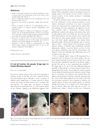
July 2015 in “British Journal of Dermatology” This article discusses the pseudo 'fringe sign' in frontal fibrosing alopecia, highlighting that it is not solely related to traction, and it reports no new clinical results.
December 2016 in “Anales del sistema sanitario de Navarra” This case study reports successful treatment of frontal fibrosing alopecia with daily 2.5mg finasteride in a 77-year-old woman.
20 citations
,
July 2019 in “Stem cell investigation” This study found that the combination of stromal vascular fraction and platelet-rich plasma accelerated wound healing in rats more effectively than either treatment alone or saline.
 4 citations
,
January 2016 in “Dermatology practical & conceptual”
4 citations
,
January 2016 in “Dermatology practical & conceptual” This report describes the first known case of Kaposi's varicelliform eruption occurring after a follicular unit extraction procedure, possibly linked to surgical trauma and post-surgical steroid use.
4 citations
,
August 2023 in “Biomedicine & Pharmacotherapy” This study found that in noise-exposed FVB/NJ mice and cell models, ivacaftor reduced oxidative stress and hearing damage by maintaining CFTR function and increasing Nrf2 expression, suggesting its potential for treating noise-induced hearing loss.
1 citations
,
February 2023 in “Pharmaceutics” This article reviews cell proteomic footprinting technology and its application in improving the authentication and quality control of cell-based immunotherapeutics, without providing new clinical results.
 November 2023 in “Indian Journal of Dermatology”
 This study from North-East India analyzed 21 cases of frontal fibrosing alopecia, noting a high prevalence in post-menopausal women and distinct histological features such as perifollicular lymphocytic infiltrate and hydropic degeneration.
 2 citations
,
March 2016 in “The Journal of Dermatology”
2 citations
,
March 2016 in “The Journal of Dermatology” The researchers reported that the facial Psoriasis Log-based Area and Severity Index (fPLASI) more reliably and sensitively captured clinical improvement in facial psoriasis than the existing facial Psoriasis Area and Severity Index (fPASI).
September 2023 in “Journal of the American Academy of Dermatology” This study examined the application of new clinical guidelines for diagnosing frontal fibrosing alopecia in 18 men, highlighting that current diagnostic criteria may often overlook early beard involvement and sideburn recession.
January 2012 in “Zhongguo shengwuzhipinxue zazhi” This study found that a complex filling material made from autologous skin fibroblasts and hair keratin significantly improved the appearance of facial wrinkles, suggesting potential for clinical cosmetic applications.
 September 2024 in “BMJ Case Reports”
 This case report highlights an atypical presentation of favus in an immunocompetent adult, where a psoriasiform plaque over the 'bindi' area was successfully treated with systemic itraconazole, achieving complete resolution without relapse. Simple stains proved essential for diagnosis in this resource-limited setting.
September 2024 in “Journal of Investigative Dermatology” VIP reduces hair pigmentation by decreasing melanin production.
 August 2021 in “Case Reports”
 This report describes a case where a woman with frontal fibrosing alopecia initially presented with symptoms resembling rosacea, but further investigation led to a diagnosis of FFA, resulting in a treatment change to oral finasteride and hydroxychloroquine.
 6 citations
,
November 2021 in “Oncology Research and Treatment”
6 citations
,
November 2021 in “Oncology Research and Treatment” This study found that lower expression of VDR protein in breast cancer patients is associated with increased bone metastasis and poorer prognosis, making it a significant prognostic factor.
 April 2017 in “Journal of Investigative Dermatology”
 This study observed that using a 1064 nm Nd: YAG laser may stabilize hair loss and promote new growth in some females with frontal fibrosing alopecia, though individual results varied.
2 citations
,
December 2018 This study found that dermatoscopy can quickly and non-invasively detect facial vellus hair involvement in patients with alopecia frontal fibrosante, occurring frequently and associated with specific facial lesions.
 March 2026 in “Journal of Maxillofacial and Oral Surgery”
 This study found that using intraoperative platelet-rich plasma in follicular unit extraction hair transplantation significantly improved graft survival, accelerated hair regrowth, and increased patient satisfaction compared to the procedure without PRP.
January 2022 in “Stem cell biology and regenerative medicine” This review explores the role of lymphatic vessels in skin regeneration and hair follicle growth, emphasizing their interactions with hair follicle stem cells and potential implications for regenerative therapies, but reports no new clinical results.
 January 2019 in “Springer Reference Medizin”
 This article reviews the role of factor Xa inhibitors like Rivaroxaban and suggests they may eventually replace vitamin K antagonists, but their side effects require further clarification.
May 2024 in “Clinical and experimental optometry” This case report describes a rare side effect of finasteride in a young male being treated for androgenic alopecia.
 July 2024 in “Deleted Journal”
 This study found that using PRP with the FUE method of hair restoration led to better graft survival, aesthetic outcomes, and patient satisfaction compared to not using PRP.