 June 2024 in “Annals of Medicine and Surgery”
 This case report highlights the rare co-occurrence of Pili Annulati and Trichorrhexis Nodosa in a Syrian woman, underlining the need for further research into their relationship and treatment.
September 2008 in “Kitasato medical journal”  2 citations
,
June 2021 in “Research Square (Research Square)”
2 citations
,
June 2021 in “Research Square (Research Square)” This study identified a novel missense mutation in the FGF5 gene associated with the longhair phenotype in about 3% of Maine Coon cats, suggesting it may be a breed-specific variant.
July 2026 in “Anais Brasileiros de Dermatologia” This study reported that both AGA and SD in Caucasian male patients showed overlapping histopathological features with FAPD, particularly perifollicular fibrosis and inflammation, complicating diagnosis.
October 2024 in “Endocrinology Insights” In this study, researchers found that both the EU-TIRADS and Bethesda systems exhibited high specificity but suboptimal sensitivity for predicting thyroid nodule malignancy in patients who underwent surgery, with Bethesda system showing particularly high specificity in this postoperative population.
 December 2023 in “International Journal of Science and Research (IJSR)”
 In this observational study, researchers at a dental and craniofacial hospital found that the FUE technique for beard and moustache transplants is effective and safe, with minimal complications such as pinpoint white scars in some patients but no significant issues like infection or numbness.
January 2023 in “Indian Dermatology Online Journal” This case report identifies a 23-year-old man with congenital triangular alopecia, a non-scarring alopecia characterized by preserved follicles and vellus hair, for which unnecessary interventions should be avoided.
 August 2023 in “Clinical, Cosmetic and Investigational Dermatology”
 In this article, researchers describe a novel FUE device designed to enhance follicular unit excision surgery by minimizing follicular injury and improving ergonomics with features such as Bluetooth functionality, fingertip touch sensors, and automated operation.
 45 citations
,
August 2013 in “Facial Plastic Surgery Clinics of North America”
45 citations
,
August 2013 in “Facial Plastic Surgery Clinics of North America” This article reviews factors affecting follicular unit extraction, emphasizing the need to tailor procedures to individual patient characteristics, but reports no new experimental findings.
 4 citations
,
August 2023 in “Nature Communications”
4 citations
,
August 2023 in “Nature Communications” In this study, researchers observed that the combination of hair progenitors and their micro-niche changes every three days in mouse zigzag hair, and disruptions in specific genes affected this rhythm, highlighting the importance of this periodic change for normal hair morphology.
 63 citations
,
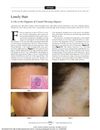
October 2011 in “Archives of Dermatology”
63 citations
,
October 2011 in “Archives of Dermatology” Isolated long hairs at the original hairline can help diagnose Frontal Fibrosing Alopecia.
 12 citations
,
February 2014 in “PLoS ONE”
12 citations
,
February 2014 in “PLoS ONE” This study observed high expression of mTOR pathway effectors in fibrous papules and TSC-associated angiofibromas, suggesting that topical rapamycin might be an effective treatment for fibrous papules.
47 citations
,
August 2012 in “Cell Cycle” This study found that multipotent, nestin-expressing stem cells from the upper part of hair follicles can proliferate significantly and differentiate into various cell types, showing potential for nerve and spinal cord repair.
 March 2026 in “Frontiers in Medicine”
 This study reported that two male patients with diffuse unpatterned alopecia exhibited donor-area involvement in both the vertex and occiput, challenging the assumption of occipital stability for hair transplantation, and showed partial improvement following treatment with oral finasteride and topical minoxidil.
 2 citations
,
September 2017 in “Plastic and Aesthetic Research”
2 citations
,
September 2017 in “Plastic and Aesthetic Research” This study captured digital images of hair regions in healthy individuals and patients with androgenetic alopecia to analyze and compare the number of follicular units and hairs using software.
 33 citations
,
June 2017 in “Developmental Biology”
33 citations
,
June 2017 in “Developmental Biology” This study found that local refinement of hair follicles into higher order patterns can occur without the core planar cell polarity system, but global alignment with body axes requires its function throughout development and regeneration.
 1 citations
,
January 2018 in “Indian journal of otolaryngology and head and neck surgery”
1 citations
,
January 2018 in “Indian journal of otolaryngology and head and neck surgery” This case study details an elderly patient with multiple nasal vestibular furunculosis leading to severe tissue damage and a nasolabial fistula, which was addressed using an alar advancement flap after allowing for tissue healing.
1 citations
,
August 2018 in “Journal of the American Academy of Dermatology” A young woman developed facial bumps before hair loss, which is unusual for her condition.
2 citations
,
January 2016 in “Dermatology online journal” This case report describes a 46-year-old man diagnosed with frontal fibrosing alopecia, a condition primarily affecting postmenopausal women, highlighting its rare occurrence in men.
 November 2022 in “Archives of Plastic Surgery”
 This study found that follicular unit extraction is effective for treating scar alopecia after craniotomy, with better outcomes achieved when 1-year postoperative hair density exceeds 20 follicles per cm².
 43 citations
,
February 2008 in “Journal of cutaneous pathology”
43 citations
,
February 2008 in “Journal of cutaneous pathology” This study revealed that during fetal development, MITF and Mart-1 expressing melanocytes progress from the dermis to the epidermis and hair follicles, with MITF possibly marking follicular stem cells.
2 citations
,
March 2019 in “PubMed” This case report describes successful treatment of folliculitis decalvans in a 41-year-old woman using oral fusidic acid, leading to clinical improvement and no recurrences after six months.
2 citations
,
February 2023 in “Anais Brasileiros de Dermatologia” April 2025 in “Journal of Diabetes & Metabolic Disorders” This study found that linc-PINT expression was significantly decreased in patients with atrial fibrillation compared to healthy controls, while several TGF-β signaling genes were increased, suggesting a potential role in heart arrhythmias' pathogenesis.
 April 2016 in “Journal of Investigative Dermatology”
 This study found that adding cell adhesion-linked gene expression variables improved the identification of patients with SLN metastases within 90 days of melanoma diagnosis compared to using clinicopathologic variables alone.
 September 2017 in “Journal of Investigative Dermatology Symposium Proceedings”
 This review discusses the clinical features of hypopigmented mycosis fungoides in primary cutaneous T cell lymphoma and reports no new clinical results.
 11 citations
,
May 1998 in “Child's nervous system”
11 citations
,
May 1998 in “Child's nervous system” This case report describes a 5-day-old male infant with a constellation of symptoms, including leptomeningeal angiomatosis, hair follicle nevus, and congenital alopecia, potentially representing a novel neurocutaneous syndrome.
59 citations
,
March 1984 in “Journal of Investigative Dermatology” 21 citations
,
December 2015 in “European journal of cell biology” In this study, researchers demonstrated that follicular tight junctions in porcine skin form a barrier to nanoparticle penetration, particularly in upper regions, which supports its use as a model for human skin.
3 citations
,
March 2017 in “Pediatric Dermatology” This case report documents the first known instance of FOXN1 duplication linked to congenital hypertrichosis.