 8 citations
,
February 2016 in “The American Journal of Dermatopathology”
8 citations
,
February 2016 in “The American Journal of Dermatopathology” In this study, the researchers found that transplanted hair follicles undergo significant morphological changes, including a thickened dermal sheath and increased hair shaft diameter, which are associated with altered follicular vascularization.
May 2008 in “10th European Congress of Endocrinology” This study discovered that TTR is expressed in the human placenta as early as 6 weeks gestation, with increased levels in the first trimester potentially facilitating thyroid hormone delivery to the fetus.
 9 citations
,
January 2015 in “Current problems in dermatology”
9 citations
,
January 2015 in “Current problems in dermatology” This review discusses partial longitudinal-follicular unit transplantation (PL-FUT) for hair loss and notes its potential to multiply hair follicles while preserving donor areas, but reports no new clinical results.
6 citations
,
June 2014 in “PubMed” This study concluded that transurethral seminal vesiculoscopy combined with finasteride is a safe and effective treatment for recurrent hemospermia in the observed patients.
January 1982 in “Clinical Cosmetic and Investigational Dermatology” This case report describes a 54-year-old woman with familial dyskeratotic comedones who experienced slight improvement in her skin lesions after three months of treatment with topical retinoids and urea cream.
 8 citations
,
March 2016 in “Hair transplant forum international”
8 citations
,
March 2016 in “Hair transplant forum international” This article discusses hair angle manipulation using the Mega FUE® device but reports no clinical results; disclosure of the author's ownership of the manufacturing company is noted.
 November 2006 in “Dermatologic Surgery”
 This study concluded that while transected hair follicles can survive after transplantation in follicular unit extraction, their growth rate is unsatisfactory, and they are thinner than original follicles.
 4 citations
,
January 2013 in “Dissolution Technologies”
4 citations
,
January 2013 in “Dissolution Technologies” This study optimized and validated a dissolution test method for immediate-release finasteride capsules, highlighting the need for an official standard due to variability in commercial products.
 3 citations
,
May 2021 in “Indian Dermatology Online Journal”
3 citations
,
May 2021 in “Indian Dermatology Online Journal” This article reviews the diverse uses of follicular unit extraction in treating various hair and skin conditions but reports no new clinical findings.
 13 citations
,
September 2018 in “Hair transplant forum international”
13 citations
,
September 2018 in “Hair transplant forum international” This article discusses the unique aspects of hair transplantation for achieving natural and dense coverage, but it provides no new clinical results.
 1 citations
,
January 2007 in “The Kitakanto Medical Journal”
1 citations
,
January 2007 in “The Kitakanto Medical Journal” This report documents a case where a man survived sub-acute toxicity from an overdose of the anticancer drug UFT due to effective treatment with antibiotics and granulocyte colony-stimulating factor.
 14 citations
,
January 2011 in “Journal of analytical & bioanalytical techniques”
14 citations
,
January 2011 in “Journal of analytical & bioanalytical techniques” This research discusses a validated HPTLC method for simultaneously determining Tamsulosin Hydrochloride and Finasteride in bulk and pharmaceutical dosage forms but reports no new clinical results.
 1 citations
,
May 2021 in “International Journal of Dermatology”
1 citations
,
May 2021 in “International Journal of Dermatology” This article presents the surgical technique of long hair follicular unit excision (FUE) in hair transplantation and reports procedural and outcome data for 134 patients, without evaluating clinical outcomes.
 January 2025 in “Journal of Crohn s and Colitis”
 In this study, tofacitinib showed promising efficacy and safety for biologic-naïve elderly patients with moderate-to-severe ulcerative colitis, achieving steroid-free remission and clinical response over 52 weeks.
 41 citations
,
December 2015 in “JAMA Dermatology”
41 citations
,
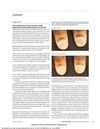
December 2015 in “JAMA Dermatology” Tofacitinib citrate improved nail dystrophy and pain in patients with alopecia universalis without causing side effects.
 May 2017 in “InTech eBooks”
 This article reviews the follicular unit extraction technique in hair transplantation for androgenetic alopecia and other hair loss conditions, noting it can effectively meet patient expectations but reports no new clinical data.
 January 2026 in “Dermatology and Therapy”
 This study suggests that using UVFD to examine non-pigmented facial lesions can potentially enhance diagnostic accuracy and reduce unnecessary biopsies.
 4 citations
,
January 2020 in “Skin appendage disorders”
4 citations
,
January 2020 in “Skin appendage disorders” This case report describes a unique presentation of frontal fibrosing alopecia characterized by a hair loss pattern that resembles the Greek letter upsilon, supported by trichoscopic and histological findings.
November 2025 in “Turkish Journal of Dermatology” This study found that both follicular unit transplantation (FUT) and follicular unit extraction (FUE) are safe and effective for female pattern hair loss, with FUE offering broader indications and higher patient satisfaction.
 4 citations
,
November 2016 in “Hair transplant forum international”
4 citations
,
November 2016 in “Hair transplant forum international” This article discusses the follicular unit excision process in hair restoration, focusing on the balance between donor site wounding and graft retrieval, and provides no new clinical data.
1 citations
,
April 2018 in “Journal of Investigative Dermatology” The Trichodysplasia spinulosa virus protein can cause abnormal hair growth in mice.
 2 citations
,
April 2019 in “Dermatologic Therapy”
2 citations
,
April 2019 in “Dermatologic Therapy” A patient with alopecia had hair regrowth with tofacitinib but developed a skin reaction, choosing to continue the treatment despite the side effect.
2 citations
,
June 2020 in “Clinical Journal of Gastroenterology” This case report describes two patients with ulcerative colitis and alopecia areata who did not respond to various treatments but achieved remission and improved hair growth after starting tofacitinib.
 December 2016 in “Journal of Dermatology and Dermatologic Surgery”
 In this study, the Instant Follicular Hair Unit Transplant technique demonstrated superior hair growth compared to conventional FUE in patients with androgenetic alopecia, although it requires a steeper learning curve for surgeons.
22 citations
,
March 2017 in “Transplant Infectious Disease” This case report describes successful treatment of generalized trichodysplasia spinulosa with leflunomide in a patient undergoing immunosuppressive therapy following solid organ transplantation.
 May 2017 in “Journal of The American Academy of Dermatology”
 An intact skin barrier is crucial to prevent infection in cases of tether-induced tenosynovitis.
 July 2009 in “International Society of Hair Restoration Surgery”
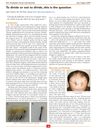
 This article introduces the concept of follicular units, highlighting their significance in hair restoration, but reports no new findings.
 January 2026 in “Food and Nutrition Sciences”
 This randomized, placebo-controlled trial reported that USPlus PRO saw palmetto extract significantly improved lower urinary tract symptoms, including voiding, incomplete emptying, and weak stream, as well as sexual function in males over 12 weeks, while maintaining a favorable safety profile.
 29 citations
,
January 2010 in “PubMed”
29 citations
,
January 2010 in “PubMed” This review discusses the methodology, limitations, and advantages of Follicular Unit Extraction in hair transplantation without providing new clinical results.
 2 citations
,
September 2007 in “International Journal of Impotence Research”
2 citations
,
September 2007 in “International Journal of Impotence Research” This case study reports that low-dose testosterone therapy improved libido and sexual functions in a 36-year-old fragile X carrier female with hypoactive sexual desire disorder when monitored regularly for lab parameters.