This review outlines diagnostic and treatment approaches for hirsutism, highlighting spironolactone or cyproterone acetate with oral contraceptives as the most effective therapy, and reports no new empirical results.
 15 citations
,
August 1998 in “Australasian journal of dermatology”
15 citations
,
August 1998 in “Australasian journal of dermatology” This review discusses various treatments for hirsutism, including cosmetic techniques, anti-androgens like spironolactone, and new drugs such as finasteride and flutamide, but it reports no new clinical results.
November 2009 in “Hair transplant forum international” This piece presents no new research findings; it briefly mentions opinions on Female Pattern Hair Loss and the importance of increasing awareness.
 17 citations
,
January 1986 in “Acta obstetricia et gynecologica Scandinavica”
17 citations
,
January 1986 in “Acta obstetricia et gynecologica Scandinavica” In this study, spironolactone treatment reduced hair growth in 17 out of 30 patients with hirsutism, but was less effective compared to cyproterone acetate–estrogen therapy.
 10 citations
,
December 1995 in “Journal of women's health”
10 citations
,
December 1995 in “Journal of women's health” This study observed that finasteride, especially when combined with electrolysis, effectively reduced hair growth in women with hirsutism over six months.
 September 2017 in “Journal of Investigative Dermatology”
 This study found that infrared thermography might be a useful non-invasive tool to help diagnose frontal fibrosing alopecia by identifying active phases of the disease.
 September 2024 in “Cermin Dunia Kedokteran”
 This research discusses Fahr syndrome, highlighting its association with abnormal brain calcifications and varied clinical symptoms in young to middle-aged adults. Diagnosis involves specific criteria and CT scans, but no specific treatment exists; therapy focuses on managing symptoms and underlying conditions.
 July 2022 in “Research Square (Research Square)”
 This study found that Egyptian women with frontal fibrosing alopecia had lower serum PPARγ levels and a higher occurrence of PPARG gene polymorphism compared to healthy controls, suggesting a potential role for PPARγ in the condition's development.
4 citations
,
January 2006 in “PubMed” This study found that finasteride-induced DHT deficiency altered estrogen receptor expression in the epididymis, potentially destabilizing its function.
137 citations
,
December 2007 in “Journal of bone and mineral research” This study suggests that 1,25-dihydroxyvitamin D(3) and fibroblast growth factor 23 form a crucial axis in regulating phosphate balance, akin to its role in calcium regulation, and explores novel VDR interactions including with curcumin.
 September 2024 in “Medicina”
 This study found that among women with PCOS, the FokI CC genotype of the VDR gene may offer protection against acne and seborrhea, while the VDR-TaqI dominant genotype is associated with reduced oxidative stress.
 2 citations
,
October 2015 in “Obstetrics and gynaecology cases - reviews”
2 citations
,
October 2015 in “Obstetrics and gynaecology cases - reviews” This case report details a postmenopausal woman with increased libido, hirsutism, and spontaneous orgasms, noting elevated testosterone levels and enlarged ovaries.
 April 2016 in “Expert opinion on orphan drugs”
 This review explores current therapeutic options for frontal fibrosing alopecia, noting the use of finasteride, topical tacrolimus, hydroxychloroquine, and excimer laser in managing the condition, but reports no new clinical results.
This trial will compare the effectiveness of spironolactone to doxycycline for treating acne in adult females, potentially offering an alternative to antibiotics and isotretinoin.
62 citations
,
January 2009 in “Biochemistry” This study found that both the natural ligand 1alpha,25(OH)(2)D(3) and the synthetic agonist LG190178 bind similarly to the vitamin D receptor's coregulator motifs, suggesting similar biological functions.
 17 citations
,
February 2016 in “Experimental Dermatology”
17 citations
,
February 2016 in “Experimental Dermatology” This study found that SFRP2 enhances Wnt3a-mediated β-catenin signaling in human dermal papilla cells, with higher SFRP2 expression in beard cells correlating with increased trichogenicity.
 24 citations
,
March 2002 in “Expert opinion on investigational drugs”
24 citations
,
March 2002 in “Expert opinion on investigational drugs” This review discusses various anti-androgen treatments for hirsutism, including androgen receptor blockers and inhibitors, and emphasizes the role of diagnosis in selecting the most appropriate therapy, but reports no new clinical results.
 155 citations
,
September 2008 in “British journal of dermatology/British journal of dermatology, Supplement”
155 citations
,
September 2008 in “British journal of dermatology/British journal of dermatology, Supplement” This study observed that frontal fibrosing alopecia predominantly affects postmenopausal women, can be associated with lichen planus, and may lead to progressive hairline recession, though this progression is not consistent in all cases.
1 citations
,
June 2004 in “Sexuality, reproduction & menopause” This review discusses the use of eflornithine cream for managing hirsutism in women and reports promising results from clinical experience but presents no new clinical trials.
 6 citations
,
January 2019 in “Medical Hypotheses”
6 citations
,
January 2019 in “Medical Hypotheses” This hypothesis article explores frontal fibrosing alopecia as a potential autoimmune condition and calls for future research to investigate this possibility, but reports no new clinical results.
 26 citations
,
June 2018 in “Australasian Journal of Dermatology”
26 citations
,
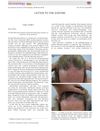
June 2018 in “Australasian Journal of Dermatology” Stopping sunscreen use on the forehead led to hair regrowth in a woman with frontal fibrosing alopecia.

In this study, the researchers found no significant link between CAG repeat numbers in the androgen receptor gene and female pattern hair loss in a Chinese population.
In this study, a modified Sinclair scale was presented for evaluating hair loss severity in men with female pattern hair loss, outlining stages from normal hair density to severe hair loss while preserving the anterior hairline. Reliability data for using this scale was also included.
 October 2024 in “Journal of the Endocrine Society”
 This case report details a postmenopausal woman whose hyperandrogenism was attributed to ovarian stromal hyperplasia, ultimately resolved with bilateral salpingo-oophorectomy.
 April 2017 in “Journal of Investigative Dermatology”
 In this study, HPH-15, a newly synthesized compound, demonstrated potential in reducing skin fibrosis in a mouse model by targeting underlying pathogenic mechanisms and exhibited a good safety profile, warranting further clinical trials for fibrotic skin disorders like systemic sclerosis.
 115 citations
,
January 2001 in “American journal of clinical dermatology”
115 citations
,
January 2001 in “American journal of clinical dermatology” This study found that eflornithine 15% cream reduced unwanted facial hair growth more effectively than a placebo in women with hirsutism, but hair growth returned to pretreatment levels within 8 weeks of stopping treatment.
 75 citations
,
November 2007 in “Clinical endocrinology”
75 citations
,
November 2007 in “Clinical endocrinology” This study found that several drugs, including flutamide and spironolactone, significantly reduced hirsutism in women, with reduced effectiveness in those with higher BMI.
 2 citations
,
March 2020 in “bioRxiv (Cold Spring Harbor Laboratory)”
2 citations
,
March 2020 in “bioRxiv (Cold Spring Harbor Laboratory)” This study suggests that maternal hyperandrogenism and insulin resistance may induce ferroptosis in the gravid uterus and placenta in rats, but through distinct molecular mechanisms.
1 citations
,
July 2016 in “Dermatologic surgery”  47 citations
,
June 2009 in “Journal of Biological Chemistry”
47 citations
,
June 2009 in “Journal of Biological Chemistry” This study found that finasteride competitively inhibits the enzyme AKR1D1 with low micromolar affinity but does not act as a mechanism-based inactivator.