10 citations
,
March 2021 in “International Journal of Environmental Research and Public Health” This study found that Google users are increasingly searching for health information on dermatological issues, with particular interest in itch, hair loss, and skin rash.
5 citations
,
April 2023 in “Bioengineering & Translational Medicine” This study found that STAR particles, when applied to human skin, were well tolerated and highly acceptable at various pressures and with repeated daily use, suggesting they may provide a safe and effective method for enhancing drug delivery through the skin.
2 citations
,
June 2025 in “Cosmetics” This study observed that a five-week topical treatment with cold-pressed Rosa canina seed oil significantly reduced mean wrinkle scores and UV-induced spots in volunteers, suggesting potential anti-aging and photoprotective benefits attributed to its high carotenoid content.
 1 citations
,
July 2022 in “International Journal of Environmental Research and Public Health”
1 citations
,
July 2022 in “International Journal of Environmental Research and Public Health” This study observed seasonal trends in Poland's Google searches for dermatology-related terms and noted a decrease in searches for sexually transmitted diseases despite rising infection rates, highlighting a need for better sexual education.
April 2026 in “IntechOpen eBooks” This study reviews the complexities of burn-related skin complications, highlighting postburn pruritus, dyspigmentation, and the risk of malignant ulcers, while offering a framework for evidence-based management through various treatment approaches.
January 2026 in “Pharmaceutics” This review highlighted recent advances in nanocarrier-based topical delivery systems for skincare, emphasizing their potential to enhance ingredient stability, penetration, and targeted release while addressing specific pathophysiological skin concerns.
January 2026 in “Annals of Dermatology” This review outlines evidence-based strategies for diagnosing pediatric hypopigmented disorders and emphasizes distinguishing vitiligo from self-limiting conditions through a systematic clinical approach; no new results are reported.
March 2024 in “Journal of pharmacy & pharmaceutical sciences” This review discusses the design strategies and applications of long-acting polymeric microneedles, noting their potential to improve patient compliance and reduce side effects in chronic disease management, but reports no new experimental results.
This review highlights recent advances in the use of light exposure for health purposes, examining its role in pathology, therapeutic strategies, and molecular changes, as well as discussing future developments in this globally supported field.
January 2005 in “Experimental Dermatology” This abstract reviews recent findings on genetic factors in acne, highlighting the potential of genetic studies to advance understanding of its pathogenesis, but reports no new clinical results.
3 citations
,
June 2021 in “Actas Dermo-Sifiliográficas” This study found that dermoscopy can identify typical features of Malassezia folliculitis, such as folliculocentricity and perilesional erythema, offering a valuable tool for diagnosing this condition in clinical settings.
 January 2022 in “Yonago Acta Medica”
 This case report describes a Japanese woman with unilateral steroid-induced rosacea-like dermatitis attributed to long-term topical corticosteroid use, highlighting the significance of appropriate steroid application and histopathological evaluation for facial erythematous nodules.
 September 2016 in “Springer eBooks”
 This review discusses how physical appearance, including skin, facial features, and physique, is linked to aging and health risks, but reports no new experimental results.
11 citations
,
December 2013 in “Clinical and experimental dermatology” This study reports a case of a child with congenital skin fragility, alopecia, and cardiomyopathy due to compound heterozygous mutations in the DSP gene causing desmoplakin deficiency.
70 citations
,
December 1968 in “Journal of Investigative Dermatology” 11 citations
,
December 2011 in “The Journal of Dermatology” This abstract provides clinical images of scaly erythematous lesions but does not report any new research findings; further queries should be directed to the corresponding author.
4 citations
,
August 1999 in “Clinical Cosmetic and Investigational Dermatology” This study highlights the potential role of the CYP21A2 and CYP19A1 genes in severe acne vulgaris among Han Chinese, especially males.
This review discusses complications of frizzy hair syndrome and emphasizes the importance of precautionary measures, but it reports no new research findings.
 November 2016 in “Journal of Evolution of Medical and Dental Sciences”
 This study observed that among elderly patients, the most common systemic disease associated with skin conditions was diabetes, while wrinkling and xerosis were prevalent skin changes.
 10 citations
,
July 2022 in “Dermatology and Therapy”
10 citations
,
July 2022 in “Dermatology and Therapy” This review discusses the pathogenesis of melasma, including genetic, environmental, and hormonal factors, and highlights potential avenues for new treatments and preventive strategies, but reports no new experimental findings.
 9 citations
,
July 2002 in “Journal of the European Academy of Dermatology and Venereology”
9 citations
,
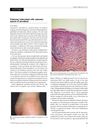
July 2002 in “Journal of the European Academy of Dermatology and Venereology” This article discusses multiple minute digitate hyperkeratosis in a dermatological context and reports no new clinical findings; the authors focus on a descriptive review.
 1 citations
,
January 2009
1 citations
,
January 2009 In this case report, a 25-year-old man with nevus comedonicus showed no improvement from keratolytics and topical tretinoin, but had success with surgical excision of the lesions.
22 citations
,
September 2014 in “JAMA dermatology” This study identified major criteria including ectodermal malformations for diagnosing ichthyosis with confetti, and revealed significant genetic variation in the disease locus within the general population.
38 citations
,
June 2005 in “International Journal of Dermatology” This case report describes a 28-year-old man with widespread pigmented basal cell carcinomas and recurrent infections that were challenging to control, associated with nevus comedonicus and a rudimentary toe.
January 2022 in “Indian journal of paediatric dermatology” This case report details an unusual instance of multiple eruptive milia in an otherwise healthy 3-month-old baby, characterized by widespread distribution and believed to be idiopathic due to the absence of associated genodermatoses.
55 citations
,
November 2010 in “Development” This study observed that in frizzled 6 null mice, initially uncorrelated hair follicle orientations develop into highly ordered patterns over time, suggesting possible mechanisms for biological structure patterning.
 18 citations
,
July 2018 in “Skin appendage disorders”
18 citations
,
July 2018 in “Skin appendage disorders” This review discusses trichoscopic features of hair disorders in individuals with dark skin phototypes and reports no new clinical results; the authors emphasize the need for more specific diagnostic criteria for these populations.
 August 2010 in “Journal of The American Academy of Dermatology”
 This educational activity reports no new research findings; it aims to help physicians assess and improve their clinical skills through self-evaluation and continued medical education.
 April 2018 in “Journal of Investigative Dermatology”
 This study found that kaempferol increased the proliferation potential of basal epidermal cells in three-dimensional skin models by enhancing integrin expression and altering cell morphology.
 12 citations
,
March 2018 in “Anais brasileiros de dermatologia/Anais Brasileiros de Dermatologia”
12 citations
,
March 2018 in “Anais brasileiros de dermatologia/Anais Brasileiros de Dermatologia” This article describes a case of frontal fibrosing alopecia in a patient with chronic lichenoid lupus erythematosus and notes the lack of similar documented cases in existing literature.