 14 citations
,
April 2019 in “International Journal of Women's Health”
14 citations
,
April 2019 in “International Journal of Women's Health” This review highlights current treatment options for frontal fibrosing alopecia, noting that 5-α-reductase inhibitors, intralesional steroids, and hydroxychloroquine have the highest evidence of effectiveness, while other therapies show variable results and need further research.
 5 citations
,
January 2020 in “Wiadomości lekarskie (Warsaw Poland)”
5 citations
,
January 2020 in “Wiadomości lekarskie (Warsaw Poland)” This study found that patients with GERD and UCTD have significantly more frequent phenotypic and visceral markers than those with GERD alone, which should inform early diagnostic and treatment strategies.
 1 citations
,
December 2018 in “Journal of genetic medicine”
1 citations
,
December 2018 in “Journal of genetic medicine” In this case report, a 20-year-old male with tricho-rhino-phalangeal syndrome was found to have a de novo frameshift mutation in the TRPS1 gene, highlighting the challenges in diagnosing this rare disorder.
 September 2020 in “Adnan Menderes Üniversitesi Sağlık Bilimleri Fakültesi Dergisi”
 This review investigates the relationship between certain gene polymorphisms associated with obesity (FTO and MC4R) and Polycystic Ovarian Syndrome, reporting no new results but suggesting a potential genetic link.
 25 citations
,
December 2005 in “Molecular Genetics and Metabolism”
25 citations
,
December 2005 in “Molecular Genetics and Metabolism” This study reports that riboflavin may increase enzymatic activity in a GCDH-deficient patient with specific mutations, but doesn't fully normalize urinary organic acid levels.
 1 citations
,
October 2023 in “Journal of the Pakistan Medical Association”
1 citations
,
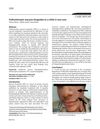
October 2023 in “Journal of the Pakistan Medical Association” This source describes a case of a 12-year-old male diagnosed with folliculotropic mycosis fungoides, presenting with an asymptomatic, erythematous plaque. Histology and immunohistochemistry confirmed FMF, which is typically rare in children and marked by follicular infiltration by CD4+ lymphocytes.
 29 citations
,
July 2010 in “Journal of Cutaneous Medicine and Surgery”
29 citations
,
July 2010 in “Journal of Cutaneous Medicine and Surgery” This study reported no significant improvement in patients with frontal fibrosing alopecia treated with various therapeutic agents, highlighting the need for more evidence-based treatments, especially in those with active disease.
 March 2024 in “Poster presentations”
 This case report describes a 43-year-old woman diagnosed with both Kikuchi-Fujimoto disease and systemic lupus erythematosus, who showed clinical improvement after treatment with glucocorticoids and hydroxychloroquine, highlighting the rare coexistence of these conditions and the ongoing uncertainty about the precise cause of Kikuchi-Fujimoto disease.
 January 2026 in “Dermatology and Therapy”
 This study suggests that using UVFD to examine non-pigmented facial lesions can potentially enhance diagnostic accuracy and reduce unnecessary biopsies.
 December 2022 in “Физиотерапия, бальнеология и реабилитация”
 This integrative literature analysis found that radiofrequency is widely used in dermatocosmetology for facial skin rejuvenation due to its high efficiency and safety, but noted a lack of comprehensive studies on radiofrequency microneedling, which may enhance safety and efficacy over traditional methods.
 September 2025 in “Dermatologic Surgery”
 This study found that combining Fractional Microneedling Radiofrequency (FMRF) with topical minoxidil significantly increased hair counts and density more than minoxidil alone or combined with Fractional CO2 in women with androgenic alopecia.
June 2026 in “British Journal of Dermatology” This case study suggests that intense inflammation after photodynamic therapy may trigger or worsen fibrosing alopecia in susceptible individuals.
 35 citations
,
October 2017 in “Signal Transduction and Targeted Therapy”
35 citations
,
October 2017 in “Signal Transduction and Targeted Therapy” This study found that fibromodulin significantly reduces scar formation and boosts scar strength in rodent and porcine models, suggesting potential for FMOD-based therapies in cutaneous wound repair.
 64 citations
,
June 2009 in “Journal of The American Academy of Dermatology”
64 citations
,
June 2009 in “Journal of The American Academy of Dermatology” This article discusses frontal fibrosing alopecia, noting potential connections to lichen planopilaris, but reports no new clinical findings.
2 citations
,
January 2023 in “Skin Appendage Disorders” This study suggests a potential role for systematic scalp examinations in first-degree relatives of patients with pattern cicatricial alopecia.
 32 citations
,
March 2014 in “PLOS ONE”
32 citations
,
March 2014 in “PLOS ONE” This study demonstrates that FMOD deficiency in mice alters TGF-β ligand and receptor expression during wound healing stages, leading to delayed wound closure and increased scar size.
3 citations
,
May 2025 in “Lasers in Surgery and Medicine” This study suggested that MRF may support skin regeneration and rejuvenation by promoting collagen synthesis and regulating factors involved in fibroblast activation and ECM remodeling, with preliminary findings indicating ADSCs might aid these processes.
107 citations
,
March 2014 in “BoneKEy Reports” This abstract reviews hereditary vitamin D-resistant rickets, a rare genetic condition causing severe early childhood rickets, and reports no new results; effective treatment typically requires high doses of calcium to address hypocalcemia and secondary hyperparathyroidism.
 19 citations
,
June 2011 in “British Journal of Dermatology”
19 citations
,
June 2011 in “British Journal of Dermatology” Severe digestive issues in DRESS need early endoscopy for better treatment.
 99 citations
,
July 2012 in “PLoS Genetics”
99 citations
,
July 2012 in “PLoS Genetics” This study identified a 69 bp deletion in the KRT75 gene as the cause of the frizzle feather trait in chickens, affecting feather curling.
1 citations
,
August 2024 in “Anais Brasileiros de Dermatologia” This review discusses the non-follicular skin manifestations of frontal fibrosing alopecia and how they affect diagnosis and treatment, but reports no new clinical results.
September 2023 in “Journal of the American Academy of Dermatology” This study examined the application of new clinical guidelines for diagnosing frontal fibrosing alopecia in 18 men, highlighting that current diagnostic criteria may often overlook early beard involvement and sideburn recession.
 8 citations
,
December 2017 in “Journal of The American Academy of Dermatology”
8 citations
,
December 2017 in “Journal of The American Academy of Dermatology” This correspondence discusses the diagnostic criteria for frontal fibrosing alopecia but reports no new research findings, agreeing with many previously suggested criteria.
 24 citations
,
October 1995 in “The Journal of clinical endocrinology and metabolism/Journal of clinical endocrinology & metabolism”
24 citations
,
October 1995 in “The Journal of clinical endocrinology and metabolism/Journal of clinical endocrinology & metabolism” This study found that the LH response to nafarelin effectively distinguished gonadotropin deficiency from constitutional delay of puberty, performing comparably to the sleep test and offering certain advantages.
January 2022 in “Chemistry: A European Journal” This study found that synchrotron radiation ECD imaging provides new insights into solid-state Finasteride by highlighting the significant role of anisotropy in local domains for chiroptical measurements.
 38 citations
,
January 2019 in “International Journal of Women's Dermatology”
38 citations
,
January 2019 in “International Journal of Women's Dermatology” This review discusses potential therapeutic options for frontal fibrosing alopecia by exploring distinct signaling pathways and cellular players, but reports no new clinical findings and emphasizes the need for further trials.
 60 citations
,
November 2009 in “General and Comparative Endocrinology”
60 citations
,
November 2009 in “General and Comparative Endocrinology” The researchers reported that during early embryogenesis and larval development in Silurana tropicalis, inhibiting steroidogenic enzymes cyp19 and srd5beta affects genes related to thyroid and reproductive systems.
 155 citations
,
September 2008 in “British journal of dermatology/British journal of dermatology, Supplement”
155 citations
,
September 2008 in “British journal of dermatology/British journal of dermatology, Supplement” This study observed that frontal fibrosing alopecia predominantly affects postmenopausal women, can be associated with lichen planus, and may lead to progressive hairline recession, though this progression is not consistent in all cases.

In this retrospective study, researchers at a Spanish hospital found that the severity of frontal fibrosing alopecia, primarily affecting postmenopausal women, was correlated with the duration of the disease, though inflammatory signs were not linked with its progression.
 March 2025 in “Journal of Clinical Medicine”
 This review discusses the unique clinical features, challenges in diagnosis, and treatment protocols of frontal fibrosing alopecia in men, noting the overlap with other types of alopecia and the need for further studies.