7 citations
,
July 2021 in “The Journal of Dermatology” This study in Asian females found that higher use of moisturizers and sunscreen among FFA patients may reflect appearance concerns rather than indicating a direct link to the disease mechanism.
 21 citations
,
October 2017 in “Journal of the European Academy of Dermatology and Venereology”
21 citations
,
October 2017 in “Journal of the European Academy of Dermatology and Venereology” This study reports that variable environmental factors, including dietary habits, may contribute to the increasing incidence and diverse clinical presentations of frontal fibrosing alopecia.
2 citations
,
June 2021 in “Sultan Qaboos University medical journal” This case report presents three sisters with familial frontal fibrosing alopecia, making it the 25th documented familial case, with treatment results observed in one sister.
August 2019 in “Journal of the American Academy of Dermatology” Frontal fibrosing alopecia may be caused by an autoimmune reaction and hormonal imbalance.
 1 citations
,
December 2022 in “Archives of Dermatological Research”
1 citations
,
December 2022 in “Archives of Dermatological Research” This study compared fluid PRF and PRP for treating atrophic acne scars and found PRF to be more effective, particularly when combined with needling. Both treatments improved scars, but PRF showed higher therapeutic response, suggesting it as a superior alternative for acne scar treatment.
 17 citations
,
February 2016 in “Experimental Dermatology”
17 citations
,
February 2016 in “Experimental Dermatology” This study found that SFRP2 enhances Wnt3a-mediated β-catenin signaling in human dermal papilla cells, with higher SFRP2 expression in beard cells correlating with increased trichogenicity.
December 2018 in “International journal of women’s dermatology” This case report highlights that frontal fibrosing alopecia may be underrecognized in young women and notes that no single treatment regimen has been proven consistently effective for this condition.
 2 citations
,
July 2022 in “Frontiers in Medicine”
2 citations
,
July 2022 in “Frontiers in Medicine” This review discusses the current understanding of frontal fibrosing alopecia's pathogenesis, highlighting genetic susceptibility, immune response involvement, and possible links to steroid hormones, but reports no new clinical results.
 November 2023 in “Indian Journal of Dermatology”
 This study from North-East India analyzed 21 cases of frontal fibrosing alopecia, noting a high prevalence in post-menopausal women and distinct histological features such as perifollicular lymphocytic infiltrate and hydropic degeneration.
April 2025 in “Australasian Journal of Dermatology” This report presents the first Australian case of familial frontal fibrosing alopecia involving a mother and daughter and seeks to differentiate clinical features between familial and sporadic cases.
 61 citations
,
January 2019 in “American Journal of Clinical Dermatology”
61 citations
,
January 2019 in “American Journal of Clinical Dermatology” This review discusses the potential causes and treatments for frontal fibrosing alopecia but reports no new clinical findings, highlighting the need for further research to understand its pathogenesis and develop validated treatments.
2 citations
,
August 2025 in “JAAD reviews.” This review discusses frontal fibrosing alopecia in males and reports no new clinical results, indicating a broader demographic affected by this inflammatory disorder beyond postmenopausal women.
8 citations
,
August 2017 in “Skin appendage disorders” Red dots on the upper chest may be an early sign of certain types of hair loss.
2 citations
,
July 2012 in “BMJ” In this case report, a woman initially misdiagnosed with rosacea was later correctly diagnosed with frontal fibrosing alopecia after further examination and treated with oral finasteride and hydroxychloroquine to stabilize her condition.
January 2013 in “Scholarworks (University of Massachusetts Amherst)” This dissertation reveals that FERONIA, a cell wall-binding receptor kinase, plays a crucial role in regulating plant functions such as sugar signaling, pollen tube reception, and RAC/ROP-mediated auxin signaling.
 8 citations
,
November 2018 in “Australasian Journal of Dermatology”
8 citations
,
November 2018 in “Australasian Journal of Dermatology” This study adds evidence suggesting a genetic component to frontal fibrosing alopecia, with daughters experiencing an earlier onset than their mothers, although the clinical pattern remains similar to non-familial cases.
 13 citations
,
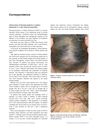
January 2018 in “International Journal of Dermatology”
13 citations
,
January 2018 in “International Journal of Dermatology” This clinical study on fibrosing alopecia in a pattern distribution among a Latin American population reports no new results but addresses this specific condition in its demographic context.
54 citations
,
November 2007 in “Actas Dermo-Sifiliográficas” Early diagnosis of frontal fibrosing alopecia is crucial to prevent permanent hair loss.
 7 citations
,
October 2015 in “Actas Dermo-Sifiliográficas”
7 citations
,
October 2015 in “Actas Dermo-Sifiliográficas” This article reviews the increasing incidence of frontal fibrosing alopecia since its first description in 1994 and reports no new results.
 3 citations
,
November 2020 in “Clinical, Cosmetic and Investigational Dermatology”
3 citations
,
November 2020 in “Clinical, Cosmetic and Investigational Dermatology” This review summarizes the current treatment modalities for frontal fibrosing alopecia and provides a practical guide for clinicians, but reports no new clinical results.
4 citations
,
April 2019 in “DOAJ (DOAJ: Directory of Open Access Journals)” This review highlights available treatments for frontal fibrosing alopecia, noting that 5-alpha reductase inhibitors, intralesional steroids, and hydroxychloroquine currently have the most evidence supporting their use, while other treatments show variable results and require further study.
 33 citations
,
January 2015 in “Journal of Cosmetic Dermatology”
33 citations
,
January 2015 in “Journal of Cosmetic Dermatology” This study reports that familial frontal fibrosing alopecia was diagnosed earlier in premenopausal women compared to postmenopausal women, though long-term outcomes remain uncertain without a definitive treatment.
October 2024 in “Skin Appendage Disorders” This study found that serum FABP4 levels were significantly higher in alopecia areata patients compared to healthy controls and may correlate with disease severity.
 2 citations
,
April 2017 in “Actas Dermo-Sifiliográficas”
2 citations
,
April 2017 in “Actas Dermo-Sifiliográficas” This review discusses the etiology, pathogenesis, clinical presentation, and treatment of frontal fibrosing alopecia, noting the lack of clinical trial data and limited observational treatment results.
 23 citations
,
November 2018 in “Journal of the European Academy of Dermatology and Venereology”
23 citations
,
November 2018 in “Journal of the European Academy of Dermatology and Venereology” This study observed that frontal fibrosing alopecia is increasingly diagnosed in Italian Caucasian females, often showing premenopausal onset and eyebrow alopecia as an early sign.
 December 2025 in “Aesthetic Cosmetology and Medicine”
 This study reported that platelet-rich fibrin (iPRF) therapy may improve scalp health and hair appearance in women, showing beneficial changes in scalp hydration, redness, oiliness, and hair density, thickness, and loss.
 25 citations
,
December 2017 in “Facial Plastic Surgery”
25 citations
,
December 2017 in “Facial Plastic Surgery” This study observed that combining high-potency steroids with pimecrolimus might effectively stabilize hairline recession in frontal fibrosing alopecia patients.
4 citations
,
June 2024 in “Journal of Cosmetic Dermatology” In this study, fractional radiofrequency treatment was found to be effective, safe, and well-tolerated for patients with erythematotelangiectatic rosacea, with high satisfaction rates.
December 2025 in “JEADV Clinical Practice” This case study reports on a 72-year-old woman with frontal fibrosing alopecia and hair repigmentation, suggesting the rare occurrence of canities reversal could aid in diagnosing FFA.
July 2021 in “British Journal of Dermatology” In this study, the researchers reported that early diagnosis and treatment of fibrosing alopecia in a pattern distribution may arrest or potentially reverse disease progression, though some patients experienced continued hair loss.