September 2010 in “International Journal of Cosmetic Science” This study describes a microfluorometric method to quantify lipid removal and reattachment on human hair during light exposure and chemical treatments, altering hair surface properties from hydrophobic to hydrophilic.
20 citations
,
January 2014 in “International Journal of Oral and Maxillofacial Surgery” This study found that using superficial temporal fascia as an interposition barrier is effective in reducing the incidence of Frey syndrome following superficial parotidectomy, compared to no barrier.
 98 citations
,
January 2013 in “Journal of The American Academy of Dermatology”
98 citations
,
January 2013 in “Journal of The American Academy of Dermatology” This study reported that while various treatments for frontal fibrosing alopecia showed limited effectiveness, dutasteride most effectively stabilized the condition among patients at Duke University.
 September 2017 in “Journal of Dermatology & Cosmetology”
 This study reports a case of frontal fibrosing alopecia associated with hepatitis C treatment involving interferon and ribavirin.
September 2018 in “The Journal of Urology” This review discusses FAERS data on 5-alpha reductase inhibitors and their potential implications for post-finasteride syndrome, but it does not report any new clinical results.
February 2018 in “Archivio Istituzionale della Ricerca (Universita Degli Studi Di Milano)” This study concluded that macrophage iron retention due to Ferroportin inactivation hinders skin wound healing but does not affect liver damage or fibrogenesis in a mouse model.
 41 citations
,
July 2017 in “Journal of The American Academy of Dermatology”
41 citations
,
July 2017 in “Journal of The American Academy of Dermatology” This study observed that frontal fibrosing alopecia also occurs in men, with clinical features and areas of involvement similar to those seen in women, but often affecting sideburns and facial hair.
325 citations
,
June 1994 in “Archives of Dermatology” This study observed that progressive frontal recession in postmenopausal women may exhibit features of fibrosing alopecia, suggesting a distinct reaction pattern from typical lichen planopilaris.
 December 2023 in “Dermatologic Surgery”
 The researchers reported that using a skin-responsive FUE device in nonscalp hair transplantation significantly reduced graft transection rates compared to older methods, improving patient satisfaction and surgeon willingness.
 1 citations
,
January 2019 in “Acta dermato-venereologica”
1 citations
,
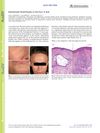
January 2019 in “Acta dermato-venereologica” The woman's skin and hair symptoms were confirmed as frontal fibrosing alopecia, and while facial papules are common in such cases, there's no effective local treatment, but systemic treatments can help.
 15 citations
,
January 2014 in “BioMed Research International”
15 citations
,
January 2014 in “BioMed Research International” This review discusses the concept of drug repositioning and highlights fragmin and protamine as emerging biomaterials for tissue engineering and regenerative medicine, but it reports no new clinical results.
26 citations
,
October 2017 in “PubMed” According to this study, systemic retinoids, specifically oral isotretinoin and acitretin, were more effective than finasteride in stabilizing the frontal hairline in female patients with frontal fibrosing alopecia, achieving treatment goals in over 70% of cases.
 3 citations
,
December 2020 in “International Journal of Women's Dermatology”
3 citations
,
December 2020 in “International Journal of Women's Dermatology” Scalp micro-wounding helps promote hair growth in female pattern hair loss.
June 2026 in “British Journal of Dermatology” This study found that individuals with frontal fibrosing alopecia have increased odds of thyroid disease, lupus erythematous, vitiligo, and heart disease, supporting the consideration of FFA as a systemic disorder.
 April 2024 in “International Journal of Women’s Dermatology”
 This case report highlights the potential for laser hair reduction treatments to trigger Fox-Fordyce disease, a chronic skin disorder, and underscores the need for awareness and management strategies among patients and clinicians.
 99 citations
,
July 2012 in “PLoS Genetics”
99 citations
,
July 2012 in “PLoS Genetics” This study identified a 69 bp deletion in the KRT75 gene as the cause of the frizzle feather trait in chickens, affecting feather curling.
 March 2024 in “Current materials science”
 This study explores the various properties of the flavonoid fisetin, highlighting its potential therapeutic applications due to its ability to modulate numerous biological pathways, suggesting benefits in conditions like inflammation, cancer, and neurodegenerative diseases.
74 citations
,
April 2017 in “JEADV. Journal of the European Academy of Dermatology and Venereology/Journal of the European Academy of Dermatology and Venereology” This study classified frontal fibrosing alopecia patients into three clinical patterns, finding that pattern III had the best prognosis and pattern II the worst after treatment with dutasteride and corticosteroids.
 18 citations
,
June 2017 in “Journal of The American Academy of Dermatology”
18 citations
,
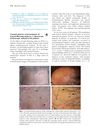
June 2017 in “Journal of The American Academy of Dermatology” In this study, trichoscopy consistently identified typical findings of frontal fibrosing alopecia, revealing three unusual clinical patterns in 18.4% of patients, which may aid in the differential diagnosis when clinical presentations are atypical.
 86 citations
,
July 2002 in “Clinical and Experimental Dermatology”
86 citations
,
July 2002 in “Clinical and Experimental Dermatology” This review discusses female pattern hair loss, emphasizing its complex causes and the limited treatment options available, and reports no new clinical results.
This study found that 54% of participants with androgenetic alopecia using Ricapil® showed clinical signs of hair follicle reactivation and initial hair regrowth over three months.
13 citations
,
August 2013 in “International Journal of Dermatology” Frontal fibrosing alopecia can affect African men and may be underdiagnosed.
 14 citations
,
April 2019 in “International Journal of Women's Health”
14 citations
,
April 2019 in “International Journal of Women's Health” This review highlights current treatment options for frontal fibrosing alopecia, noting that 5-α-reductase inhibitors, intralesional steroids, and hydroxychloroquine have the highest evidence of effectiveness, while other therapies show variable results and need further research.
 March 2024 in “Journal of cosmetic dermatology”
 This study found that oral isotretinoin significantly reduced symptoms in nearly 90% of patients with frontal fibrosing alopecia, affecting both facial papules and hair loss.
 May 2021 in “Experimental Cell Research”
 In this study, SFRP1 expression was found to be upregulated in hair follicles from men with androgenetic alopecia, with the transcription factor FOXC1 playing a significant role in its regulation.
 4 citations
,
September 2020 in “PeerJ”
4 citations
,
September 2020 in “PeerJ” This study found that platelet factor 4 in platelet-rich plasma suppresses human hair follicle growth and alters related gene expressions, suggesting potential implications for its use in hair loss treatment.
June 2026 in “British Journal of Dermatology” This study presents cases suggesting that hair transplantation may trigger de novo frontal fibrosing alopecia in some patients, highlighting a potential association worth considering as cosmetic hair procedures become more common.
 March 2025 in “Journal of Clinical Medicine”
 This review discusses the unique clinical features, challenges in diagnosis, and treatment protocols of frontal fibrosing alopecia in men, noting the overlap with other types of alopecia and the need for further studies.
May 2024 in “Reactions weekly” April 2024 in “Journal of clinical medicine” This review discusses various therapeutic options for frontal fibrosing alopecia and highlights the need for more research, as existing data are largely retrospective and lack precise treatment guidelines.