16 citations
,
January 2019 in “Aging” This study found that transgenic mice expressing a mutant CYLD protein lacking deubiquitinase function showed signs of premature aging and spontaneous tumor development, likely due to over-activation of specific molecular pathways and chronic inflammation.
28 citations
,
June 1995 in “The Journal of Dermatology” This study reports that flaky skin mice exhibit skin and nail features that closely resemble human psoriasis vulgaris, suggesting they may serve as a natural model for this condition.
71 citations
,
May 2006 in “The journal of investigative dermatology/Journal of investigative dermatology” In this study, researchers found that trichothiodystrophy hair brittleness is linked to abnormalities in sulfur content and structural organization, making it prone to breakage.
 May 2019 in “The journal of investigative dermatology/Journal of investigative dermatology”
 This study found that the dysfunction of hair follicle dermal stem cells with age contributes to hair follicle aging and hair loss in mice.
 42 citations
,
December 2016 in “Cell Death & Differentiation”
42 citations
,
December 2016 in “Cell Death & Differentiation” This study found that transient mtDNA double strand breaks in mice accelerated aging in certain tissues through increased reactive oxygen species, independent of p21/p53 pathway mediation.
 11 citations
,
March 2019 in “EMBO molecular medicine”
11 citations
,
March 2019 in “EMBO molecular medicine” This paper reviews the role of endoplasmic reticulum stress and the unfolded protein response in Hutchinson-Gilford progeria syndrome-related atherosclerosis, especially in vascular smooth muscle cells, but reports no clinical findings; intervention in these pathways is suggested as a potential therapeutic strategy.
9 citations
,
January 2015 in “Annals of dermatology/Annals of Dermatology” This retrospective study concluded that alopecia areata in elderly patients showed mild severity and a favorable treatment response, with no link found between hair graying and the extent of hair loss.
 September 2019 in “Journal of Investigative Dermatology”
 This study suggests that subtle modifications in ribosomal RNA methylation may influence cellular physiology and contribute to ribosome specialization in senescent human dermal fibroblasts.
2 citations
,
January 2018 in “International Journal of Trichology” This case report describes trichothiodystrophy in two sisters with only hair fragility, illustrating the condition's variable presentation and the importance of regular monitoring for potential associated impairments.
 295 citations
,
September 2006 in “Cell Cycle”
295 citations
,
September 2006 in “Cell Cycle” This review discusses the role of the TOR pathway in aging and suggests that rapamycin could potentially target age-related diseases, but reports no new clinical results.
 1 citations
,
November 1990 in “International Journal of Dermatology”
1 citations
,
November 1990 in “International Journal of Dermatology” This article reports no new findings; it discusses metastasis of an untreated thin melanoma in a very elderly patient.
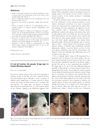 39 citations
,
July 2015 in “British Journal of Dermatology”
39 citations
,
July 2015 in “British Journal of Dermatology” This article discusses the pseudo 'fringe sign' in frontal fibrosing alopecia, highlighting that it is not solely related to traction, and it reports no new clinical results.
This article reviews current understanding of Hutchinson–Gilford Progeria Syndrome and suggests RNA-based treatments show promise, but no new clinical findings are reported.
January 2005 in “Chinese Journal of Integrated Traditional and Western Nephrology” This study found that systemic lupus erythematosus in aging patients often presents with atypical clinical manifestations, leading to more frequent misdiagnosis, yet these patients may respond better to treatment.
 October 2024 in “Benha Journal of Applied Sciences”
 This study examined the association between aging and androgenetic alopecia, suggesting a strong interplay among chronic inflammation, metabolic dysregulation, and increased oxidative stress as contributing factors.
 April 2015 in “Experimental Dermatology”
 Melanoma risk tools need improvement, certain gene mutations cause skin diseases and could be treated by targeting those mutations, skin wrinkling may relate to lung aging due to genetic factors, and oxidative stress affects hair loss but can be reduced in low oxygen.
122 citations
,
April 2020 in “American Journal Of Pathology” This review discusses the multiple factors contributing to skin aging, including cellular changes and environmental influences, and highlights its recognition as a disease with significant implications beyond cosmetic concerns, without reporting new research results.
42 citations
,
September 2012 in “PLoS ONE” In this study, bezafibrate treatment improved certain aging-like features in a mouse model with mitochondrial dysfunction, but did not enhance muscle function or lifespan.
 1 citations
,
July 2017 in “Journal of evolution of medical and dental sciences”
1 citations
,
July 2017 in “Journal of evolution of medical and dental sciences” In this study, common skin conditions in the geriatric population of Kerala were found to be widely prevalent, with significant associations between xanthelasma palpebrarum and dyslipidemia, and between cherry angioma and diabetes.
 7 citations
,
January 2016 in “Hair therapy & transplantation”
7 citations
,
January 2016 in “Hair therapy & transplantation” This study reported significantly lower levels of serum iron, ferritin, and calcium in young patients with premature gray hair compared to controls, implying that supplementation might prevent further graying.
2 citations
,
January 2015 5 citations
,
June 1993 in “Pediatric dermatology” Monilethrix Syndrome causes fragile, beaded hair that breaks easily and needs early diagnosis for better care.
 16 citations
,
July 2012 in “The New England Journal of Medicine”
16 citations
,
July 2012 in “The New England Journal of Medicine” This case report describes a 27-year-old man hospitalized with fatigue, myalgias, weakness, profound weight loss, and abnormal liver function, leading to a diagnosis after chest imaging revealed pneumomediastinum.
September 2017 in “Journal of Investigative Dermatology” Loss of COL17A1 causes hair follicle stem cells to age and leads to hair loss.
July 2007 in “Cancer biology & therapy” In this study, researchers found that deleting the ATR gene in adult mice led to signs of premature aging and reduced capacity for tissue renewal.
 April 2017 in “Journal of Investigative Dermatology”
 This study identified that dominant mutations in the KLHL24 gene cause epidermolysis bullosa through dysregulated autoubiquitination, leading to excessive degradation of keratin 14.
 4 citations
,
July 2014 in “Journal of Investigative Dermatology”
4 citations
,
July 2014 in “Journal of Investigative Dermatology” This study suggests that age-related regenerative decline in hair follicles may be due to an imbalance of signals affecting stem cell activation, with follistatin potentially promoting renewal.
 10 citations
,
December 2024 in “EXPERIMENTAL ANIMALS”
10 citations
,
December 2024 in “EXPERIMENTAL ANIMALS” This study found that aged C57BL/6 mice sub-strains exhibit distinct aging patterns, including differences in survival rates, body weight changes, and disease incidences, providing valuable insights for geriatric research using these mice models.
1 citations
,
April 2015 in “Munich Personal RePEc Archive (Ludwig Maximilian University of Munich)” This study found that early clinical markers of androgenic alopecia, such as peripilar signs and hair diameter diversity, are linked to inflammatory infiltrates and hair follicle miniaturization, while iron status is linked to hair loss in pre-menopausal women.
 June 2020 in “IP Indian journal of clinical and experimental dermatology”
 This observational study reported that primary ageing dermatoses were more common than non-ageing dermatoses among elderly patients, especially among those with pre-existing skin conditions.