October 2023 in “Journal of Mind and Medical Sciences” In this study, metabolic surgery led to a weight loss of 10.8 to 12.6 kg and improvement in body composition and HbA1c levels among patients from North-Eastern Romania, with nutritional intervention proving safe over six months.
 4025 citations
,
December 2003 in “Human Reproduction”
4025 citations
,
December 2003 in “Human Reproduction” This review discusses the evolution of diagnostic criteria for polycystic ovary syndrome and emphasizes its association with various metabolic and cardiovascular risks, but it provides no new research findings.
 414 citations
,
August 2005 in “The Journal of Clinical Endocrinology and Metabolism”
414 citations
,
August 2005 in “The Journal of Clinical Endocrinology and Metabolism” This study estimates the total cost of evaluating and treating polycystic ovary syndrome in reproductive-aged women in the United States to be $4.36 billion, suggesting more liberal screening could be beneficial.
 343 citations
,
December 2008 in “Endocrine Reviews”
343 citations
,
December 2008 in “Endocrine Reviews” This review discusses the various evidence-based and potential applications of metformin in treating and preventing symptoms and complications associated with polycystic ovary syndrome but reports no new clinical results.
 88 citations
,
June 2016 in “Human Reproduction Update”
88 citations
,
June 2016 in “Human Reproduction Update” This review discusses developments in oral contraceptives, highlighting improved individualization, reduced side effects, and enhanced suitability for various women's health needs, but it reports no new clinical results.
 75 citations
,
June 1999 in “Pediatric Clinics of North America”
75 citations
,
June 1999 in “Pediatric Clinics of North America” This review discusses the clinical features and therapeutic goals for teenagers with PCOS, emphasizing the need for further research into its causes and potential long-term health risks, but reports no new clinical results.
 62 citations
,
April 2013 in “Steroids”
62 citations
,
April 2013 in “Steroids” This review discusses the age-related diagnostic challenges and comorbidities of polycystic ovarian syndrome and provides no new clinical findings; the authors emphasize the role of obesity in insulin resistance among affected women.
 29 citations
,
March 2015 in “Clinical Endocrinology”
29 citations
,
March 2015 in “Clinical Endocrinology” This study found that women with polycystic ovary syndrome in the UK show significant differences in phenotypic and metabolic characteristics based on ethnicity, age, and obesity, influencing management strategies.
 26 citations
,
November 2011 in “Arquivos Brasileiros De Endocrinologia E Metabologia”
26 citations
,
November 2011 in “Arquivos Brasileiros De Endocrinologia E Metabologia” This review highlights that hyperandrogenism is a crucial factor for diagnosing PCOS during adolescence, while traditional criteria like polycystic ovarian morphology may be misleading.
 18 citations
,
December 2016 in “Phytomedicine”
18 citations
,
December 2016 in “Phytomedicine” In this study, applying 1% or 5% Curcuma aeruginosa essential oil lotion to the underarm for 10 weeks significantly slowed hair growth and brightened skin in young women, with no adverse effects reported.
14 citations
,
February 2021 in “Open Forum Infectious Diseases” In this study, 84% of postacute COVID-19 patients experienced at least one persistent symptom 60 days after hospital discharge, regardless of initial disease severity.
 6 citations
,
October 2010 in “Gynecological Endocrinology”
6 citations
,
October 2010 in “Gynecological Endocrinology” This study found that relatives of women with symptoms of oligo-amenorrhoea and hirsutism experienced higher rates of hirsutism, menstrual disorders, infertility, childlessness, diabetes, and hypertension compared to relatives of symptomless women.
5 citations
,
July 2022 in “Frontiers in Medicine” In this study, the combination of ECM-C with microneedle and radiofrequency treatments improved periorbital wrinkles, skin elasticity, and thickness more effectively than ECM-C with microneedles alone, but subjective evaluations showed no significant differences.
 4 citations
,
March 2013 in “Neuropsychiatric Disease and Treatment”
4 citations
,
March 2013 in “Neuropsychiatric Disease and Treatment” This case report describes a rare instance of a patient with anorexia nervosa who was subsequently diagnosed with Cushing's syndrome, highlighting diagnostic challenges due to overlapping symptoms.
 3 citations
,
June 2023 in “European heart journal open”
3 citations
,
June 2023 in “European heart journal open” This study found that oligo-amenorrhea/menstrual irregularity in women is associated with an increased risk of overall cardiovascular disease, coronary heart disease, and myocardial infarction, while evidence linking hyperandrogenism or polycystic ovaries to cardiovascular disease remains mixed or unexplored.
 2 citations
,
March 2016 in “InnovAiT”
2 citations
,
March 2016 in “InnovAiT” This article discusses the signs, symptoms, and associated risks of polycystic ovary syndrome, without providing new clinical results; it emphasizes the link between being overweight and increased metabolic risks.
 1 citations
,
April 2016 in “Journal of The American Academy of Dermatology”
1 citations
,
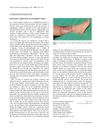
April 2016 in “Journal of The American Academy of Dermatology” A woman had a delayed allergic reaction to the blood thinner enoxaparin, treated with a steroid cream.
 1 citations
,
May 2002 in “British Journal of Dermatology”
1 citations
,
May 2002 in “British Journal of Dermatology” This article provides an overview of hair density, hair diameter, and the prevalence of female pattern hair loss but reports no new clinical findings.
 February 2025 in “IntechOpen eBooks”
 This chapter examines how hormonal changes during the postpartum period, alongside various external factors, impact mother and infant well-being, addressing challenges like postpartum depression, fatigue, and healthcare access, while stressing the need for improved medical training focused on maternal and fetal health.
 April 2024 in “Journal of burn care & research”
 This study found that neck defect size was more relevant than total body surface area for predicting contracture recurrence after burn injury, suggesting increased attention to defect size in managing such cases.
 June 2018 in “Journal of Clinical Periodontology”
 Finasteride may cause gum problems, but stopping the drug can improve these issues.
 July 2015 in “Cambridge University Press eBooks”
 The document concludes that careful history and physical exams are crucial for accurately diagnosing polycystic ovary syndrome and distinguishing it from other similar conditions.
 May 2010 in “Current Women's Health Reviews”
 This article reviews the challenges and importance of diagnosing and managing PCOS, especially in adolescent girls, and reports no new clinical findings; the authors emphasize early intervention.
 January 2026 in “AYUSHDHARA”
 This case study highlights that an Ayurvedic treatment approach involving Basti Chikitsa and Tilmooladi Churna over 3 months may improve menstrual regularity and hormonal profiles in a woman with polycystic ovary syndrome.
 May 2002 in “British Journal of Dermatology”
 This brief article is a response from the authors about hair density, hair diameter, and female pattern hair loss, and it reports no new clinical findings.
 16 citations
,
January 2017 in “Anais brasileiros de dermatologia/Anais Brasileiros de Dermatologia”
16 citations
,
January 2017 in “Anais brasileiros de dermatologia/Anais Brasileiros de Dermatologia” This case study discusses a postmenopausal woman's frontal fibrosing alopecia and lichen planus pigmentosus, controlled with corticosteroids and finasteride, highlighting diagnostic and therapeutic challenges in scarring alopecia.
 16 citations
,
March 2014 in “Journal of the European Academy of Dermatology and Venereology”
16 citations
,
March 2014 in “Journal of the European Academy of Dermatology and Venereology” This study found that acne was the most common dermatological manifestation in Korean women with polycystic ovary syndrome, particularly those with a specific combination of symptoms, showing distinct variations in serum hormonal and metabolic parameters.
 1 citations
,
November 2023
1 citations
,
November 2023 This study examined the prevalence and management of PCOD, finding that it primarily affects unmarried women aged 18-25, causing symptoms like irregular periods and infertility, with many opting for medication and lifestyle changes despite mixed beliefs about their effectiveness.
 January 2021 in “Journal of Scientific Research of the Banaras Hindu University”
 In this study of young adults in Angamaly, only 5% were found to have Polycystic Ovary Syndrome, with dietary choices playing an important role in symptom management.
 108 citations
,
August 2017 in “Clinical, Cosmetic and Investigational Dermatology”
108 citations
,
August 2017 in “Clinical, Cosmetic and Investigational Dermatology” This review highlights microneedling's promise as an adjuvant therapy for enhanced drug delivery in dermatology, especially for conditions like atrophic scars and pigmentation disorders, though its efficacy for vitiligo is limited.