 13 citations
,
August 2002 in “Dermatologic Surgery”
13 citations
,
August 2002 in “Dermatologic Surgery” This paper introduces Follicular Unit Extraction and reports the FOX Test can identify suitable candidates, with about 25% of patients being ideal and 35% being good candidates for the procedure.
 61 citations
,
January 2019 in “American Journal of Clinical Dermatology”
61 citations
,
January 2019 in “American Journal of Clinical Dermatology” This review discusses the potential causes and treatments for frontal fibrosing alopecia but reports no new clinical findings, highlighting the need for further research to understand its pathogenesis and develop validated treatments.
4 citations
,
April 2018 in “Journal of vacuum science and technology. B, Nanotechnology & microelectronics” This study demonstrated the potential of a methodology combining ToF-SIMS and AFM to effectively analyze human hair structure and identify cosmetic residues, which can aid the cosmetic industry in product development.
 5 citations
,
August 2014 in “Journal of The American Academy of Dermatology”
5 citations
,
August 2014 in “Journal of The American Academy of Dermatology” This article notes slow progression and spontaneous stabilization in untreated cases of a specific scarring alopecia and reports no new results; the authors call for randomized trials to confirm the treatment's benefit.
 1 citations
,
September 2021 in “CRC Press eBooks”
1 citations
,
September 2021 in “CRC Press eBooks” This chapter reviews trichoscopic-pathologic correlations in Frontal Fibrosing Alopecia and reports no new clinical results; the authors discuss genetics, clinical patterns, and unusual variants associated with this condition.
November 2009 in “Hair transplant forum international” This piece presents no new research findings; it briefly mentions opinions on Female Pattern Hair Loss and the importance of increasing awareness.
February 2025 in “Actas Dermo-Sifiliográficas” This study found that oral minoxidil can improve hair and eyebrow growth and increase the density of the frontotemporal hairline in patients with FFA, though adverse effects were reported by a third of participants.
April 2019 in “Journal of Investigative Dermatology” This study found that frontal fibrosing alopecia involves distinct molecular changes, such as downregulation of steroid and cholesterol pathways and upregulation of fibrotic and immune response genes, which may help guide treatment strategies.
 February 2024 in “Skin research and technology”
 The researchers in this study identified molecular mechanisms involved in frontal fibrosis alopecia, highlighting immune response and fatty acid metabolism, and developed a four-gene diagnostic model showing high accuracy in distinguishing affected individuals from controls.
 October 2020 in “International Journal of Research in Dermatology”
 This review discusses the possible immune-mediated and environmental factors contributing to frontal fibrosing alopecia but reports no new clinical findings, emphasizing the need for standardized treatment evaluations.
 10 citations
,
June 2005 in “The journal of investigative dermatology/Journal of investigative dermatology”
10 citations
,
June 2005 in “The journal of investigative dermatology/Journal of investigative dermatology” This study identified FP-1 as a highly specific extracellular matrix protein in follicular papilla cells, which may play a role in hair growth regulation during specific hair cycle phases.
 1 citations
,
June 2022 in “International Journal of Dermatology”
1 citations
,
June 2022 in “International Journal of Dermatology” FFA in men shows unique features and treatment results vary widely.
 18 citations
,
June 2017 in “Journal of The American Academy of Dermatology”
18 citations
,
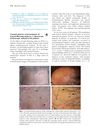
June 2017 in “Journal of The American Academy of Dermatology” In this study, trichoscopy consistently identified typical findings of frontal fibrosing alopecia, revealing three unusual clinical patterns in 18.4% of patients, which may aid in the differential diagnosis when clinical presentations are atypical.
 16 citations
,
February 2022 in “Science Advances”
16 citations
,
February 2022 in “Science Advances” This study found that coactivating LIN28B and follistatin enhances cochlear supporting cells' ability to regenerate hair cells in neonatal mice by reprogramming them into progenitor-like cells.
 1 citations
,
July 2023 in “Nature communications”
1 citations
,
July 2023 in “Nature communications” This study found that deleting the Mof gene in mouse skin leads to severe defects in skin cell self-renewal, differentiation, and hair follicle growth, indicating that MOF is crucial for mitochondrial and ciliary gene expression and essential for skin development.
 July 2019 in “Faculty Opinions – Post-Publication Peer Review of the Biomedical Literature”
 Activin A speeds up ear hair cell differentiation, while Follistatin slows it down.
2 citations
,
July 2012 in “BMJ” In this case report, a woman initially misdiagnosed with rosacea was later correctly diagnosed with frontal fibrosing alopecia after further examination and treated with oral finasteride and hydroxychloroquine to stabilize her condition.
 53 citations
,
May 2010 in “Dermatologic Surgery”
53 citations
,
May 2010 in “Dermatologic Surgery” This article appears to be a table of contents or navigation page for a journal, not presenting any new findings or research results.
2 citations
,
August 2025 in “JAAD reviews.” This review discusses frontal fibrosing alopecia in males and reports no new clinical results, indicating a broader demographic affected by this inflammatory disorder beyond postmenopausal women.
 6 citations
,
January 2019 in “Medical Hypotheses”
6 citations
,
January 2019 in “Medical Hypotheses” This hypothesis article explores frontal fibrosing alopecia as a potential autoimmune condition and calls for future research to investigate this possibility, but reports no new clinical results.
 3 citations
,
February 2022 in “Dermatology practical & conceptual”
3 citations
,
February 2022 in “Dermatology practical & conceptual” This study found that trichoscopy is an effective noninvasive technique for diagnosing frontal fibrosing alopecia, confirming its valuable role alongside traditional histopathological examination.

In this retrospective study, researchers at a Spanish hospital found that the severity of frontal fibrosing alopecia, primarily affecting postmenopausal women, was correlated with the duration of the disease, though inflammatory signs were not linked with its progression.
 8 citations
,
October 2016 in “Actas Dermo-Sifiliográficas”
8 citations
,
October 2016 in “Actas Dermo-Sifiliográficas” This study found that men with frontal fibrosing alopecia exhibited more frequent facial papules, androgenetic alopecia, and body hair loss compared to women with the condition, and were generally older.
 81 citations
,
January 2003 in “The FASEB Journal”
81 citations
,
January 2003 in “The FASEB Journal” This study found that follistatin and activin interactions are important for hair follicle development and cycling in mice, suggesting that they may regulate processes involving BMP-2 and its antagonist.
 1 citations
,
January 2022 in “Journal of Pharmaceutical Sciences”
1 citations
,
January 2022 in “Journal of Pharmaceutical Sciences” This study developed a stable, cosmetically appealing formulation for the topical delivery of the peptide FOL-005, enhancing skin permeation and maintaining stability by keeping the peptide solid and in a water-free environment with particle sizes under 10 µm.
 January 2025 in “Indian Journal of Dermatology”
 This review discusses the various factors implicated in the etiology of frontal fibrosing alopecia and notes the need for effective treatments, reporting no new clinical findings.
 April 2023 in “The journal of investigative dermatology/Journal of investigative dermatology”
 This study revealed distinct cellular and transcriptomic differences among various subtypes of cutaneous T-cell lymphoma, particularly highlighting characteristics unique to folliculotropic mycosis fungoides.
159 citations
,
August 2010 in “British journal of dermatology/British journal of dermatology, Supplement” In this study, hydroxychloroquine significantly reduced signs and symptoms of frontal fibrosing alopecia after 6 months of treatment, with maximal benefits observed within the first 6 months.
 23 citations
,
April 2021 in “Journal of Clinical Medicine”
23 citations
,
April 2021 in “Journal of Clinical Medicine” This review compiles existing data on frontal fibrosing alopecia and highlights the promise of 5-alpha reductase inhibitors as a treatment option, while noting the need for clarity on its cause and progression.

This study describes a system called FOLLYSIS©, which uses mathematics and image analysis to optimize Follicular Unit Extraction hair transplants, showing high accuracy in measuring donor area density and reducing donor site injury.