This study suggests bee venom acupuncture therapy may enhance hair follicle growth by increasing the expression of cytokines, enzymes, and receptors associated with the hair growth cycle.
 January 2025 in “International Journal of Advanced Biochemistry Research”
 In this study from a veterinary college, three cats with notoedric mange were treated with weekly subcutaneous injections of Ivermectin (0.2 mg/kg) combined with supportive therapy, leading to successful recovery over four weeks.
 December 2025 in “Therya notes”
 In this study, researchers documented the first instance of alopecia in bats within the Puebla region, specifically affecting two Artibeus jamaicensis and one Choeronycteris mexicana, possibly linked to environmental stress from human activities interfering with their nutrition.
 January 2024 in “Arquivo Brasileiro de Medicina Veterinária e Zootecnia/Arquivo brasileiro de medicina veterinária e zootecnia”
 This study reports that treating a feline with progressive pruritus, alopecia, and FIV infection with imidacloprid and moxidectin resulted in remission of clinical signs and elimination of Demodex cati mites, as confirmed by parasitological examination and genetic sequencing.
March 2023 in “Italian journal of dermatology and venereology” 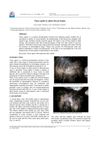
This report presents the first known case of tinea capitis caused by Microsporum canis in an adult female in the authors' locality, responsive to oral fluconazole treatment.
 June 2025 in “Deleted Journal”
 In this case report, two Persian cats with Lynxacarus radovskyi fur mites and symptoms like mild alopecia and pruritus fully recovered after receiving selamectin spot-on treatment monthly for three months.
 91 citations
,
July 2004 in “BMJ. British medical journal”
91 citations
,
July 2004 in “BMJ. British medical journal” This review covers the epidemiology, clinical features, and treatment of four common skin infections in children, reporting no new experimental findings.
 October 2024 in “Cermin Dunia Kedokteran”
 This article discusses the surveillance and spread of hand, foot, and mouth disease in China, Singapore, and Indonesia, and reports no new results, emphasizing the need for improved prevention and management strategies.
 January 2021 in “Indian journal of sexually transmitted diseases and AIDS”
 A dermatologist helped identify syphilis in a teenager who only had hair loss.
 August 2023 in “Journal of animal research”
 In this study, 22 pet rabbits with symptoms of itching and hair loss were found to have mite infestations, which were successfully treated with a combination of medications including ivermectin, resulting in recovery within 45 days.
 January 2020 in “International journal of medical parasitology and epidemiology sciences”
 This case report suggests that Demodex infection should be considered in patients with facial scaling and itching, as observed in a 36-year-old woman in Tabriz testing positive for the mites.
December 2024 in “PLoS ONE” In this study, researchers observed that alopecia prevalence varies in gray bats throughout the summer, with higher rates in lactating females, who also exhibit more severe lesions, but found no link between subcutaneous mites and fur loss.
 1 citations
,
August 2022 in “International journal of women’s dermatology”
1 citations
,
August 2022 in “International journal of women’s dermatology” This case report suggests that intradermal botulinum toxin type A may alleviate pruritus and reduce papules in Fox-Fordyce disease, improving quality of life without serious adverse effects for at least six months.
26 citations
,
February 1991 in “PubMed” This case report highlights trichotillomania's distinguishing "tonsure pattern" and nail-biting, emphasizing the need to differentiate it from other hair loss types due to differing treatments.
30 citations
,
June 2013 in “Optometry and vision science” This study reports that a clinical sequence can help eye care practitioners identify Demodex mites, which are often underdiagnosed and undertreated in ocular surface diseases.
 August 2020 in “Egyptian Veterinary Medical Society of Parasitology Journal (EVMSPJ)”
 In this study, 10.5% of sheep examined in Ismailia, Egypt, were infested with Sarcoptes scabiei, showing specific molecular and skin alterations.
February 2016 in “Journal of Allergy and Clinical Immunology” This report highlights a case of disseminated and recurrent infundibulofolliculitis in a 45-year-old African American male and underscores the importance of performing a skin biopsy for diagnosis.
June 2020 in “Comparative medicine” The study reported that Demodex musculi infestation was notably higher in immunodeficient mice, while infested immunocompetent mice, particularly the BALB/c strain, showed increased IgE levels and developed alopecia over time.
1 citations
,
March 2024 in “Oxford Medical Case Reports” In this case study, researchers reported that moth-eaten alopecia was the only clinical sign of secondary syphilis in a 28-year-old man from Nepal, and treatment with Benzathine Penicillin G led to complete hair regrowth within four months.
 8 citations
,
January 2007 in “International journal of experimental pathology”
8 citations
,
January 2007 in “International journal of experimental pathology” This study observed that hairless HRS/J mice were resistant to Bacillus anthracis infection at the skin's surface, suggesting resistance may be due to increased dermal neutrophils rather than non-functional hair follicles.
 6 citations
,
February 2015 in “Journal of parasitic diseases”
6 citations
,
February 2015 in “Journal of parasitic diseases” This case report describes a sarcoptic mange outbreak caused by Trixacarus caviae in a guinea pig breeding colony, which was successfully treated with subcutaneous ivermectin injections and preventive spraying.
 14 citations
,
January 2008 in “Medical mycology”
14 citations
,
January 2008 in “Medical mycology” This study reported intra-familial transmission of Arthroderma benhamiae among Canadian porcupines in a Japanese zoo, with genetic sequences previously undocumented in Japan or the GenBank database.
May 2019 in “Small Animal Dermatology” In this chapter, a 7-year-old cat's hair loss was explored, with flea bite hypersensitivity considered the most likely cause, but other reasons for excessive grooming could not be ruled out; effective ongoing flea control was suggested as a practical approach leading to a good prognosis.
 March 2012 in “Journal of The American Academy of Dermatology”
 Hair casts are often mistaken for head lice, scalp pain in hair loss is linked to certain nerve factors, eyelash growth treatment is safe and effective, and nail shedding in children may follow hand-foot-mouth disease.
This chapter reviews various fungal zoonoses, including dermatophytoses and trichophytosis, and reports no new empirical findings.
 January 2024 in “Editora In Vivo eBooks”
 In this case report, the authors describe a female dog with alopecia in the neck and ear region, affected by dermatophytosis caused by the zoophilic fungus Microsporum canis, highlighting its zoonotic potential and prevalence in certain climates.

This study found that subcutaneous administration of Botulinum toxin type A significantly reduced histamine-induced itch intensity and neurogenic inflammation in human skin compared to saline.
 8 citations
,
January 2015 in “International journal of trichology”
8 citations
,
January 2015 in “International journal of trichology” In this case report, the authors describe complete recovery from acute diffuse and total alopecia linked to Borrelia infection after treatment with intravenous ceftriaxone and topical clobetasol foam.
 May 2023 in “Archiv EuroMedica”
 In this article, a rare case of black piedra, a zoonotic hair disease typically found in tropical climates, was documented in Russia due to close contact between an infected and a healthy person, with insights into its epidemiology, clinical presentation, diagnostic methods, and treatment discussed.