79 citations
,
June 1991 in “Journal of Medical Genetics” This article discusses the classification of mental retardation based on IQ ranges and provides no new experimental findings.
21 citations
,
January 2006 in “Hormone Research in Paediatrics” In this case study, a girl with hereditary vitamin D resistant rickets had a novel mutation in the VDR gene that affected hair cycling without causing total alopecia, suggesting ligand-independent VDR function in hair cycling.
 November 2023 in “Deleted Journal”
 In this study, the researchers found no superiority of combining 308-nm excimer laser with intralesional corticosteroid over corticosteroid alone for treating frontal fibrosing alopecia, and reported side effects such as erythema and postinflammatory hyperpigmentation in both treatment groups.
 3 citations
,
January 2021 in “Applied sciences”
3 citations
,
January 2021 in “Applied sciences” This study found that in C57BL/6 mice, treatment with fermented red ginseng marc, a traditional polyherb formula, or a combination of both, promoted hair growth by enhancing the hair-growth cycle.
 25 citations
,
December 2005 in “Molecular Genetics and Metabolism”
25 citations
,
December 2005 in “Molecular Genetics and Metabolism” This study reports that riboflavin may increase enzymatic activity in a GCDH-deficient patient with specific mutations, but doesn't fully normalize urinary organic acid levels.
 March 2026 in “Dermatology Reports”
 This study found that frontal fibrosing alopecia had higher long-term remission rates compared to lichen planopilaris, highlighting differences in their clinical presentations and outcomes.
2 citations
,
June 2023 in “Research in Pharmaceutical Sciences” Bhamrung-Lohit may help with inflammation and oxidation.
 February 2022 in “Journal of Cosmetic Dermatology”
 This study suggests that systemic oxidative stress in female pattern hair loss may be related to NRF2 deficiency, and NRF2 activators might assist in treatment.
23 citations
,
June 1992 in “PubMed” This study found that RAR-gamma 1 mRNA is present in multiple skin layers and structures, suggesting a role in maintaining and differentiating normal epidermis and skin appendages.
 January 2019 in “Springer eBooks”
 This chapter discusses procedural therapies like platelet-rich plasma and low-level light therapy for androgenetic alopecia, but reports no new clinical findings.
 17 citations
,
September 2022 in “Genes & Genomics”
17 citations
,
September 2022 in “Genes & Genomics” In this study, researchers identified specific long non-coding RNAs involved in feather development that do not follow traditional genetic inheritance patterns in chickens.
January 2013 in “Anti-infection Pharmacy” This review discusses the pharmacological and dermatological uses of Ligustri Lucidi Fructus and its components, such as anti-inflammation, anti-allergy, anti-dermatotumor effects, and hair growth promotion, but reports no new clinical results.
 April 2018 in “The journal of investigative dermatology/Journal of investigative dermatology”
 This study identified a novel mechanism by which dsRNA-induced TLR3 activation and retinoic acid pathways contribute to new hair follicle formation after deep wounds in mice and suggested a similar potential in humans.
October 2021 in “Scholarworks (University of Massachusetts Amherst)” This dissertation demonstrates that FERONIA regulates essential plant functions such as RAC/ROP signaling, pollen tube reception, cell wall integrity, and sugar signaling as a cell surface receptor kinase.
 April 2018 in “Journal of Investigative Dermatology”
 This study found that high skin expression of amphiregulin in acute graft-versus-host disease was associated with severe disease grade, poor overall survival, and increased non-relapse mortality.
 February 2009 in “Journal of The American Academy of Dermatology”
 This study found that fractional infrared technology may improve skin laxity and thickness in the cervical area without side effects in a small group of patients.

This study found that TLR2 and its ligand CEP are crucial for maintaining hair follicle health and stimulating hair growth, with deficiencies observed in aging and obesity potentially reducing regeneration.

This study found that mouse type II spiral ganglion neurites in vitro avoided laminin and high concentrations of fibronectin, indicating both can guide neurite paths differently than type I neurites.
January 2020 in “Journal of clinical and cosmetic dermatology” This article reviews the etiology of FPHL, distinguishing between androgen-dependent and androgen-independent forms, but reports no new clinical findings; it highlights the need to better understand its pathogenesis.
 99 citations
,
July 2012 in “PLoS Genetics”
99 citations
,
July 2012 in “PLoS Genetics” This study identified a 69 bp deletion in the KRT75 gene as the cause of the frizzle feather trait in chickens, affecting feather curling.
 April 2026 in “Zenodo (CERN European Organization for Nuclear Research)”
 This paper provides an auditable companion package for their exploratory re-analysis of miRNA dysregulation and target enrichment in female pattern hair loss cases, focusing on candidate-level results from a public dataset comparison between affected individuals and healthy controls.
65 citations
,
September 2023 in “Cell Reports Medicine” This review examined the common side effects of FGFR inhibitors like erdafitinib, pemigatinib, and futibatinib, and detailed strategies for managing them, highlighting that proactive monitoring and appropriate interventions can effectively mitigate these toxicities.
 28 citations
,
October 2004 in “Differentiation”
28 citations
,
October 2004 in “Differentiation” This study identified a large deletion in the desmoglein 4 gene as the genetic basis of the Iffa Credo "hairless" rat's skin phenotype, linking it to lanceolate hair mutations.
13 citations
,
November 2005 in “Endocrinology” This study explored the secretion and cellular localization of different forms of follistatin and FST-like-3, revealing variable secretion kinetics and possible intracellular roles, particularly for nuclear FSTL3.
 25 citations
,
March 2013 in “British Journal of Dermatology”
25 citations
,
March 2013 in “British Journal of Dermatology” Woman has discoid lupus, frontal fibrosing, and androgenetic alopecia.
 February 2024 in “Planta”
 This study found that TRM21 acts as a positive regulator of flavonoid biosynthesis at the translational level in Arabidopsis, leading to changes in root hair growth and a decrease in flavonoid content when TRM21 is mutated.
 63 citations
,
October 2011 in “Archives of Dermatology”
63 citations
,
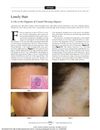
October 2011 in “Archives of Dermatology” Isolated long hairs at the original hairline can help diagnose Frontal Fibrosing Alopecia.
This study found that TLR2 in hair follicle stem cells is crucial for maintaining hair health and regeneration, and its decrease in aging and obesity may impair hair growth, suggesting that stimulation through its ligand carboxyethylpyrrole could offer new therapeutic avenues.