2 citations
,
August 2021 in “Animal Cells and Systems” This study suggests that egfl6 expression in the pharyngeal pouches is not essential for craniofacial development in zebrafish.
 September 2024 in “Cermin Dunia Kedokteran”
 This article reviews Frambusia, a skin-contact-spread tropical infection, and stresses improving medical professionals' diagnostic and treatment skills to achieve the WHO's eradication target by 2030, without reporting new results.
13 citations
,
May 2001 in “Current problems in dermatology” Keratin proteins in epithelial cells are dynamic and crucial for cell processes and disease understanding.
This document supplements a study on androgenetic alopecia, describing materials and methods, and includes figures showing fibrosis in the bulge region of miniaturized hair follicles.
10 citations
,
October 2009 in “Photomedicine and laser surgery” This study found that intense pulsed light treatment achieved a mean of 85% hair reduction in two patients with faun tail, although local anesthesia may be needed due to severe pain associated with neurological abnormalities.
 9 citations
,
January 2001 in “Dermatology”
9 citations
,
January 2001 in “Dermatology” This study reports two cases where pili anulati, typically a non-fragile hair condition, showed increased fragility due to androgenetic alopecia, causing hair shaft fracturing in the affected area.
2 citations
,
June 2024 in “Skin Appendage Disorders” This study identifies specific trichoscopic features such as empty follicles and perifollicular erythema in Caucasians with frontal fibrosing alopecia, which may assist in diagnosis and monitoring, but stresses the need for further research due to limited demographic data.
 10 citations
,
June 2005 in “The journal of investigative dermatology/Journal of investigative dermatology”
10 citations
,
June 2005 in “The journal of investigative dermatology/Journal of investigative dermatology” This study identified FP-1 as a highly specific extracellular matrix protein in follicular papilla cells, which may play a role in hair growth regulation during specific hair cycle phases.
7 citations
,
July 2021 in “The Journal of Dermatology” This study in Asian females found that higher use of moisturizers and sunscreen among FFA patients may reflect appearance concerns rather than indicating a direct link to the disease mechanism.
1 citations
,
May 2020 in “bioRxiv (Cold Spring Harbor Laboratory)” In this study, researchers identified a temperature-sensitive mutation in the FERONIA gene of plants that prevents root hair formation at elevated temperatures, highlighting its role in maintaining root hair growth and response to plant hormones.
 July 2025 in “New Phytologist”
 This study demonstrated that the FER/MLO signaling module regulates calcium dynamics and ROS accumulation in root hair growth, with the constitutively active MLO (faNTA) able to restore normal development and signaling in specific mutant genotypes, highlighting MLO15's role in root hair tip growth regulation.
39 citations
,
January 2006 in “Journal of Cosmetic and Laser Therapy” This study found that pneumatic skin flattening (PSF) significantly reduces pain and post-treatment erythema during high-energy IPL and laser hair removal while enhancing treatment efficacy.
 December 2023 in “The journal of physical chemistry. B (1997 : Online)”
 This study explored the potential of human hair keratin as a filtration material, finding that it may effectively absorb the pollutants diclofenac and perfluorobutanesulfonate. The researchers reported significant binding affinities through molecular simulations, supporting further investigation into keratin's use for water purification.
September 2018 in “Digital Access to Scholarship at Harvard (DASH) (Harvard University)” In this study, FN-based fiber scaffolds designed using Rotary Jet-Spinning were shown to enhance wound healing and reduce scar formation in a mouse model, suggesting potential for regenerating healthy skin structure.
 31 citations
,
April 2010 in “British journal of dermatology/British journal of dermatology, Supplement”
31 citations
,
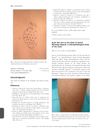
April 2010 in “British journal of dermatology/British journal of dermatology, Supplement” This report describes two patients with frontal fibrosing alopecia who developed acute hair loss on their limbs, revealing that the limb alopecia had similar histological features to scalp alopecia.
 March 2022 in “Research Square (Research Square)”
 This study reported that pelage hair follicle mesenchymal stem cells isolated from mice using Ficoll Density Gradient Sedimentation can be obtained in large numbers and may promote hair growth via exosome secretion.
October 1977 in “Munich Personal RePEc Archive (Ludwig Maximilian University of Munich)” This study found that telogen effluvium occurred in two subjects taking 500 mg of mefloquine weekly, and gastrointestinal intolerance was observed at higher doses in additional acute studies.
April 2019 in “Journal of Investigative Dermatology” This study found that frontal fibrosing alopecia involves distinct molecular changes, such as downregulation of steroid and cholesterol pathways and upregulation of fibrotic and immune response genes, which may help guide treatment strategies.
 21 citations
,
July 2014 in “Antimicrobial Agents and Chemotherapy”
21 citations
,
July 2014 in “Antimicrobial Agents and Chemotherapy” This study found that finasteride alone is highly effective in preventing Candida albicans urinary biofilms and shows synergistic activity with fluconazole in vitro, suggesting potential for further clinical investigation.
 1 citations
,
January 2020
1 citations
,
January 2020 This study found that Ift20 is essential for hair follicle stem cell identity and hair regrowth, and it regulates keratinocyte migration during wound healing through focal adhesion integrin recycling, independently of ciliogenesis.
 April 2018 in “The journal of investigative dermatology/Journal of investigative dermatology”
 This study found that using a commercially available IPL home-use device led to significant hair reduction and demonstrated long-term efficacy in maintaining hair reduction one year after treatment.

In this study, researchers found that Fgf21 knockout mice exhibited delayed hair follicle cycling compared to wild-type mice, potentially due to altered miRNA interactions affecting Vezf1 and Map3k1 expression, providing insights into the molecular regulation of hair growth.
This review discusses complications of frizzy hair syndrome and emphasizes the importance of precautionary measures, but it reports no new research findings.
75 citations
,
September 2007 in “Journal of Heredity” This study found that mutations in the FGF5 gene are the primary genetic factor causing long hair in domestic cats through an autosomal recessive mechanism.
1 citations
,
April 2023 in “Preprints.org” This study found that the guided SEFFI technique for facial volume restoration and anti-aging is minimally invasive with a low complication rate, suggesting it as a promising treatment option.
 January 2025 in “Indian Journal of Dermatology”
 This review discusses the various factors implicated in the etiology of frontal fibrosing alopecia and notes the need for effective treatments, reporting no new clinical findings.
 7 citations
,
August 2006 in “Biopolymers”
7 citations
,
August 2006 in “Biopolymers” This study demonstrated that human hair shafts can be anatomically separated to obtain intact micron and nano keratin filaments using solvents like performic acid and urea.
September 2022 in “Zenodo (CERN European Organization for Nuclear Research)” This article discusses Fluxactive Complete, a natural supplement for prostate health, and reports no new clinical results.
This study found that Fructus Ligustri Lucidi water extract significantly increased proliferation in human hair dermal papilla cells, potentially promoting hair growth by activating ERK and Akt pathways.
May 2021 in “bioRxiv (Cold Spring Harbor Laboratory)” This study introduced rPanglaoDB, an R package that facilitates the integration of public scRNA-seq datasets to effectively characterize rare cell types, exemplified by generating the first unbiased transcriptome profile of fibrocytes.