 March 2022 in “Berkala Ilmu Kesehatan Kulit dan Kelamin/Berkala ilmu kesehatan kulit dan kelamin (Periodical of dermatology and venerology)”
 This study found that nearly half of the tinea capitis patients at a Surabaya hospital had cat contact, with the most common symptoms being crust and hair loss.
January 2024 in “AIP conference proceedings”  July 2022 in “Journal of Veterinary Medical Research”
 This research outlines the significant morbidity and economic impact of dermatophytosis, a contagious fungal disease affecting skin, hair, and nails, with heightened severity in immune-compromised individuals and poor environmental conditions.
This chapter reviews fungal skin diseases in cattle and reports no new findings; the authors discuss conditions like sterile eosinophilic folliculitis and anagen defluxion, noting their patterns and effects.
 November 2025 in “Zenodo (CERN European Organization for Nuclear Research)”
 This study observed that dermatophytosis, primarily caused by fungi like M. canis, is the most common fungal skin infection in cats, often resolving spontaneously except in young or immunocompromised animals.
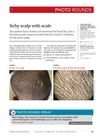 December 2020 in “The Journal of Family Practice”
 This report describes an 11-year-old boy in Panama who visited a village health center due to scalp itching and subtle hair loss, previously treated for head lice, with no hair pulling reported.
 February 2025 in “The Indian Journal of Animal Sciences”
 This study investigated a severe outbreak of mange in a goat herd in North Goa and found that treatment with Ivermectin and other supplements led to complete recovery, highlighting the need for preventive measures in hot, humid regions.
36 citations
,
January 2015 in “Clinical and Translational Allergy” This review discusses allergic reactions to pollen in dogs, cats, and horses and suggests that these animals' spontaneous allergies could serve as models for translational clinical studies applicable to human allergies.
April 1992 in “Pediatrics in Review” This review discusses diagnostic methods for superficial fungal infections in children and does not report new clinical results; the authors note the ease and simplicity of these diagnostic approaches.
April 2026 in “Indian Journal of Paediatric Dermatology” This report highlights the use of trichoscopy in diagnosing tinea capitis in a 17-year-old female with systemic lupus erythematosus, revealing specific trichoscopic features like corkscrew hairs, which confirmed a fungal infection leading to successful treatment with terbinafine.
2 citations
,
January 2006 in “Indian Journal of Veterinary Pathology” In this study of sheep across various breeds and ages, researchers found that Trichophyton mentagrophytes caused severe dermatophytosis, especially affecting young Shahbadi sheep during winter, leading to notable anemia and skin lesions.
 1 citations
,
March 2025 in “Acta fytotechnica et zootechnica/Acta fytotechnica et zootechnica”
1 citations
,
March 2025 in “Acta fytotechnica et zootechnica/Acta fytotechnica et zootechnica” This study evaluated quercetin's potential as a treatment for cats with Feline Atopic Skin Syndrome, finding it significantly reduced clinical scores in certain symptom groups like Head-and-Neck Pruritus and Miliary Dermatitis, although improvements in oxidative stress markers were not clearly significant.
5 citations
,
March 2012 in “Veterinary dermatology” This case report describes a potential drug-induced localized scleroderma in a Persian cat following the application of a 'spot-on' treatment.
 28 citations
,
November 2017 in “Skin appendage disorders”
28 citations
,
November 2017 in “Skin appendage disorders” This paper proposes a systematic approach to evaluating scalp itch using the SCALLP acronym and highlights the importance of classifying cases based on the presence of dermatological lesions and hair loss, but it reports no new clinical findings.
 1 citations
,
January 2021 in “Advances in animal and veterinary sciences”
1 citations
,
January 2021 in “Advances in animal and veterinary sciences” This study observed a high prevalence of the dermatophyte M. canis in humans and pets in Egypt, particularly highlighting the potential for zoonotic transmission from dogs and cats to humans.
22 citations
,
January 2020 in “Veterinary dermatology” This review discusses the unique characteristics and taxonomy of Malassezia yeasts and examines current diagnostic and therapeutic approaches in veterinary medicine; it reports no new clinical findings.
 May 2023 in “Authorea (Authorea)”
 In this report, researchers documented a rare complication linked to levofloxacin, used as a second-line treatment for tuberculosis, which could include various adverse events during TB therapy.
 1 citations
,
July 2016 in “Reactions Weekly”
1 citations
,
July 2016 in “Reactions Weekly” Finasteride can cause itching, burning, and other side effects that may not go away after treatment.
 17 citations
,
January 2021 in “Agrobiological Records”
17 citations
,
January 2021 in “Agrobiological Records” This study reported that allethrin caused dose-dependent toxico-pathological effects, including decreased feed intake, body weight, and blood parameters, and organ damage in adult male albino rats.
26 citations
,
February 1991 in “PubMed” This case report highlights trichotillomania's distinguishing "tonsure pattern" and nail-biting, emphasizing the need to differentiate it from other hair loss types due to differing treatments.
24 citations
,
June 2012 in “Journal of Feline Medicine and Surgery” This case report describes three Devon Rex cats with papular dermatitis due to dermatophytosis, which resolved with antifungal treatment.
 September 2024 in “The Indian Veterinary Journal”
 This case report describes a three-month-old male Labrador pup with dermatophytosis, diagnosed through clinical signs and a Woods lamp test, which successfully recovered from the infection with a four-week treatment regimen involving topical and oral therapies.
January 2023 in “Indian Dermatology Online Journal” This case report describes two instances of superficial dermatophytosis in neonates, highlighting the unusual occurrence and successful resolution with topical antifungal treatment.
January 2025 in “International Journal of Advanced Biochemistry Research” This case report described a one-year-old male husky dog with severe itching and skin lesions caused by Demodex canis, where treatment with Nexgard® and other supportive therapies over two weeks improved the dog's condition, indicating Nexgard® as a viable option for managing canine demodicosis.
 January 2021 in “Revista brasileira de higiene e sanidade animal”
 In this case report, Trichophyton rubrum was isolated from a dog with dermatophytosis, and treatment with ketoconazole shampoo and oral itraconazole led to complete healing and no recurrence in follow-up.
 October 2022 in “Gadua Journal of Pure and Allied Science”
 In this study, Trichophyton tonsurans and Microsporum canis were identified as the primary causes of tinea capitis, with terbinafine treatment showing the highest cure rate. Non-commercial kits surpassed real-time PCR commercial kits in specificity and sensitivity for diagnosis.
14 citations
,
March 2000 in “Journal of Zoo and Wildlife Medicine” This study identified a new Demodex species causing demodicosis in a zoo koala, successfully treated with daily oral ivermectin.
196 citations
,
November 2014 in “PubMed” This article discusses the diagnosis and treatment of tinea infections, emphasizing the importance of confirming certain diagnoses with lab tests and recommending treatments such as terbinafine for tinea capitis and onychomycosis.
 March 2014 in “Journal of clinical microbiology”
 This paper reviews the diagnosis and treatment of inflammatory tinea capitis, highlighting the importance of laboratory confirmation and recommending griseofulvin as the gold standard treatment.
3 citations
,
October 2024 in “Veterinary Medicine and Science” This study reported successful treatment of sarcoptic mange in two wild bare-nosed wombats using three topical doses of moxidectin, clearing skin crusting and mites within two weeks.