10 citations
,
May 2021 in “International Journal of Cosmetic Science” This study found that split-head paired design trials are as effective as whole-head parallel design trials in differentiating anti-dandruff shampoos through scalp flaking measurements, but are more efficient and cost-effective, requiring fewer participants to achieve similar results.
 89 citations
,
January 2013 in “Acta dermato-venereologica”
89 citations
,
January 2013 in “Acta dermato-venereologica” This review examines dandruff and seborrheic dermatitis, highlighting the role of Malassezia yeasts in inflammation and hyper-proliferation, and reports no new clinical findings.
 93 citations
,
April 2012 in “International Journal of Cosmetic Science”
93 citations
,
April 2012 in “International Journal of Cosmetic Science” This article discusses the role of stratum corneum disruption in dandruff and suggests that treatments improving scalp barrier integrity along with antifungal activity may be beneficial; it reports no new research findings.
 March 2017 in “International journal of current advanced research”
 This study evaluates the effectiveness of medicated shampoo against hair loss using a questionnaire distributed to 100 people, but it reports no new clinical results.
June 2026 in “International Journal of Research in Dermatology” This study found that a 4-week treatment with an ayurvedic anti-dandruff regime was highly effective and safe, significantly reducing dandruff flakes and scalp itch in all Indian participants with moderate dandruff, while lowering histamine and oxidative stress markers without reported side effects.
7 citations
,
March 2023 in “European Journal of Dermatology” Using Selenium Disulfide shampoo weekly helps prevent scalp dermatitis flare-ups.
 9 citations
,
August 2024 in “Cureus”
9 citations
,
August 2024 in “Cureus” This study reviewed existing knowledge and research, observing that ketoconazole shampoo is a safe and effective treatment for scalp seborrheic dermatitis, significantly improving irritation and scaling while maintaining low relapse rates and minimal side effects.
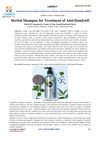 February 2023 in “International Journal of Advanced Research in Science, Communication and Technology”
 In this study, the researchers investigated the effectiveness of shampoo containing herbal extracts, specifically Neem and Tulsi, for managing dandruff and found it may offer benefits compared to synthetic drugs, which often cause side effects.
 32 citations
,
November 2005 in “Journal of Investigative Dermatology Symposium Proceedings”
32 citations
,
November 2005 in “Journal of Investigative Dermatology Symposium Proceedings” Most women preferred the 1% pyrithione zinc shampoo for better hair smoothness and less frizz while controlling dandruff.
 8 citations
,
November 2022 in “Cureus”
8 citations
,
November 2022 in “Cureus” In this study, patients with mild to moderate scalp seborrheic dermatitis experienced greater improvements in severity scores and quality of life with Lulican™ shampoo compared to Ketoconazole over four weeks, with similar safety profiles but better tolerability and cosmetic acceptability for LulicanTM.
 October 2025 in “Current Pharmaceutical Research”
 This study evaluated a new herbal shampoo made from traditional plants and found it to have effective cleansing properties, moderate foam stability, and environmental safety, suggesting it as a favorable natural alternative to synthetic shampoos.
 August 2025 in “International Journal of Advanced Research in Science Communication and Technology”
 In this study, researchers aimed to develop a herbal shampoo by replacing harmful synthetic ingredients with natural alternatives to improve safety and effectiveness, targeting issues like hair loss and scalp irritation often associated with traditional shampoos.

This study formulated an herbal anti-dandruff shampoo powder using Nyctanthes arbortristis as the main ingredient, and found that it exhibited significant anti-dandruff properties, beneficial physicochemical characteristics, and promising in-vitro results compared to a marketed medicated product.
 February 2024 in “International Journal of Progressive Research in Engineering Management and Science”
 This study evaluated a herbal shampoo containing fermented rice water and traditional herbs and found it to be safe, effective, and efficient in treating hair loss, with pronounced results in foaming, washing, and environmental friendliness.
 October 2020 in “Journal of Ayurvedic and herbal medicine”
 In this study, Dheedhi Hair Care herbal shampoo significantly reduced hair fall and dandruff compared to a regular shampoo, with no reported side effects.
 July 2024 in “Anti-Infective Agents”
 This study explored the development of a herbal anti-dandruff shampoo using natural polyherbal tincture and reported strong antimicrobial effects, which suggests it may be a safer and more effective alternative to conventional solutions that can cause side effects like hair loss and irritation.
 67 citations
,
April 2007 in “Journal der Deutschen Dermatologischen Gesellschaft”
67 citations
,
April 2007 in “Journal der Deutschen Dermatologischen Gesellschaft” This article reviews the development and formulation of shampoos, emphasizing their dual role as cosmetic and medicinal products, but presents no new experimental findings.
 7 citations
,
January 2007 in “Elsevier eBooks”
7 citations
,
January 2007 in “Elsevier eBooks” This article reviews the composition and functionality of shampoos, emphasizing the role of surfactants in cleaning and conditioning hair, and reports no new experimental results.
 4 citations
,
January 2021 in “Skin appendage disorders”
4 citations
,
January 2021 in “Skin appendage disorders” In this study, researchers found that washing hair 5–6 times per week results in higher satisfaction and better objective and subjective hair and scalp conditions among Asian populations, with no observed detrimental effects from frequent washing.
 July 2026 in “International journal of research in pharmacy and life sciences.”
 This study formulated and evaluated a polyherbal anti-dandruff shampoo, demonstrating it had good cleansing properties, antimicrobial activity against dandruff-causing microbes, and remained physically stable, potentially offering a safe and effective herbal alternative for dandruff management.
 January 2023 in “International Journal of Research Publication and Reviews”
 This review details the causes, symptoms, and treatments for dandruff, emphasizing herbal ingredients with anti-dandruff properties used in shampoos and exploring their antifungal and anti-inflammatory mechanisms. It highlights dandruff's exploitation by personal care companies due to the lack of medical interventions.
 January 1997 in “Elsevier eBooks”
 This chapter describes the functions and purposes of hair care cosmetics, including shampoos, hair growth promoters, and grooming products, without reporting new experimental findings.
 61 citations
,
October 2005 in “The journal of investigative dermatology. Symposium proceedings/The Journal of investigative dermatology symposium proceedings”
61 citations
,
October 2005 in “The journal of investigative dermatology. Symposium proceedings/The Journal of investigative dermatology symposium proceedings” This review discusses scalp skin disorders, their overlapping symptoms, diagnostic techniques, and treatment strategies, emphasizing the importance of accurate differential diagnosis, but reports no new clinical results.
 January 2025 in “UiTM Institutional Repositories (Universiti Teknologi MARA)”
 This abstract introduces dandruff as a key obstacle to achieving beautiful hair and a healthy scalp, noting its impact on appearance and self-confidence, but it does not provide study results.
 July 2017 in “International journal of Ayurvedic and herbal medicine”
 This study revealed that Madayantika siddha taila, containing sesame oil, showed effectiveness in treating Darunaka (seborrhea capitis) by addressing aggravated Vata and Kapha doshas.
 March 2004 in “Journal of The American Academy of Dermatology”
 This study found that the TrichoScan effectively measures hair growth changes, showing significant increases in hair counts and thickness in men with androgenetic alopecia after 6 months of using 5% minoxidil solution.
 57 citations
,
August 2003 in “British Journal of Dermatology”
57 citations
,
August 2003 in “British Journal of Dermatology” This study found that daily use of 1% pyrithione zinc shampoo modestly improved hair growth over 26 weeks, although these effects were less than those of 5% minoxidil.
12 citations
,
May 2017 in “Journal of pharmaceutical and biomedical analysis” In this study, researchers developed a method using scalp cyanoacrylate biopsy and advanced imaging techniques to effectively measure and visualize the distribution of anti-dandruff shampoo ingredients zinc pyrithione and climbazole within the scalp follicular infundibulum.
 February 2026 in “International Journal of Advanced Research in Science Communication and Technology”
 In this review, researchers explored the potential of herbal shampoos as effective and safe alternatives to conventional anti-dandruff treatments, highlighting that polyherbal formulations may offer comparable or superior benefits with fewer side effects.
 65 citations
,
November 2016 in “Journal of The American Academy of Dermatology”
65 citations
,
November 2016 in “Journal of The American Academy of Dermatology” This article reviews various types of primary cicatricial alopecias and emphasizes the importance of accurate diagnosis to improve management strategies, particularly detailing remaining lymphocytic forms and expanding on neutrophilic and mixed types.