 141 citations
,
September 2016 in “European Journal of Dermatology”
141 citations
,
September 2016 in “European Journal of Dermatology” This review examines dermatological side effects of taxane chemotherapy reported in past studies and highlights the necessity for identifying and managing these conditions to maintain cancer patients' quality of life; it presents no new clinical results.
 76 citations
,
August 2007 in “Supportive care in cancer”
76 citations
,
August 2007 in “Supportive care in cancer” The researchers reported that dermatological side effects from chemotherapy for women's cancers are common and significantly affect quality of life.
 January 2003 in “American Journal of Clinical Dermatology”
 In 2002, various skin reactions were reported due to different drugs, including allergies, hair loss, skin lesions, and other skin conditions.
 2 citations
,
October 2016
2 citations
,
October 2016 This article discusses the range of skin-related side effects caused by chemotherapy and radiotherapy, including novel patterns emerging with targeted therapies, but does not report new clinical results.
 1 citations
,
January 2010 in “Elsevier eBooks”
1 citations
,
January 2010 in “Elsevier eBooks” Any drug can cause skin reactions, but antibiotics, NSAIDs, and psychotropic drugs are more common, with some reactions being life-threatening.
 63 citations
,
February 2013 in “Human cell”
63 citations
,
February 2013 in “Human cell” In this study using an animal model, researchers found that PEGL-DOX, unlike DOX, causes Hand-Foot Syndrome due to reactive oxygen species interacting with skin tissue, leading to skin-specific inflammatory responses.
 12 citations
,
June 2019 in “Actas dermo-sifiliográficas/Actas dermo-sifiliográficas”
12 citations
,
June 2019 in “Actas dermo-sifiliográficas/Actas dermo-sifiliográficas” This article reviews the dermatological side effects of chemotherapy, their impact on treatment and patient quality of life, and emphasizes collaboration between oncologists and dermatologists for effective management.
 53 citations
,
May 2001 in “The American journal of the medical sciences”
53 citations
,
May 2001 in “The American journal of the medical sciences” This article reviews common skin eruptions in chemotherapy patients and discusses how recognizing these patterns can help avoid unnecessary changes to cancer treatment; it reports no new clinical results.
 1 citations
,
January 2009 in “Actas Dermo-Sifiliográficas”
1 citations
,
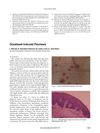
January 2009 in “Actas Dermo-Sifiliográficas” Docetaxel, a chemotherapy drug, was reported to cause psoriasis in a patient for the first time.
 275 citations
,
March 1999 in “Journal of The American Academy of Dermatology”
275 citations
,
March 1999 in “Journal of The American Academy of Dermatology” This review elaborates on the skin side effects of chemotherapy and emphasizes identifying and managing both common and life-threatening skin reactions, without presenting new clinical findings.
 108 citations
,
December 2003 in “Clinical breast cancer”
108 citations
,
December 2003 in “Clinical breast cancer” The authors concluded that pegylated liposomal doxorubicin may offer comparable efficacy to conventional doxorubicin with reduced toxicity in metastatic breast cancer treatment.
 15 citations
,
December 2014 in “Dermatology and therapy”
15 citations
,
December 2014 in “Dermatology and therapy” This study reports that sorafenib-associated facial acneiform eruption, mimicking chloracne, is a rare cutaneous adverse event which improved upon reducing or discontinuing the drug.
 5 citations
,
October 2018 in “American Journal of Clinical Dermatology”
5 citations
,
October 2018 in “American Journal of Clinical Dermatology” This review discusses major dermatologic conditions occurring in the early post-hematopoietic stem cell transplant period and reports no new clinical results; it underscores dermatologists' role in recognizing critical complications.
 4 citations
,
April 2023 in “Cutis”
4 citations
,
April 2023 in “Cutis” This review examines various skin conditions associated with the COVID-19 pandemic, covering virus-related dermatoses and cutaneous side effects from treatments and vaccines, but reports no clinical results.

This article provides a reference guide for various dermatological terms, treatments, and conditions, but reports no new clinical findings.
 21 citations
,
August 2003 in “Seminars in oncology nursing”
21 citations
,
August 2003 in “Seminars in oncology nursing” This review discusses the side effects associated with ovarian cancer treatment and highlights the need for tools to assess, prevent, and manage these effects; it reports no clinical results.
 1 citations
,
January 2015 in “Springer eBooks”
1 citations
,
January 2015 in “Springer eBooks” Chemotherapy can cause skin side effects that affect patients' lives, but they can be managed to avoid interrupting cancer treatment.
1 citations
,
January 2023 in “IntechOpen eBooks” This review explores the advantages and drawbacks of the anticancer drug paclitaxel, noting its effectiveness in combination with cisplatin for breast cancer survival, its potential for treating non-cancer conditions, and the mechanisms behind its resistance.
 18 citations
,
November 2021 in “Anais Brasileiros de Dermatologia”
18 citations
,
November 2021 in “Anais Brasileiros de Dermatologia” This review examines the skin manifestations associated with COVID-19 but reports no new clinical findings, emphasizing the need for differential diagnoses to correlate skin symptoms with the virus.
January 2021 in “Annals of translational medicine” This study found that the YH0618 decoction reduced chemotherapy-induced nail discoloration, alopecia, skin hyperpigmentation, and fatigue in cancer patients who completed chemotherapy.
14 citations
,
June 2014 in “World Journal of Urology” This study found that the herbal combination PRO 160/120 significantly improved nocturnal voiding frequency in patients with moderate-to-severe LUTS/BPH compared to placebo, with similar effectiveness to tamsulosin and finasteride.
 8 citations
,
December 2008 in “Journal of The American Academy of Dermatology”
8 citations
,
December 2008 in “Journal of The American Academy of Dermatology” This case report describes the first known instance of fixed drug eruption linked to finasteride, confirmed through an oral challenge test that reproduced symptoms at the same skin site.
 8 citations
,
July 1990 in “Archives of Dermatology”
8 citations
,
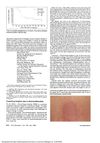
July 1990 in “Archives of Dermatology” This case report details a fixed-drug eruption in a woman linked to the use of dextromethorphan, marking it as a previously unreported skin reaction to this medication.
4 citations
,
August 2015 in “JEADV. Journal of the European Academy of Dermatology and Venereology/Journal of the European Academy of Dermatology and Venereology” This study concluded that both low and incremental radiant exposures of diode lasers produced similar hair reduction and patient satisfaction, but low radiant exposure was less painful and better tolerated.

This case study reports a rare instance of both alopecia areata and fixed drug eruption occurring in the same area on a 40-year-old man's beard, triggered by oral paracetamol, highlighting potential shared pathogenic pathways and the isotopic phenomenon.

The man has Temporal Triangular Alopecia, a stable, non-scarring hair loss condition best treated with hair transplantation.
February 2010 in “Faculty Opinions – Post-Publication Peer Review of the Biomedical Literature” Finasteride can cause skin reactions, so dermatologists should be aware.
28 citations
,
June 2003 in “Applied immunohistochemistry & molecular morphology” This study demonstrated that combining cell conditioning with mild protease digestion enhanced the visualization of versican mRNA in formalin-fixed mouse skin tissue sections compared to using either technique alone.
 September 2023 in “Skin Research and Technology”
 This article presents a new method using dermoscopy to evaluate the severity and treatment effectiveness of androgenetic alopecia in men by capturing images of specific scalp regions.
 September 2022 in “PubMed”
 Entadfi, a mix of finasteride and tadalafil, is used for BPH.