March 2022 in “Oncology Times” In this study, tebentafusp-tebn improved overall survival in patients with metastatic uveal melanoma compared to standard therapies, despite higher rates of significant adverse events.
 8 citations
,
December 2017 in “Journal of The American Academy of Dermatology”
8 citations
,
December 2017 in “Journal of The American Academy of Dermatology” This correspondence discusses the diagnostic criteria for frontal fibrosing alopecia but reports no new research findings, agreeing with many previously suggested criteria.
135 citations
,
October 1997 in “Journal of biological chemistry/The Journal of biological chemistry” This study suggests that trichohyalin is modified by peptidyl-arginine deiminase before being cross-linked by TGase 3, allowing the formation of rigid structures in hair follicle cells.
60 citations
,
December 2003 in “Journal of Investigative Dermatology” This study found that keratin 6hf, a type II keratin, is expressed in specific regions of mouse and human hair and suggests potential interactions with keratin 17, impacting hair development and associated disorders.
 5 citations
,
March 2014 in “Journal of The American Academy of Dermatology”
5 citations
,
March 2014 in “Journal of The American Academy of Dermatology” The study suggests hormonal factors may play a role in Frontal Fibrosing Alopecia and that treatments like oral antiandrogens and steroids could be beneficial.
 March 2025 in “Forum Dermatologicum”
 This case report highlights the importance of trichoscopy in diagnosing fibrosing alopecia in pattern distribution, distinguishing it from female pattern hair loss, and guiding effective treatment.
 17 citations
,
December 2010 in “Journal of Investigative Dermatology”
17 citations
,
December 2010 in “Journal of Investigative Dermatology” This study found that higher levels of the protein Flii were associated with enhanced hair follicle regeneration and longer hair fibers in a mouse model.
 1 citations
,
June 2013 in “Science-business Exchange”
1 citations
,
June 2013 in “Science-business Exchange” In this study, researchers at the University of Pennsylvania found that increasing FGF9 levels in wounded mouse skin can lead to the growth of hair follicles.
 1 citations
,
December 2022 in “Clinical, Cosmetic and Investigational Dermatology”
1 citations
,
December 2022 in “Clinical, Cosmetic and Investigational Dermatology” In this study, TrichoScan characteristics, particularly hair density and terminal hair percentage in the midscalp, were found to predictively classify female pattern hair loss in a Chinese population.
 1 citations
,
October 2008 in “Expert Review of Dermatology”
1 citations
,
October 2008 in “Expert Review of Dermatology” This review discusses frontal fibrosing alopecia, noting its frequent misdiagnosis and highlighting the need for larger studies to better understand its epidemiology, causes, and treatment options; it reports no new clinical findings.
19 citations
,
April 2013 in “Drug Development and Industrial Pharmacy” This study highlights the significance of the hf pathway for the skin permeation of ionized and hydrophilic high molecular compounds, and the usefulness of hf-plugging in evaluating their skin permeability.
7 citations
,
August 2019 in “American Journal of Dermatopathology” This study found that limb hair loss in frontal fibrosing alopecia is inflammatory and permanent, but lacks the classic scarring features seen in scalp alopecia, prompting potential misdiagnosis as alopecia areata.
2 citations
,
September 2021 in “Anais Brasileiros de Dermatologia” Increased sunscreen use may be linked to frontal fibrosing alopecia in Hispanic females.
 31 citations
,
April 2010 in “British journal of dermatology/British journal of dermatology, Supplement”
31 citations
,
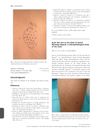
April 2010 in “British journal of dermatology/British journal of dermatology, Supplement” This report describes two patients with frontal fibrosing alopecia who developed acute hair loss on their limbs, revealing that the limb alopecia had similar histological features to scalp alopecia.
 15 citations
,
February 2021 in “Scientific Reports”
15 citations
,
February 2021 in “Scientific Reports” This study found that novel RNA aptamers specifically inhibited FGF5-induced cell proliferation, suggesting their potential as candidates for treating FGF5-related diseases or hair disorders.
 19 citations
,
May 2006 in “Clinical and Experimental Dermatology”
19 citations
,
May 2006 in “Clinical and Experimental Dermatology” This study identified a novel insertion mutation in the hairless gene that may contribute to the development of congenital atrichia with papular lesions in a Pakistani family.
July 2022 in “British Journal of Dermatology”  38 citations
,
January 2019 in “International Journal of Women's Dermatology”
38 citations
,
January 2019 in “International Journal of Women's Dermatology” This review discusses potential therapeutic options for frontal fibrosing alopecia by exploring distinct signaling pathways and cellular players, but reports no new clinical findings and emphasizes the need for further trials.

This study describes a system called FOLLYSIS©, which uses mathematics and image analysis to optimize Follicular Unit Extraction hair transplants, showing high accuracy in measuring donor area density and reducing donor site injury.
 3 citations
,
October 2021 in “Postepy Dermatologii I Alergologii”
3 citations
,
October 2021 in “Postepy Dermatologii I Alergologii” This study found that evaluating terminal hair growth on the chin, thighs, and either the upper lip or lower abdomen could streamline the modified Ferriman-Gallwey scoring, aiding hirsutism diagnosis under pandemic conditions.
 October 2013 in “Faculty Opinions – Post-Publication Peer Review of the Biomedical Literature”
 FGF9 from certain T cells helps create new hair follicles during wound healing, which could potentially be used for hair loss treatments.
August 2022 in “Nutrients” This ex vivo study found that hair follicles in female pattern hair loss exhibited nutrient insufficiency and dormant metabolism, but maintained nutrient uptake capability, suggesting potential benefits of nutritional supplementation as an adjunct therapy.
 8 citations
,
September 2015 in “Hair transplant forum international”
8 citations
,
September 2015 in “Hair transplant forum international” This article highlights the significant hair transplant results achieved with the potentially obsolete FUT technique and includes varied expert opinions on its efficacy, but it reports no new clinical findings.
 9 citations
,
January 2013 in “Journal of Cutaneous and Aesthetic Surgery”
9 citations
,
January 2013 in “Journal of Cutaneous and Aesthetic Surgery” This case report observed complete repigmentation of a stable vitiligo patch with body hair transplantation in a 28-year-old man, with no recurrence after 3 months.
 October 2024 in “Cermin Dunia Kedokteran”
 This article discusses the surveillance and spread of hand, foot, and mouth disease in China, Singapore, and Indonesia, and reports no new results, emphasizing the need for improved prevention and management strategies.
April 2025 in “Australasian Journal of Dermatology” This report presents the first Australian case of familial frontal fibrosing alopecia involving a mother and daughter and seeks to differentiate clinical features between familial and sporadic cases.
 September 2017 in “Journal of Investigative Dermatology Symposium Proceedings”
 This review discusses the clinical features of hypopigmented mycosis fungoides in primary cutaneous T cell lymphoma and reports no new clinical results.
17 citations
,
September 2020 in “Inflammation and Regeneration” In this study, researchers found that WNT activation influenced FGF expression in human scalp-derived fibroblasts, with mouse model results showing FGF9 increased hair follicle number and diameter, while FGF7 reduced diameter.
 March 2025 in “Journal of Cosmetic Dermatology”
 This study explored the effects of TTFE on male androgenic alopecia, finding that topical application increased hair density, follicular diameter, and scalp hydration while reducing water loss and sebum production in a 12-week trial.