19 citations
,
April 2020 in “Oxidative Medicine and Cellular Longevity” This study provides evidence that Fernblock® upregulates antioxidant pathways in cultured keratinocytes, potentially protecting against damage from fine pollutant particles.
 86 citations
,
June 2017 in “Anais Brasileiros de Dermatologia”
86 citations
,
June 2017 in “Anais Brasileiros de Dermatologia” This review discusses the role of antioxidants in managing oxidative skin damage and reports no new results, emphasizing the need for understanding their mechanisms, limitations, and risks for safe use.
 1 citations
,
December 2022 in “Exploration of Medicine”
1 citations
,
December 2022 in “Exploration of Medicine” This review discusses the antioxidant and photoprotective potential of Polypodium leucotomos for use as a natural sunscreen ingredient and reports no new experimental results; further studies are recommended to evaluate its effectiveness.
 June 2026 in “Dermatology and Therapy”
 This review provides an analysis of topical treatments with clinically proven efficacy for managing hyperpigmentation and concludes that the most effective approach is using combined therapies that target multiple aspects of skin pigmentation physiology.
1 citations
,
January 2001 in “Acta Archaeologica Academiae Scientiarum Hungaricae” This review details the Follicular Unit Extraction technique for hair restoration, highlighting its advantages over traditional strip surgery, but includes no new clinical findings.
 13 citations
,
August 2002 in “Dermatologic Surgery”
13 citations
,
August 2002 in “Dermatologic Surgery” This paper introduces Follicular Unit Extraction and reports the FOX Test can identify suitable candidates, with about 25% of patients being ideal and 35% being good candidates for the procedure.
 1 citations
,
April 2017 in “Journal of Investigative Dermatology”
1 citations
,
April 2017 in “Journal of Investigative Dermatology” In this study, D-OCT imaging revealed distinct structural and vascular changes in patients with frontal fibrosing alopecia, highlighting the technique's potential for diagnosing and monitoring the condition's activity.
60 citations
,
July 2014 in “Autophagy” This study found that autophagy is impaired in Birt-Hogg-Dubé syndrome-associated renal tumors and identified that the FLCN protein interacts with key autophagy components regulated by ULK1.
6 citations
,
February 2023 in “Cosmetics” This study found that hexane extracts of Nostoc verrucosum significantly inhibited melanin synthesis in melanoma cells and demonstrated antioxidant activity, suggesting potential use in developing cosmetic and functional food products.
6 citations
,
March 2022 in “International journal of molecular sciences” This review explores the detrimental effects of sunlight on the skin’s circadian rhythm and photodamage, noting the potential of natural cosmeceuticals to influence this rhythm, but reports no new results.
 2 citations
,
November 2007 in “Hair transplant forum international”
2 citations
,
November 2007 in “Hair transplant forum international” This abstract introduces the concept of follicular units (FUs) in the human scalp but presents no new research findings.
 January 2021 in “Hair transplant forum international”
 This article describes a new T-Fast multi-implanter that potentially reduces operating costs and surgical time by implanting two follicular unit excision grafts simultaneously, which may encourage clinics to adopt this technique.

EFBL offers hidden incisions, faster recovery, and fewer risks, but may raise hairline and cost more.
 39 citations
,
July 2015 in “British Journal of Dermatology”
39 citations
,
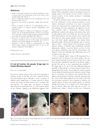
July 2015 in “British Journal of Dermatology” This article discusses the pseudo 'fringe sign' in frontal fibrosing alopecia, highlighting that it is not solely related to traction, and it reports no new clinical results.
 March 2026 in “International Ayurvedic Medical Journal”
 This study reported that Gunja (Abrus precatorius Linn.) demonstrates various pharmacological activities, including antifertility, hair growth promotion, immunomodulatory effects, and anticancer properties, supported by its phytochemical composition and analytical advancements, suggesting its potential in Ayurvedic therapeutic applications and future drug development.
 11 citations
,
September 2016 in “Journal of virological methods”
11 citations
,
September 2016 in “Journal of virological methods” In this study, rabies virus antigens were detected in the outer root sheath of the follicle-sinus complex in the muzzle skin of rabid dogs, suggesting its usefulness as an alternative diagnostic specimen.
4 citations
,
August 2015 in “Journal of Cosmetic Dermatology” This study found that UVA blocker-containing sunscreens instantly reduced follicular fluorescence due to porphyrins in facial skin, with the effect lasting for a few hours, influenced by sunscreen amount and formulation.
58 citations
,
November 2004 in “The journal of investigative dermatology/Journal of investigative dermatology” This study found that mutations in the Foxn1 gene in nude mice affect not only hair but also nail structure and differentiation, offering insights into nail hypergranulosis pathogenesis relevant to human nail diseases.
This report details a refined hair transplantation method called direct no-shave follicular unit excision (DNS FUE), which avoids donor-site shaving and minimizes follicular trauma while yielding high patient satisfaction.
 1 citations
,
January 2021 in “Journal of biological chemistry/The Journal of biological chemistry”
1 citations
,
January 2021 in “Journal of biological chemistry/The Journal of biological chemistry” This study found that loss of the folliculin protein delays transferrin receptor recycling, leading to iron deficiency and suggesting a role in the mechanisms of Birt-Hogg-Dubé syndrome.
475 citations
,
October 2006 in “Proceedings of the National Academy of Sciences” This study suggests that folliculin, mutated in Birt–Hogg–Dubé syndrome, and its partner FNIP1 may play a role in energy and nutrient sensing through the AMPK and mTOR pathways.
October 2022 in “Hair Transplantation” This chapter outlines the sequential steps for using motorized follicular unit extraction machines with blunt punches in hair restoration, noting their advantages in minimizing follicle transection and providing tactile feedback.

Flubendazole in a nanoemulsion can potentially treat lung cancer and cryptococcal meningitis effectively and safely.
2 citations
,
May 2021 in “bioRxiv (Cold Spring Harbor Laboratory)” This study found that fibronectin is crucial for hair follicle stem cell function and regeneration, with its deletion impairing regeneration but restoration by dermal injection of exogenous fibronectin.
 153 citations
,
August 2002 in “Dermatologic Surgery”
153 citations
,
August 2002 in “Dermatologic Surgery” This paper introduces the Follicular Unit Extraction procedure and its accompanying FOX Test, finding that 60% of tested patients were suitable candidates for this minimally invasive hair transplantation method.
 63 citations
,
October 2011 in “Archives of Dermatology”
63 citations
,
October 2011 in “Archives of Dermatology” Isolated long hairs at the original hairline can help diagnose Frontal Fibrosing Alopecia.
 1 citations
,
December 2017 in “Anais Brasileiros de Dermatologia”
1 citations
,
December 2017 in “Anais Brasileiros de Dermatologia” This article discusses the DOAJ, a comprehensive index of international open access journals, and emphasizes its role in providing free quality content online without presenting new research findings.
2 citations
,
January 2016 in “Dermatology online journal” This case report describes a 46-year-old man diagnosed with frontal fibrosing alopecia, a condition primarily affecting postmenopausal women, highlighting its rare occurrence in men.
 1 citations
,
April 2024 in “Dermatology Practical & Conceptual”
1 citations
,
April 2024 in “Dermatology Practical & Conceptual” Hair loss in male frontal fibrosing alopecia may spare areas covered by a wristwatch.
1 citations
,
June 2025 in “Journal of Clinical Medicine” This study reported that frontal fibrosing alopecia predominantly affects postmenopausal women and identified potential risk factors like frequent β-blocker use and sunscreen application, indicating the need for further research.