 November 2025 in “Zenodo (CERN European Organization for Nuclear Research)”
 This study highlights that dermatophytosis, a common fungal skin infection in cats, caused by Microsporum and Trichophyton species, typically resolves on its own but may be more severe in immunocompromised individuals and young animals.
 October 2019 in “Skin appendage disorders”
 This study revisits and reproduces Felix Pinkus' concept of the vitreous membrane in hair follicles, suggesting these structures may play a role in differentiation or nutrition due to their location in metabolically dynamic regions.
 57 citations
,
August 1998 in “The journal of small animal practice/Journal of small animal practice”
57 citations
,
August 1998 in “The journal of small animal practice/Journal of small animal practice” This study reported that Malassezia-associated dermatitis can cause pruritus in cats with feline paraneoplastic alopecia.
 2 citations
,
April 2022 in “PubVet”
2 citations
,
April 2022 in “PubVet” This case report discusses a 5-year-old Persian cat with feline eosinophilic granuloma complex, which responded positively to prednisone and topical corticosteroids, eliminating itching and promoting fur regrowth without relapse.
1 citations
,
December 2021 This study concluded that cutaneous lymphocytosis in cats appears to have a reactive nature with prolonged survival, while in dogs, it is more variable with clonality differences and treatment response.
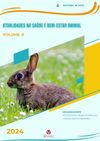 January 2024 in “Editora In Vivo eBooks”
 In this case report, a female mixed-breed dog was observed with dermatophytosis, presenting with alopecia in the neck and ear, highlighting the zoonotic nature of the infection caused by fungi that can affect both animals and humans.
January 2016 in “INTAS POLIVET” In this study, Persian cats treated with weekly Fipronil spray showed no detectable ear mites after four weeks, suggesting the spray's effectiveness against ear mites.
 February 2008 in “Vlaams dierengeneeskundig tijdschrift”
 In this case report, a pancreatic adenocarcinoma with liver and omentum metastases was found in a cat, whose clinical signs included anorexia, diarrhea, lethargy, and non-pruritic glistening alopecia.
75 citations
,
September 2007 in “Journal of Heredity” This study found that mutations in the FGF5 gene are the primary genetic factor causing long hair in domestic cats through an autosomal recessive mechanism.
66 citations
,
February 2002 in “Veterinary dermatology” This study suggests that the presence of Malassezia yeast in biopsy specimens from cats with multifocal or generalized skin lesions indicates the need for a thorough assessment for internal neoplasia.
4 citations
,
October 2001 in “Mycoses” This case report describes a rare instance of dermatophytosis in a young cat caused by Microsporum gypseum, confirmed by molecular analyses to be Arthroderma gypseum.
3 citations
,
March 2023 in “PubMed” This case report describes a rare instance of successful treatment of feline leishmaniosis in a cat, with noted nephrotoxic effects possibly linked to long-term allopurinol use.
3 citations
,
January 2020 in “Acta veterinaria indonesiana” In this case study, a Persian cat with dermatophytosis showed a reduction in skin lesions after being treated with oral itraconazole and topical ketoconazole.
2 citations
,
October 2001 in “Mycoses” This study confirmed that a rare dermatophyte infection in a young cat was caused by Arthroderma gypseum, identified using molecular analyses.
 March 2026 in “BMC Veterinary Research”
 This case report describes the successful use of bovine amniotic membrane preserved in propolis for promoting rapid wound healing and hair regrowth in a cat with extensive skin necrosis.
 March 2025 in “Journal of Bio Innovation”
 This review examines the causes, symptoms, diagnosis, and treatment of dermatophytosis (ringworm) in dogs and cats, highlighting the role of Microsporum canis and the public health implications of zoophilic dermatophytes, affecting roughly 20-25% of the global population.
March 2024 in “SVU- International Journal of Veterinary Sciences” This study suggests that fecal microbiota transplantation was effective in reducing symptoms of feline hyperesthesia syndrome, with most cats showing clinical remission or improvement and no observed side effects.
 January 2026 in “Al-Kunooze Scientific Journal”
 This study documented that dermatophytosis was highly prevalent in Basra's cats, particularly affecting males and cats under nine months, with lesions most frequent on ears, face, and abdomen.
September 2025 in “Journal of Parasite Science” This study found a 10.5% prevalence of dermatophytosis in cats treated at the Animal Health Center in Cimahi during August-September 2023, with lesions most commonly appearing in young, female, and domestic breed cats, predominantly affecting their dorsal region.
This study found that a novel pet food formulation significantly improved the management of feline atopic skin syndrome by reducing symptom severity and medication dependence over six months in client-owned cats, compared to a control diet.

In this case study, gentian violet in diluted shampoo successfully alleviated symptoms of a Malassezia pachydermatis infection in a cat initially unresponsive to conventional treatments.
 September 2024 in “Journal of Parasite Science”
 In this study, researchers at Go Pet Care Animal Clinic reported a varying prevalence of dermatophytosis in domestic cats from 2020 to 2022, highest in young and male Persian cats, with common lesions including alopecia mainly in the ear and back regions.
March 2013 in “Pigment Cell & Melanoma Research” This study revealed that different coat patterns in cats and cheetahs are related to variations in the aminopeptidase Q gene and endothelin-3 expression, which affects pigment production.
 June 2023 in “jurnal veteriner”
 In this study, Typhonium flagelliforme leaf-ethanolic extract combined with natural interferon was observed to stabilize body weight, inhibit tumor growth, and reduce mitosis, angiogenesis, and certain protein expressions in carcinogen-induced tumors in female mice, suggesting potential antitumor effects.
June 2026 in “Kerbala Journal of Veterinary Medical Sciences” This study found that gray mongooses have more numerous and well-developed sebaceous glands compared to domestic cats, suggesting they may benefit from enhanced lipid-derived skin protection.
105 citations
,
December 2003 in “Veterinary Dermatology” This review discusses the association between cutaneous paraneoplastic syndromes and internal malignancies, noting that recognition of these skin disorders may help detect underlying cancers, but reports no new research findings.
 59 citations
,
February 2003 in “Veterinary Dermatology”
59 citations
,
February 2003 in “Veterinary Dermatology” This narrative review discusses the use of cyclosporin for various skin diseases in small animals and notes minimal side effects at therapeutic doses, but reports no original clinical findings.
 9 citations
,
July 1995 in “Veterinary Clinics of North America: Small Animal Practice”
9 citations
,
July 1995 in “Veterinary Clinics of North America: Small Animal Practice” This review discusses causes of hair loss in cats, highlighting self-inflicted trauma due to flea allergy dermatitis, and presents no new clinical findings.
 2 citations
,
September 2016 in “Symbiosis online journal of veterinary sciences”
2 citations
,
September 2016 in “Symbiosis online journal of veterinary sciences” This report details a case of feline degenerative mucinotic mural folliculitis associated with feline immunodeficiency virus, identified using immunohistochemistry and immunoassay techniques.
1 citations
,
January 2024 in “Journal of Feline Medicine and Surgery Open Reports” In this study, the researchers describe a case of feline demodicosis that presented with dermatological lesions but lacked the typical signs of pruritus or overgrooming, and they report successful off-label treatment using a single spot-on application of fluralaner.