 46 citations
,
January 2015 in “Journal of The American Academy of Dermatology”
46 citations
,
January 2015 in “Journal of The American Academy of Dermatology” This study suggests that trichoscopic features, such as perifollicular erythema and cicatricial white patches, are independently associated with pruritus and the severity of frontal fibrosing alopecia.
 1 citations
,
June 2024 in “British Journal of Dermatology”
1 citations
,
June 2024 in “British Journal of Dermatology” In this case study, a woman with frontal fibrosing alopecia and associated hyperpigmentation showed significant improvement in skin pigmentation and itch after 9 months of treatment with mycophenolate mofetil, highlighting its therapeutic potential for lichen planus pigmentosus linked to this condition.
 May 2025 in “Journal of Clinical Images and Medical Case Reports”
 The study observed that patterned fibrosing alopecia, a type of scarring hair loss, appears in some patients after hair transplants, facelifts, and other surgical interventions, sharing features with lichen planopilaris and androgenetic alopecia.
June 2020 in “International Journal of Women’s Dermatology” This case report highlights the importance of considering frontal fibrosing alopecia in young women, emphasizing early diagnosis to preserve hair and limit inflammation.
 17 citations
,
October 2017 in “Journal of Cutaneous Medicine and Surgery”
17 citations
,
October 2017 in “Journal of Cutaneous Medicine and Surgery” This review discusses the various treatment options for frontal fibrosing alopecia but reports no definitive results, as no treatment has proven effective in halting hairline recession or promoting hair growth.
4 citations
,
June 2017 in “Annales de dermatologie et de vénéréologie” This prospective study in Morocco reported on 20 cases of frontal fibrosing alopecia, finding that dermoscopy played a key role in diagnosing and managing the condition, which can increasingly affect premenopausal women.
6 citations
,
July 2004 in “JDDG Journal der Deutschen Dermatologischen Gesellschaft” This case report documents two postmenopausal women with frontal fibrosing alopecia whose hair loss stabilized after treatment with topical corticosteroids, one also using minoxidil.
 3 citations
,
November 2020 in “Clinical, Cosmetic and Investigational Dermatology”
3 citations
,
November 2020 in “Clinical, Cosmetic and Investigational Dermatology” This review summarizes the current treatment modalities for frontal fibrosing alopecia and provides a practical guide for clinicians, but reports no new clinical results.
October 2025 in “Clinical and Experimental Dermatology” Among patients with biopsy-proven FAPD in specialized hair clinics, this study found the condition is common in females around 52.5 years old, with treatment generally stabilizing or slightly improving hair loss, despite challenges in differentiating FAPD from androgenetic alopecia.
June 2026 in “Dermatology” In this study, frontal fibrosing alopecia showed a higher cumulative remission rate compared to lichen planopilaris, despite similar timeframes and relapse rates between the two conditions.
 63 citations
,
October 2011 in “Archives of Dermatology”
63 citations
,
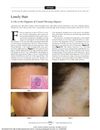
October 2011 in “Archives of Dermatology” Isolated long hairs at the original hairline can help diagnose Frontal Fibrosing Alopecia.
2 citations
,
January 2012 in “STARS (University of Central Florida)” This study suggests that using stable isotope analysis on various tissues can effectively reconstruct individual life histories, providing insights into both the individual and broader population from the Romano-Christian period in Egypt.
1 citations
,
January 2010 in “STARS (University of Central Florida)” This study found that men receiving negative appearance-related commentary are more likely to experience negative psychological outcomes, while positive feedback tends to lead to better outcomes despite encouraging appearance-change behaviors.
January 2017 in “STARS (University of Central Florida)” This study found that steroid reproductive hormones such as estradiol and testosterone can be preserved and analyzed in archaeological human hair, providing new insights into ancient health and fertility.
13 citations
,
August 2013 in “International Journal of Dermatology” Frontal fibrosing alopecia can affect African men and may be underdiagnosed.
May 2026 in “Advanced Pharmaceutical Bulletin” In this study, black cumin oil-based nanostructured lipid carriers enhanced the delivery and effectiveness of fluticasone for psoriasis in a mouse model, improving skin targeting, inflammation reduction, and permeability compared to standard cream.
3 citations
,
February 2020 in “DOAJ (DOAJ: Directory of Open Access Journals)” This review discusses the challenges of managing intraoperative floppy iris syndrome during cataract surgery and highlights the importance of preoperative risk assessment and multidisciplinary collaboration, reporting no new clinical results.
17 citations
,
June 2016 in “Archives de Pédiatrie” This case report describes three pediatric cases of frontal fibrosing alopecia, a condition typically seen in postmenopausal women, including a unique instance involving female twins.
February 2018 in “The American Journal of Gastroenterology” This study observed that intravenous ferric carboxymaltose did not inhibit the drug-induced reduction of inflammatory activity in patients with inflammatory bowel disease, as indicated by lower CRP levels.
 May 2022 in “Journal of Cosmetic Dermatology”
 This review discusses the characteristics and diagnostic challenges of fibrosing alopecia pattern distribution, proposing an algorithm for hair transplantation, but reports no new clinical results.
 June 2023 in “British Journal of Dermatology”
 This study reports a unique case of coinheritance of BRCA2 and CYLD pathogenic variants in a man with metastatic malignant cylindroma, suggesting that recognizing such genetic profiles in rare conditions can provide new treatment options, including the potential use of therapies targeting BRCA deficiency.
This study introduced the C-CAT, a new assessment tool for central centrifugal cicatricial alopecia, and found that established treatments improved symptoms in most patients over six months.
April 2026 in “Case Reports in Dermatology” In this case report, a woman with Graham-Little-Piccardi-Lassueur Syndrome and hidradenitis suppurativa showed significant improvements in both conditions after six months of treatment with tofacitinib, a Janus Kinase inhibitor, with no recurrence or adverse events noted during a two-year follow-up.
 5 citations
,
February 2004 in “Clinical and Experimental Ophthalmology”
5 citations
,
February 2004 in “Clinical and Experimental Ophthalmology” This study presents two cases correlating the clinical appearance of adult-onset foveomacular vitelliform dystrophy with optical coherence tomography findings, describing the location of the yellow vitelliform material.
 9 citations
,
January 2020 in “Postepy Dermatologii I Alergologii”
9 citations
,
January 2020 in “Postepy Dermatologii I Alergologii” This review discusses the enigmatic nature of frontal fibrosing alopecia and reports no clinical results; the authors stress the need for further research.

In this retrospective study, researchers at a Spanish hospital found that the severity of frontal fibrosing alopecia, primarily affecting postmenopausal women, was correlated with the duration of the disease, though inflammatory signs were not linked with its progression.
 13 citations
,
September 2017 in “Skin appendage disorders”
13 citations
,
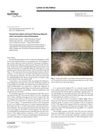
September 2017 in “Skin appendage disorders” Some women with Frontal Fibrosing Alopecia also have Lichen Planopilaris, which can lead to more symptoms and affect hair outside the scalp.
 January 2020 in “Clinical Case Reports and Reviews”
 This study observed that the coexistence of Frontal Fibrosing Alopecia and lupus erythematosus in a patient may suggest a shared pathogenic background.
 October 2023 in “Dermatology practical & conceptual”
 In this case report, folliculitis decalvans with frontal fibrosing alopecia was observed in a patient with a dark phototype, highlighting the phenotypic spectrum of folliculitis decalvans and lichen planopilaris.
 March 2012 in “Journal of The American Academy of Dermatology”
 This study observed that white females with Ludwig I female pattern hair loss had higher hair density on the occipital scalp, whereas Asian females had thicker hair diameters in both frontal and occipital areas.