January 2018 in “Dermatology Online Journal” This review discusses current pharmacological proposals for treating alopecia areata, highlighting the need for individualized treatment plans due to limited clinical trial evidence and potential for spontaneous remission.
 4 citations
,
August 2019 in “Actas Dermo-Sifiliográficas”
4 citations
,
August 2019 in “Actas Dermo-Sifiliográficas” This study evaluated the Spanish version of the Hair Specific Skindex-29 questionnaire and found it sensitive to changes in health-related quality of life among women with female-pattern hair loss.
 19 citations
,
December 2008 in “Journal of The American Academy of Dermatology”
19 citations
,
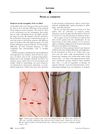
December 2008 in “Journal of The American Academy of Dermatology” This study suggests that yellow dots observed in scalp videodermoscopy are not highly specific to alopecia areata, as they appear in various types of alopecia.
 January 2020 in “the british journal of cardiology”
 This case report suggests that the progestogen-only pill may cause false-positive aldosterone/renin ratio results in primary hyperaldosteronism screening, indicating it should be omitted before testing.
 25 citations
,
September 2015 in “Clinical Endocrinology”
25 citations
,
September 2015 in “Clinical Endocrinology” This study found that diagnosing nonclassic congenital adrenal hyperplasia in women based solely on serum 17OHP measurements can lead to false positives, suggesting the need for urinary steroid profiles and genetic testing for confirmation.
 46 citations
,
August 2019 in “Journal of Ethnopharmacology”
46 citations
,
August 2019 in “Journal of Ethnopharmacology” This review compiles current information about Eclipta prostrata, traditional uses, and its promising pharmacological properties, like hepatoprotective and anti-inflammatory effects, but emphasizes that more research is needed to fully understand its mechanisms and ensure safety for clinical application.
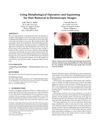
This study presents a new approach to automatically remove hair artifacts from dermoscopic images, which reportedly performed well compared to existing methods like DullRazor using the PH2 datasets.
8 citations
,
January 2011 This study observed that a polyherbal ointment containing extracts from several plants promoted significant hair growth in rats compared to using single plant extracts.
 6 citations
,
January 2022 in “GSC Biological and Pharmaceutical Sciences”
6 citations
,
January 2022 in “GSC Biological and Pharmaceutical Sciences” This review discusses the ethnobotanical use and bioactivity of Eclipta prostrata, highlighting its potential in treating various conditions and linking its effects to secondary metabolites.
 6 citations
,
March 2014 in “Herba Polonica”
6 citations
,
March 2014 in “Herba Polonica” This article reviews treatment options for androgenetic alopecia, highlighting potential uses of plant materials, but reports no new clinical results.
4 citations
,
December 2020 in “Natural Product Sciences” This study identified ten compounds from Eclipta prostrata, with some displaying potent inhibitory effects against α-glucosidase and acetylcholinesterase enzymes.
 4 citations
,
January 2016 in “Journal of analytical & bioanalytical techniques”
4 citations
,
January 2016 in “Journal of analytical & bioanalytical techniques” This study evaluated a hair growth gel with Hibiscus rosa sinensis, Eclipta alba, and Solanum nigrum extracts, demonstrating consistent homogeneity, 5 α-reductase inhibitory activity, and no skin irritation.
 3 citations
,
July 2021 in “International journal of pharmaceutical chemistry and analysis”
3 citations
,
July 2021 in “International journal of pharmaceutical chemistry and analysis” This review examines the role of medicinal plants in treating hair problems like baldness and dandruff, but it reports no new clinical results and emphasizes nutritional benefits from various herbal ingredients.
 3 citations
,
November 2020 in “Phyton-international Journal of Experimental Botany”
3 citations
,
November 2020 in “Phyton-international Journal of Experimental Botany” This review discusses the potential therapeutic applications of wedelolactone, a compound in Eclipta prostrata, for various chronic human diseases and reports no new clinical results.
 2 citations
,
February 2019 in “JOJ dermatology & cosmetics”
2 citations
,
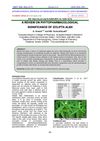
February 2019 in “JOJ dermatology & cosmetics” The study found that Anagen grow, a herbal serum, promotes hair growth elongation and may inhibit the alpha reductase enzyme, suggesting it as a safe, effective alternative to finasteride and beneficial alongside minoxidil for reducing scalp dryness.
 1 citations
,
January 2020 in “International journal of research in pharmacy and chemistry”
1 citations
,
January 2020 in “International journal of research in pharmacy and chemistry” This review provides an overview of the ethnomedicinal uses, chemical composition, and pharmacological profile of Eclipta alba Hassk and presents no new clinical findings.
 1 citations
,
January 2017 in “Pharmaceutica Analytica Acta”
1 citations
,
January 2017 in “Pharmaceutica Analytica Acta” This study found petroleum ether to be more effective than methanol at extracting β-sitosterol from Eclipta alba, with higher concentrations detected using HPTLC and HPLC methods. The extracted materials contained metals within safety limits.
1 citations
,
April 2005 in “World Journal of Pharmaceutical and life sciences” This article describes the formulation of a multipurpose herbal shampoo powder using natural ingredients, with a focus on avoiding harmful synthetic chemicals, but reports no clinical results.
August 2026 in “Tạp chí Dược liệu” In this study, Curcuma longa, Eclipta prostrata, and Pogostemon cablin extracts were found to significantly promote human dermal papilla cell proliferation, while Chrysanthemum indicum and Eclipta prostrata exhibited strong antioxidant activities, indicating their potential for hair growth-promoting formulations.
 May 2026 in “Zenodo (CERN European Organization for Nuclear Research)”
 This study evaluated a herbal mehendi gel formulated for natural hair coloring and scalp care, finding it safe for topical use and demonstrating benefits like natural coloring and scalp conditioning.
 May 2026 in “Zenodo (CERN European Organization for Nuclear Research)”
 In this study, researchers developed a herbal mehendi gel using natural plant-based ingredients aimed at providing sustainable hair coloring and scalp care. The formulation demonstrated beneficial properties including natural hair coloring, scalp conditioning, antimicrobial activity, antioxidant action, and safety with no observed skin irritancy.
 April 2026 in “Zenodo (CERN European Organization for Nuclear Research)”
 This paper discusses the formulation of an anti-dandruff herbal hair mask using traditional Ayurvedic herbs like Amla, Neem, and Shikakai, which are suggested to effectively address symptoms like redness, flaking, and itching associated with chronic scalp issues.
 April 2026 in “Zenodo (CERN European Organization for Nuclear Research)”
 This study emphasizes the importance of fortifying hair follicles to combat significant hair and scalp issues related to lifestyle changes, recommending Ayurvedic herbs like Amla and Shikakai as effective treatments for dandruff, highlighting their potential in a newly developed anti-dandruff herbal hair mask.
 April 2026 in “International Journal of Allied Medical Sciences and Clinical Research”
 In this study, researchers formulated an herbal hair serum with plant extracts like Hibiscus and Nigella and observed that it demonstrated acceptable physical properties and potential anti-dandruff activity, proposing it as a safe and effective alternative to synthetic hair care products.
 March 2026 in “International Journal of Science and Research (IJSR)”
 This research focused on Eclipta prostrata, revealing unique anatomical features and bioactive compounds such as alkaloids and flavonoids that can aid in reliable identification and quality control of this medicinal herb, commonly used for hair growth and liver health.
 March 2026 in “Israel Journal of Plant Sciences”
 This study investigated the endophytic bacterial community of Eclipta prostrata, finding that these microorganisms contribute to the plant’s stress tolerance and detoxification, which may enhance its medicinal properties by supporting the synthesis and stability of beneficial metabolites.
 January 2026 in “Zenodo (CERN European Organization for Nuclear Research)”
 In this study, a herbal hair wax stick formulated with extracts of Tulsi, Amla, and Bhringraj demonstrated favorable styling, antimicrobial, and antioxidant properties, suggesting it as a safe, natural alternative to synthetic hair styling products.
 January 2026 in “Zenodo (CERN European Organization for Nuclear Research)”
 In this study, a herbal hair wax stick incorporating extracts of Tulsi, Amla, and Bhringraj was formulated and evaluated, with the F3 formulation showing the best balance of pH, spreadability, antimicrobial, and antioxidant activity, suggesting it as a natural alternative to synthetic hair styling products.
 January 2026 in “Journal of Ayurveda and Naturopathy”
 This review highlights that Eclipta alba, or false daisy, shows promise for liver protection and hair care due to its antioxidant and tissue-protective properties, supporting its traditional Ayurvedic uses for treating liver disorders and promoting hair growth.
December 2025 in “Journal of the Bangladesh Agricultural University” This study documented 55 weed species at Daffodil International University, highlighting their ecological and cultural importance, with many species having recognized ethnobotanical uses such as hair growth and skin disorder treatments.