 1 citations
,
October 2023 in “Journal of the Pakistan Medical Association”
1 citations
,
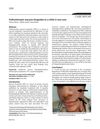
October 2023 in “Journal of the Pakistan Medical Association” This source describes a case of a 12-year-old male diagnosed with folliculotropic mycosis fungoides, presenting with an asymptomatic, erythematous plaque. Histology and immunohistochemistry confirmed FMF, which is typically rare in children and marked by follicular infiltration by CD4+ lymphocytes.
1 citations
,
February 2024 in “Journal of the European Academy of Dermatology and Venereology” Certain genetic factors may contribute to frontal fibrosing alopecia in Brazil.
 1 citations
,
January 2024 in “Advanced science”
1 citations
,
January 2024 in “Advanced science” This study found that fibronectin-attached cell sheets significantly improved wound healing in vivo by increasing wound closure rates, reducing inflammation, and promoting tissue regeneration compared to conventional cell sheets.
 6 citations
,
August 2020 in “JCRPE”
6 citations
,
August 2020 in “JCRPE” This report presents a case of familial male-limited precocious puberty with a novel LHCGR gene mutation, where a boy responded well to treatment with bicalutamide and anastrozole.
 10 citations
,
March 2016 in “Journal of The American Academy of Dermatology”
10 citations
,
March 2016 in “Journal of The American Academy of Dermatology” This review discusses the potential usefulness and safety profile of oral antiandrogens for treating frontal fibrosing alopecia, noting possible benefits but acknowledges that finasteride's efficacy remains uncertain.
 March 2020 in “The journal of investigative dermatology/Journal of investigative dermatology”
 This study suggests that the expression of VLCFA biosynthesis genes is suppressed in skin hyperplasia and cancer, which could influence keratinocyte function.
June 2025 in “Veterinary Sciences” In this case study, a neutered British Shorthair cat with diabetes mellitus showed fast remission of facial skin issues using off-label oclacitinib, with no recurrence for 17 months, but required surgery for eyelid cicatrization.
November 2025 in “Cancer Cell International” This study provides a detailed cellular atlas of cutaneous squamous cell carcinoma, indicating that different fibroblast subtypes play roles in tumor progression and suppression, with potential biomarkers identified for HPV-related tumor growth.
June 2026 in “Dermatology” In this study, frontal fibrosing alopecia showed a higher cumulative remission rate compared to lichen planopilaris, despite similar timeframes and relapse rates between the two conditions.
 26 citations
,
October 2018 in “British Journal of Dermatology”
26 citations
,
October 2018 in “British Journal of Dermatology” This study found that high frequency use of sunscreen is associated with frontal fibrosing alopecia among women attending a specialist hair clinic in Australia.
 32 citations
,
January 2003 in “Facial Plastic Surgery”
32 citations
,
January 2003 in “Facial Plastic Surgery” In this study, an endoscopic midface lifting technique showed notable improvement in midface ptosis and infraorbital hollowing, with lower morbidity and few complications after over 400 procedures.
 January 2018 in “Journal of Cleft Lip Palate and Craniofacial Anomalies”
 This article details initial findings from moustache restoration using the FUE hair restoration technique in 8 adult males with prolabial alopecia following repaired bilateral cleft lip.
2 citations
,
October 2015 in “Mikrobiyoloji bülteni” This case report describes a 20-year-old female with favus caused by T. schöenleinii, which initially improved with antifungal treatment but recurred due to poor adherence, underscoring favus as an ongoing health issue in Turkey.
 1 citations
,
June 2024 in “British Journal of Dermatology”
1 citations
,
June 2024 in “British Journal of Dermatology” In this case study, a woman with frontal fibrosing alopecia and associated hyperpigmentation showed significant improvement in skin pigmentation and itch after 9 months of treatment with mycophenolate mofetil, highlighting its therapeutic potential for lichen planus pigmentosus linked to this condition.
March 2026 in “Anais Brasileiros de Dermatologia” Lichen planopilaris and frontal fibrosing alopecia are likely distinct diseases with different tissue involvement.
 14 citations
,
April 2019 in “International Journal of Women's Health”
14 citations
,
April 2019 in “International Journal of Women's Health” This review highlights current treatment options for frontal fibrosing alopecia, noting that 5-α-reductase inhibitors, intralesional steroids, and hydroxychloroquine have the highest evidence of effectiveness, while other therapies show variable results and need further research.
22 citations
,
July 2024 in “Frontiers in Oncology” This study found that FLASH radiation within a Spread-out Bragg Peak retained its normal tissue-sparing effect compared to conventional radiation, with a 40% reduction in acute skin damage and an 18% reduction in fibrotic development in mice.
January 2018 in “Journal of Crohn s and Colitis” This study found that high-dose intravenous ferric carboxymaltose may reduce inflammatory activity in patients with inflammatory bowel disease and iron deficiency anaemia, as evidenced by decreased CRP levels and improved clinical disease indices.
 40 citations
,
January 2013 in “International journal of trichology”
40 citations
,
January 2013 in “International journal of trichology” This study found that among women with frontal fibrosing alopecia, 100% showed dermoscopic elements suggestive of the condition, with perifollicular erythema often indicating disease activity.
December 2018 in “International journal of women’s dermatology” This case report highlights that frontal fibrosing alopecia may be underrecognized in young women and notes that no single treatment regimen has been proven consistently effective for this condition.
31 citations
,
January 2016 in “Skin Appendage Disorders” This study observed two cases of frontal fibrosing alopecia developing on preexisting vitiligo, suggesting a potential causal link between the two conditions.
October 2021 in “Scholarworks (University of Massachusetts Amherst)” This dissertation demonstrates that FERONIA regulates essential plant functions such as RAC/ROP signaling, pollen tube reception, cell wall integrity, and sugar signaling as a cell surface receptor kinase.
This abstract lists numerous dermatological side effects and reactions associated with various medications but reports no new research findings.
 28 citations
,
December 2017 in “Journal of Investigative Dermatology Symposium Proceedings”
28 citations
,
December 2017 in “Journal of Investigative Dermatology Symposium Proceedings” This review summarizes findings on the long-term use of tofacitinib for severe alopecia areata, reporting its potential as a promising treatment option.
 222 citations
,
September 2016 in “JCI insight”
222 citations
,
September 2016 in “JCI insight” This research overview highlights that although JAK inhibitors show promise as potential treatments for alopecia areata based on recent insights into the disease mechanism, their efficacy has not yet been thoroughly evaluated in a systematic manner.
 95 citations
,
November 2016 in “Journal of The American Academy of Dermatology”
95 citations
,
November 2016 in “Journal of The American Academy of Dermatology” This article reviews primary cicatricial alopecias, focusing on lymphocytic forms such as chronic cutaneous lupus erythematosus, according to a classification by the North American Hair Research Society, and reports no new clinical results.
 September 2021 in “CRC Press eBooks”
 This article discusses features, genetics, and diagnostic challenges of central centrifugal cicatricial alopecia in African American women but reports no new clinical results.
 May 2023 in “Siriraj Medical Journal”
 This study demonstrated that the Thai version of the FDLQI is a valid and reliable tool for assessing the quality of life of family members of patients with dermatological diseases.
 3 citations
,
August 2014 in “Journal of The American Academy of Dermatology”
3 citations
,
August 2014 in “Journal of The American Academy of Dermatology” This article discusses the role of filaggrin gene mutations in understanding atopic dermatitis and their link to allergic sensitization but does not report new clinical results.
 1 citations
,
December 2018 in “Journal of cutaneous pathology”
1 citations
,
December 2018 in “Journal of cutaneous pathology” This study found that 11% of cutaneous focal mucinosis lesions demonstrated follicular induction, which can mimic basal cell carcinoma histologically and complicate diagnosis.