5 citations
,
January 2022 in “Asian Journal of Pharmaceutical and Clinical Research” In this review, the authors highlight that emulgels, a combination of gel and emulsion, provide an effective topical drug delivery system for hydrophobic drugs, offering benefits like controlled release and versatility in treating various dermatological conditions.
 6 citations
,
February 2016 in “Journal of Microencapsulation”
6 citations
,
February 2016 in “Journal of Microencapsulation” This study found that injectable finasteride microspheres provided a sustained drug release with a minimal initial burst in albino rabbits compared to oral suspension.
 September 2024 in “Journal of the American Academy of Dermatology”
 This study found that a new compounded topical solution for alopecia was clinically tolerable and did not cause irritation, while also showing potential to enhance hair growth through fibroblast proliferation and gene expression.
1 citations
,
May 2023 in “Elsevier eBooks” 16 citations
,
June 2015 in “Drug Design Development and Therapy” This study found that a gelatin microparticle-containing self-microemulsifying formulation combined with Soluplus improved the oral absorption of dutasteride.
6 citations
,
March 2024 in “Saudi Pharmaceutical Journal” This study found that a nano-cubosome formulation co-loaded with capsaicin and thiocolchicoside enhanced bioavailability and showed promising analgesic and anti-inflammatory effects in rats, potentially benefiting gout management through improved transdermal delivery.
January 2002 in “J0urnal of Nanjing Military Medical College” This study developed a new finasteride capsule with accurate dosage and good stability, showing potential as an effective oral preparation with a tentative two-year shelf life.
June 2024 in “International Journal of Pharmaceutical Research and Applications” This study designed fast-dissolving Minoxidil tablets to improve patient compliance and found that formulations containing 6% croscarmellose sodium were optimal, showing rapid in-vitro dispersion and effective drug release without drug interaction.
January 2026 in “PubMed Central” This article reviews self-assembled nanoparticles, highlighting their promising role in drug delivery systems but noting the need for further research on stability and large-scale industrial application; it reports no new clinical findings.
21 citations
,
September 2013 in “Current medicinal chemistry” This study found that co-drugs synthesized from hydroquinone and tranexamic acid improved skin targeting and deposition, with reduced irritation and enhanced efficacy for treating hyperpigmentation.
6 citations
,
February 2025 in “International Journal of Molecular Sciences” This study found that the solid self-nanoemulsifying drug delivery system improved the oral bioavailability of carvedilol significantly compared to the drug alone, enhancing its solubility, dissolution, AUC, and Cmax.
 8 citations
,
July 1990 in “Archives of Dermatology”
8 citations
,
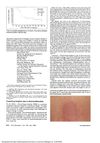
July 1990 in “Archives of Dermatology” This case report details a fixed-drug eruption in a woman linked to the use of dextromethorphan, marking it as a previously unreported skin reaction to this medication.
25 citations
,
July 2022 in “Pharmaceutics” This study optimized efinaconazole spanlastic nanovesicles using risk management and multivariate analysis for potential transungual delivery to treat onychomycosis, achieving improved drug permeability and dissolution efficiency.
January 2007 in “The Journal of Pharmaceutical Practice” This study concluded that a synthesis process for finasteride from pregnenolone acetic ester is inexpensive, simple, and achieves a good yield of 36.5%.
77 citations
,
December 2004 in “Choice Reviews Online” This review discusses various drugs and their uses across multiple therapeutic categories but reports no new clinical results.
 3 citations
,
August 2013 in “Tropical Journal of Pharmaceutical Research”
3 citations
,
August 2013 in “Tropical Journal of Pharmaceutical Research” This study concluded that the Box-Behnken experimental design effectively optimizes the size of finasteride nano-emulsions by assessing the impact of various experimental factors.
April 2026 in “SSRN Electronic Journal”  14 citations
,
August 2018 in “Journal of Pharmaceutical and Biomedical Analysis”
14 citations
,
August 2018 in “Journal of Pharmaceutical and Biomedical Analysis” This study found that finasteride maintained chemical and physical stability in various excipient mixtures, which may guide the development of stable topical delivery systems.
7 citations
,
January 2019 in “Case Reports in Surgery” This case report describes a patient self-injecting facial fillers, highlighting common complications that can mimic oral cancer, leading to diagnostic challenges and economic implications for the National Health Service.
70 citations
,
August 2019 in “European Journal of Medicinal Chemistry”  March 2026 in “International Journal of Pharmaceutics and Drug Analysis”
 In this study, researchers developed a polyherbal emulgel for topical use in managing rheumatoid arthritis and found that formulation F3 provided optimal drug release and stability, indicating it may be an effective alternative with improved patient compliance.
 39 citations
,
November 2015 in “Nanomedicine”
39 citations
,
November 2015 in “Nanomedicine” This study found that the developed Finasteride-loaded SMEDDS improved the relative bioavailability of the drug compared to a commercial tablet, offering a promising oral delivery system for glucosteroid analogs.
1 citations
,
December 2024 in “ACS Biomaterials Science & Engineering” The patches could quickly deliver epilepsy treatment and reduce seizures.
 11 citations
,
January 2020 in “Micro and Nanosystems”
11 citations
,
January 2020 in “Micro and Nanosystems” This study found that transethosomal gel loaded with propranolol hydrochloride prolonged drug release and increased peak plasma concentration compared to an oral tablet, suggesting a promising alternative for delivery.

In this large retrospective study, patients using compounded topical finasteride and minoxidil through a telehealth platform for male androgenetic alopecia reported high satisfaction and low incidence of side effects, with no need for higher care or treatment discontinuation due to adverse reactions.
48 citations
,
January 2024 in “Frontiers in Pharmacology” This paper reviews strategies to enhance the effectiveness of topical drug delivery by addressing skin barrier challenges, optimizing drug delivery systems, and personalizing treatment approaches, highlighting both current advancements and limitations in the field.
11 citations
,
July 2023 in “Applied Nanoscience” August 2024 in “Proceeding Cendekia International Conference Health and Technology” In this quasi-experimental study, researchers explored the optimal formulation of a nanoemulsion containing candlenut ethanol extract, finding that specific combinations of tween 80, span 80, and sonication time affected its physical properties and stability, although further activity testing is needed.
3 citations
,
September 2018 in “Current Drug Delivery” This study found that a finasteride topical gel formulation using propylene glycol and Tween® 80 showed significantly enhanced permeation compared to a control formulation without these enhancers.