 35 citations
,
May 2008 in “Journal of Clinical Oncology”
35 citations
,
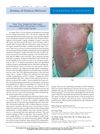
May 2008 in “Journal of Clinical Oncology” A cancer patient died from a severe skin reaction after taking the drug cetuximab.
 17 citations
,
July 2019 in “Majalah Obat Tradisional”
17 citations
,
July 2019 in “Majalah Obat Tradisional” This study found that tannin effectively inhibits and degrades mono-species and polymicrobial biofilms, making it a potential candidate for antibiofilm treatments.
January 1990 in “Medical Entomology and Zoology” This study developed a faster method for analyzing fatty acid ethyl esters in hair to help detect alcohol consumption levels, showing potential for applications in forensic and clinical settings.
May 2021 in “bioRxiv (Cold Spring Harbor Laboratory)” This study found that calprotectin induces complex multi-metal starvation responses in Pseudomonas aeruginosa, affecting its metal homeostasis pathways and resistance to polymyxin B.
 April 2023 in “The journal of investigative dermatology/Journal of investigative dermatology”
 This study reported significant transcriptomic changes in keratinocyte and immune cell populations in a mouse model with EGFR-deficient epidermis, suggesting possible targets for mitigating adverse skin events in EGFR-targeted cancer therapy.
49 citations
,
February 2014 in “Clinical Cosmetic and Investigational Dermatology” This review discusses the diagnostic and therapeutic approaches to furunculosis, emphasizing the importance of hygiene and microbiological testing to prevent and manage recurrent infections, and reports no new clinical results.
 January 2024 in “International Journal of Advanced Biochemistry Research”
 In this study investigating canine pyoderma, the researchers found that Staphylococcus species isolated from 57 dogs were most sensitive to the antibiotic Linezolid, with a 100% sensitivity rate, followed by other antibiotics like Doxycycline hydrochloride and Cefpodoxime.
24 citations
,
February 2023 in “BMC Complementary Medicine and Therapies” This study found that Forsythiaside A may protect against sepsis-induced acute kidney injury in mice by reducing inflammation and apoptosis through modulation of ER stress responses.
 April 2017 in “The journal of investigative dermatology/Journal of investigative dermatology”
 In a guinea pig model of dermatophytosis, this study found that subcutaneous CD101, dosed once weekly, demonstrated significant clinical and mycological efficacy compared to the vehicle control and the oral antifungal terbinafine, suggesting potential for CD101 in treating fungal skin infections.
 1 citations
,
April 2019 in “Journal of Investigative Dermatology”
1 citations
,
April 2019 in “Journal of Investigative Dermatology” This study concluded that the topical gel VB1953 reduced inflammatory and non-inflammatory acne lesions and resistant bacteria in patients with clindamycin-resistant acne, showing promise as an effective treatment.
This study observed that mesenchymal stem cell-conditioned medium accelerated burn wound healing in rats by enhancing epidermal growth factor presence, improving wound closure, collagen density, and re-epithelialization compared to the control.
7 citations
,
October 2021 in “Current Dermatology Reports”  May 2020 in “International Journal of Engineering Applied Sciences and Technology”
 This study explored the antimicrobial potential of natural bioactive materials such as Citrus lemon, Garlic, Baeckea frutescens, Neem, and Eclipta Alba, highlighting their eco-friendly and non-toxic properties for combating harmful bacteria.
 May 2024 in “Animal genetics”
 The researchers investigated a Maine Coon cat with suspected classical Ehlers-Danlos Syndrome and discovered a heterozygous deletion in the COL5A1 gene, underscoring the value of whole-genome sequencing for precise veterinary diagnostics.
17 citations
,
January 2025 in “Journal of Nanobiotechnology” This review discusses the potential of bacterial extracellular vesicles in regenerative medicine, highlighting their advantages in addressing current EV challenges, and provides strategies for optimizing their preparation; it reports no new clinical results.
8 citations
,
June 2022 in “Cancers” In this study, EC chemotherapy was found to be noninferior to TC in causing grade 3 or 4 neutropenia among HR+/HER2-negative breast cancer patients, but EC was associated with more other adverse events.
 January 2025 in “JCEM Case Reports”
 This report describes a 27-year-old patient with Ehler-Danlos syndrome who also presented with hypophosphatasia and mastocytosis, and suggests enzyme replacement therapy might alleviate symptoms in such overlapping genetic conditions.
April 2026 in “IntechOpen eBooks” The researchers presented a case study on Exo.Reset®, a cosmetic formulation using extracellular vesicle technology, demonstrating systematic application of recognized standards to ensure scientific rigor and regulatory compliance in skin rejuvenation product development, providing a practical model for EV-based cosmetic innovations.
27 citations
,
January 2022 in “Current Research in Biotechnology” This study reports that soy protein isolate/hydroxyethyl cellulose nanofibrous mats embedded with diclofenac sodium and halloysite nanotubes demonstrated sustained drug release, effective antibacterial action against E. coli and B. subtilis, and maintained biocompatibility, highlighting their potential use in wound care.
29 citations
,
January 2005 in “Journal of Long-Term Effects of Medical Implants” This article reviews the clinical characteristics and treatment options for various common bacterial skin infections but presents no new clinical results.
2 citations
,
June 2008 in “University of Zagreb University Computing Centre (SRCE)” This case report details a cat with sterile neutrophilic dermatitis that improved with cessation of previous medications and local povidone iodine therapy.
 5 citations
,
July 2023 in “International journal of biological macromolecules”
5 citations
,
July 2023 in “International journal of biological macromolecules” This research observed that a silver nanoparticle-loaded polydopamine/polyethyleneimine-coated bacterial cellulose dressing effectively inhibited S. aureus infections, reduced inflammation, and promoted wound healing compared with untreated cellulose, demonstrating its potential for treating infected wounds.
1 citations
,
April 2024 in “Pathogens” This study observed mycobacterial infection with M. xenopi in a pet ferret, noting its resistance to doxycycline, and highlighted the potential zoonotic transmission risk associated with such infections.
November 2025 in “Acta Dermato Venereologica” In this study, researchers reported that while systemic antibiotics are often chosen first for treating severe folliculitis decalvans, they have a high discontinuation rate, suggesting an urgent need for more effective immunomodulatory treatments.
5 citations
,
April 2016 in “PubMed” This article discusses common skin side effects of EGFR inhibitors like cetuximab, noting their management remains based on clinical experience without strict therapy protocols, but provides no new clinical findings.
 20 citations
,
February 2019 in “Genes”
20 citations
,
February 2019 in “Genes” This study identifies a likely pathogenic homozygous missense variant in the AEBP1 gene in a patient with symptoms of classical Ehlers-Danlos syndrome, suggesting new perspectives for EDS classification and research.
1 citations
,
February 2020 in “The Journal of clinical investigation/The journal of clinical investigation” This study elucidates a mechanism for acne-like skin toxicity caused by EGFR/MEK inhibitors, involving an interaction with skin bacteria to trigger inflammation, which supports existing antibiotic treatment practices.
2 citations
,
July 2011 in “International Journal of Dermatology” This case report describes three instances of eosinophilic pustular folliculitis lacking visible pustules, which histopathology confirmed involve eosinophilic infiltration around hair follicles.
2 citations
,
July 2025 in “Chemical Engineering Journal” The hydrogel dressing effectively treats infected wounds by combining infection control and tissue regeneration.
 June 2023 in “Benha Journal of Applied Sciences”
 In this study, researchers isolated gram-positive bacteria from acne lesions in 50 patients, finding that Staphylococcus epidermidis, Staphylococcus aureus, Micrococcus luteus, and Leuconostoc mesenteroides were present at varying frequencies, indicating multimicrobial causes for acne vulgaris.