 March 2024 in “Cytologia”
 In this study, researchers observed that melatonin-mediated LncRNA MTC in Liaoning cashmere goat skin fibroblasts enhances cell proliferation by interacting with the GSTM1 protein, affecting its complex formation with ASK1 and thereby inhibiting apoptosis, which may be relevant for improving cashmere growth.
This study observed increased proliferation and certain gene expressions in dermal papilla cells exposed to an 808 nm laser diode array at doses above 0.5 J/cm².
6 citations
,
December 2023 in “Journal of Molecular Cell Biology” In this study, Gsdma1/2/3 knockout mice showed reduced epidermal hyperplasia and inflammation when induced by PMA, which was attributed to decreased EGFR-Stat3/Akt signaling due to a decrease in related ligands.
July 2022 in “Journal of Investigative Dermatology” 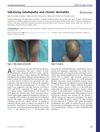 July 2018 in “Kidney international”
 This case study describes a 9-year-old girl with a homozygous EGFR gene mutation, presenting with tubulopathy and chronic dermatitis, whose ongoing symptoms and management offer insights into this rare genetic condition.
1 citations
,
November 2023 in “Skin Appendage Disorders” This study found that 308 nm excimer lamp therapy provides a good clinical response with fewer adverse effects for limited alopecia areata but is less effective for widespread hair loss like alopecia totalis.
May 2025 in “Lasers in Surgery and Medicine” This study reported that nonablative monopolar radiofrequency therapy provided sustained reductions in both inflammatory and noninflammatory acne lesion counts and sebum production in participants with moderate-to-severe acne vulgaris, with high patient satisfaction and no significant adverse effects observed up to 12 months posttreatment.
January 2012 in “Journal of Northwest A & F University” In this study, the researchers observed that Eda mRNA expression in goat skin peaks during the catagen phase of the hair cycle, suggesting its involvement in hair cycle regulation.
5 citations
,
April 2022 in “IntechOpen eBooks” This source describes the potential benefits of a nanoemulgel delivery system for enhancing the use of lipophilic drugs, improving patient compliance, and expanding treatment options for various conditions, including acne, arthritis-related inflammation, and Parkinson's disease, while also offering sunburn protection in cosmetic applications.
5 citations
,
April 2020 in “Journal of Mind and Medical Sciences” This paper presents a new device for navigational surgery utilizing the fluorescent properties of Indocyanine Green, offering enhanced intra-operative imaging capabilities by identifying tissues with an infrared CMOS camera.
 March 2023 in “International journal of pharmaceutical sciences review and research”
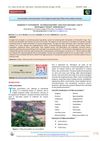
 In this study, an Emulgel containing Tridax procumbens extract was formulated and found to have promising physical properties and antimicrobial activity for wound healing.
 33 citations
,
January 2022 in “Scientific Reports”
33 citations
,
January 2022 in “Scientific Reports” This study found that loading CoQ10 into a protransfersomal emulgel improved its stability and anti-ageing effects in UV radiation skin-aged induced-mice, without causing skin irritation.
January 2022 in “Indian journal of paediatric dermatology” This case report details an unusual instance of multiple eruptive milia in an otherwise healthy 3-month-old baby, characterized by widespread distribution and believed to be idiopathic due to the absence of associated genodermatoses.
September 2023 in “Journal of the American Academy of Dermatology” June 2023 in “Zenodo (CERN European Organization for Nuclear Research)”  April 2016 in “Journal of Investigative Dermatology”
 This study found a perfect correlation between laser Doppler velocimetry measurements of scalp blood perfusion after minoxidil application and sulfotransferase enzyme activity in hair follicles, indicating a potential non-invasive test to predict minoxidil response in female pattern hair loss.
 November 2022 in “Journal of Investigative Dermatology”
 This study found that DermaCult™ Keratinocyte Expansion Medium allows for significantly extended growth of human epidermal keratinocytes while maintaining their differentiation potential.
5 citations
,
January 2022 in “Asian Journal of Pharmaceutical and Clinical Research” In this review, the authors highlight that emulgels, a combination of gel and emulsion, provide an effective topical drug delivery system for hydrophobic drugs, offering benefits like controlled release and versatility in treating various dermatological conditions.
5 citations
,
June 2020 in “Medicine” This report discusses a 22-year-old patient with MELAS syndrome carrying the m.10158T>C mutation, and highlights the need for extensive genetic testing when initial hot-spot mutation tests are negative.
 February 2026 in “Nano Research”
 This study developed a dissolvable microneedle system delivering specific molecules to remodel lymphatic networks and normalize metabolic processes, which accelerated hair growth and activated hair follicle stem cells in a mouse model of androgenetic alopecia.
17 citations
,
December 2013 in “Journal of Investigative Dermatology Symposium Proceedings” The excimer laser may help hair regrow in alopecia areata patients.
January 2012 in “Zhongguo nongye Kexue” This study concluded that transgenic somatic cell nuclear transfer technology can produce cashmere goat blastocysts carrying the K2.9 gene using specific fibroblast cells and activation methods.
November 2022 in “Journal of Investigative Dermatology” This study reported that an HS-associated NCSTN mutation in iPSC-derived skin organoids led to altered hair follicle stem cell differentiation and increased expression of proteins linked to HS inflammation.
 December 2022 in “Research Square (Research Square)”
 In this study, the researchers developed a quantum algorithm, QuantAnts machines, which identified complexes of CD9, CD34, and CD74 as potential targets for certain cancers involving the RAS pathway.
3 citations
,
December 2014 in “Aesthetic dermatology” This book reviews the evolving use of radiofrequency in aesthetic medicine and its comparison with laser and surgical approaches, but it reports no new clinical results.
 71 citations
,
October 2008 in “The journal of investigative dermatology/Journal of investigative dermatology”
71 citations
,
October 2008 in “The journal of investigative dermatology/Journal of investigative dermatology” This study presents a novel in vitro assay using human folliculoid microspheres to research hair growth, which may facilitate preclinical testing of hair growth-modulatory agents.
July 2026 in “Materials Today Bio” This study demonstrated that in a mouse melanoma wound model, the MQ Microneedles effectively managed ROS levels to inhibit tumor growth and promote wound healing through light-controlled release.
19 citations
,
May 2010 in “Surface and interface analysis” This study found that a conditioner treatment using 18-MEA combined with a specific cationic surfactant effectively restored hydrophobicity and reduced friction on damaged hair surfaces.
 April 2024 in “Journal of pharmacy & pharmacognosy research”
 This study used in silico analysis to identify 4-[2-(4-nitrophenyl)ethylcarbamoyl]benzenesulfonyl as a potential inhibitor of the EGFR mutant associated with NSCLC, highlighting the need for further in vitro and in vivo validation.
February 2023 in “Materials today bio” In this study, researchers developed a promising transdermal agent using Triton X-100-modified polyethyleneimine that successfully delivered genetic material to hair follicle cells in mice, potentially alleviating hair loss due to androgenetic alopecia by promoting cell proliferation and inhibiting apoptosis.