4 citations
,
November 2020 in “Case reports in dermatology” This report summarizes recent cases of the rare condition erythromelanosis follicularis faciei et colli to illustrate its varied clinical presentations.
 September 2024 in “Journal of the American Academy of Dermatology”
 This review discusses the consensus reached by international experts on guidelines for prescribing and monitoring low-dose oral minoxidil for hair loss, and reports no new clinical results.
6 citations
,
November 2020 in “Clinical Cosmetic and Investigational Dermatology” This study found that intralesional injections of triamcinolone acetonide at 5 mg/mL are as effective and safe as 10 mg/mL for treating patchy alopecia areata on the scalp, with similar hair regrowth rates, side effects, and recurrence observed between the two dosages.
 April 2026 in “International Journal of Drug Delivery Technology”
 The study developed herbal shampoo formulations using isolated phytoconstituents, such as eugenol, rutin, menthol, and camphor, which demonstrated similar antifungal efficacy to ketoconazole but with improved safety and detergency, offering a promising alternative for managing seborrheic dermatitis.
 May 2026 in “Zenodo (CERN European Organization for Nuclear Research)”
 This study developed a new triamcinolone acetonide serum combined with a microneedling device, showing promise for treating alopecia areata by targeting hair follicles in a less invasive, patient-friendly way with confirmed drug solubility, compatibility, and safety.
1 citations
,
November 2016 in “Journal of dermatological treatment” In this report, two young patients with corticosteroid-refractory alopecia totalis experienced safety and efficacy from oral tacrolimus.
9 citations
,
December 1987 in “European journal of endocrinology” In this study, 12 months of cyproterone acetate and ethinyl oestradiol treatment significantly reduced hair growth rate and certain hormone levels in hirsute women, though hair density and prolactin levels remained unchanged.
January 2023 in “Figshare” This meta-analysis found that a combination of clobetasol, hydroxychloroquine, and N-acetylcysteine may be the most effective treatment approach for lichen planopilaris compared to other therapies.
October 2025 in “Figshare” This systematic review and meta-analysis reported that deuruxolitinib is effective for hair regrowth and improving patient-reported outcomes in individuals with moderate to severe alopecia areata, but observed manageable treatment-emergent adverse events such as elevated creatinine kinase levels and headaches, particularly with higher doses.
15 citations
,
March 2008 in “The Journal of Dermatology” In this case report, a patient with a history of discoid lupus erythematosus experienced an exacerbation of the condition after topical immunotherapy for alopecia areata, suggesting contact dermatitis as a potential trigger.
112 citations
,
April 2009 in “Cochrane library” This review found some evidence suggesting that spironolactone can effectively reduce hirsutism in women but did not support its use for treating acne vulgaris.
 6 citations
,
August 2019 in “Indian drugs”
6 citations
,
August 2019 in “Indian drugs” This review discusses ethosomal delivery systems for topical drugs, highlighting their potential to improve treatment efficacy for conditions like herpes labialis and male pattern baldness, and reports no new clinical results.
 March 2014 in “Journal of The American Academy of Dermatology”
 Cortexolone 17a-propionate may be an effective new treatment for hair loss.
1 citations
,
November 2023 in “Journal of Innovations in Applied Pharmaceutical Science (JIAPS)” In this study, researchers developed a neem oil-based emulgel showcasing anti-dandruff properties with controlled dual release, observing formulation F5 providing a 65.27% release after 8 hours and the highest antifungal inhibition against Candida albicans.
 9 citations
,
April 2021 in “Expert opinion on pharmacotherapy”
9 citations
,
April 2021 in “Expert opinion on pharmacotherapy” This review highlights that clascoterone, a newly FDA-approved topical androgen antagonist, effectively reduces both non-inflammatory and inflammatory acne lesions with no systemic effects, making it a promising new option for acne treatment in both male and female patients.
 February 2024 in “Skin research and technology”
 This study found that line-field confocal optical coherence tomography effectively visualized microscopic alterations in alopecia areata, suggesting its potential use in diagnosis and monitoring.
This trial explores whether spironolactone is more effective than cyclines for treating moderate acne in adult women, providing a potential alternative amidst concerns over antibiotic resistance.
This study reported that the HG3 formulation of a Ketoconazole anti-dandruff gel exhibited superior drug release and antifungal efficacy without causing skin irritation, compared to other formulations tested.
4 citations
,
October 2006 in “Anais Brasileiros de Dermatologia” This case report describes a patient with alopecia areata treated with diphencyprone, who experienced both successful hair regrowth and later intense hair shedding, compatible with telogen effluvium, suggesting a possible link between contact dermatitis treatments and telogen effluvium onset.
 3 citations
,
July 2019 in “Supportive Care in Cancer”
3 citations
,
July 2019 in “Supportive Care in Cancer” The lotion CG428 did not show effectiveness in treating permanent hair loss in breast cancer survivors.
 January 2025 in “Journal of Cutaneous Medicine and Surgery”
 In this clinical trial, adding topical calcipotriol to intralesional triamcinolone acetonide significantly increased hair regrowth efficacy in scalp alopecia areata patches compared to steroids alone, but not in beard patches, with a lower incidence of atrophy observed.
1 citations
,
June 2025 in “Journal of Veterinary Internal Medicine” In this case study, a miniature donkey with multisystemic eosinophilic epitheliotropic disease was euthanized due to laminitis despite treatment for pruritus, inappetence, hypertriglyceridemia, and alopecia.
May 2024 in “Reactions weekly” February 2023 in “Journal of Cutaneous Pathology” This case report describes an adult female with concurrent mycosis fungoides and papillary dermal elastolysis, highlighting the importance of considering rare presentations in differential diagnoses.
11 citations
,
August 1948 in “Journal of Investigative Dermatology” In this study, oral calcium pantothenate was associated with improvement in the inflammatory phase of discoid lupus erythematosus of the scalp, with the most marked response observed in subacute cases.
 12 citations
,
November 2011 in “International Journal of Dermatology”
12 citations
,
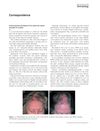
November 2011 in “International Journal of Dermatology” A woman developed a scalp condition from using minoxidil, which improved with a different treatment but left scarring.
 2 citations
,
December 2020 in “American Journal of Dermatological Research and Reviews”
2 citations
,
December 2020 in “American Journal of Dermatological Research and Reviews” This study found that combining 308-excimer phototherapy with intramuscular triamcinolone acetonide was effective and well tolerated for treating resistant alopecia totalis, showing a 90% overall response rate in the ten patients studied, with the best results observed in younger patients.
 August 1995 in “Journal of The European Academy of Dermatology and Venereology”
 New therapy helps treat hair loss.
 9 citations
,
May 2005 in “Annales de dermatologie et de vénéréologie”
9 citations
,
May 2005 in “Annales de dermatologie et de vénéréologie” In this study, three patients with erosive pustulosis of the scalp showed significant improvement when treated with oral zinc gluconate and topical steroids.
October 2006 in “Dermatologic Surgery” This study reported that eflornithine cream, when used with laser hair removal, leads to faster reduction of unwanted facial hair in women and is similarly safe compared to the cream alone.