 September 2018 in “Facial Plastic Surgery Clinics of North America”
 Biologicals are increasingly used in medicine and cosmetics, especially for skin and hair treatments, but more research is needed.
 March 2015 in “Plastic and reconstructive surgery”
 This chapter reviews the skin's structure and its clinical relevance, highlighting connective tissue diseases and the potential for novel treatments like protein, cell, or stem cell transfer, but reports no new findings.
 128 citations
,
July 2009 in “International Journal of Pharmaceutics”
128 citations
,
July 2009 in “International Journal of Pharmaceutics” This study found that penetration enhancer-containing vesicles significantly improved minoxidil delivery to the skin compared to traditional liposomes and penetration enhancer-containing ethanolic solutions, with deformability linked to enhanced deposition.
 65 citations
,
June 2020 in “Stem Cell Research & Therapy”
65 citations
,
June 2020 in “Stem Cell Research & Therapy” This review discusses recent advances in how proinflammatory cytokines affect epidermal stem cell function during skin wound healing and introduces potential therapies targeting these cells and cytokines.
 54 citations
,
August 2019 in “Bioscience trends”
54 citations
,
August 2019 in “Bioscience trends” This review discusses the potential of stem cell secretome in regenerative medicine and suggests that its paracrine effects, rather than direct cell replacement, may drive therapeutic benefits.
 28 citations
,
September 2015 in “Wiener Klinische Wochenschrift”
28 citations
,
September 2015 in “Wiener Klinische Wochenschrift” New skin substitutes for treating severe burns and chronic wounds are being developed, but a permanent solution for deep wounds is not yet available commercially.
 27 citations
,
January 2002 in “Exogenous Dermatology”
27 citations
,
January 2002 in “Exogenous Dermatology” In this study, researchers reported that chronic UV exposure may contribute to androgenic alopecia progression by influencing hair cycle changes and exacerbating solar elastosis in the scalp.
 13 citations
,
July 2017 in “Biopolymers”
13 citations
,
July 2017 in “Biopolymers” This study presents recombinant human hair keratins K31 and K81, observing novel nanostructures from their self-assembly and emphasizing disulfide crosslinking's role in this process.
 1 citations
,
April 2016 in “CRC Press eBooks”
1 citations
,
April 2016 in “CRC Press eBooks” Skin aging reflects overall body aging and can indicate internal health conditions.
 December 2025 in “Universal library of medical and health sciences.”
 This study analyzes contemporary theories and practices to understand key factors influencing the development of the examined phenomenon, proposing trends and practical applications for researchers and practitioners, while acknowledging study limitations and suggesting future research directions.
 December 2025 in “The American Journal of Medical Sciences and Pharmaceutical Research”
 This study outlines how combined ultrasonic and infrared hair treatments may enhance hair restoration and performance by breaking down keratin disulfide bonds for better treatment access and sealing cuticle scales to preserve improvements, with potential applications in salon and home settings.
 January 2023 in “Book of Abstracts”
 COVID-19 can cause different types of hair loss, with telogen effluvium being the most common.
 466 citations
,
August 2004 in “Journal of the American Academy of Dermatology”
466 citations
,
August 2004 in “Journal of the American Academy of Dermatology” This article reviews the current literature on rosacea, focusing on the new subtype classification system and the main theories of its pathogenesis, but reports no new clinical results.
 6 citations
,
September 2019 in “Skin pharmacology and physiology”
6 citations
,
September 2019 in “Skin pharmacology and physiology” This study found that RCS-01 cell therapy for aged skin was well tolerated and associated with increased gene expression related to extracellular matrix homeostasis, suggesting potential skin improvement.
 4 citations
,
October 2024 in “BMC Oral Health”
4 citations
,
October 2024 in “BMC Oral Health” This review suggests that PRF may be a promising alternative treatment for oral mucosal lesions, but further research is needed to confirm its long-term effectiveness and standardize preparation protocols.
 February 2025 in “Theranostics”
 In this study, researchers used 3D bioprinting with skin stem cells and specific hydrogels to create artificial skin that successfully promoted complete wound healing and the regeneration of skin structures, including hair follicles and blood vessels, in mice.

This review found that various treatments like finasteride, minoxidil, and platelet-rich plasma, combined with supplements, showed positive responses in combating androgenetic alopecia. The study specifically highlighted finasteride's effectiveness in increasing hair growth, with different dosages yielding notable improvements in both men and pre-menopausal women.
 59 citations
,
August 1998 in “International Journal of Dermatology”
59 citations
,
August 1998 in “International Journal of Dermatology” Genetics and hormones cause hair loss; finasteride treats it safely.

This bibliographic review highlights the importance of microneedling as a dermatological technique for treating androgenetic alopecia, emphasizing its potential benefits and the need for personalized treatment by skilled dermatologists.
 47 citations
,
July 2013 in “Pharmacological Reviews”
47 citations
,
July 2013 in “Pharmacological Reviews” This review discusses the role of pharmacological sciences in advancing regenerative medicine technologies but reports no new experimental findings; the authors advocate for increased pharmacologist involvement to drive innovations.
 421 citations
,
January 2015 in “Chemical Society Reviews”
421 citations
,
January 2015 in “Chemical Society Reviews” This review discusses recent advances in surface modification and endothelialization of biomaterials for vascular grafts, highlighting promising methods like gene engineering and targeting ligand immobilization to improve clinical outcomes.
 232 citations
,
October 2015 in “International journal of molecular sciences”
232 citations
,
October 2015 in “International journal of molecular sciences” This review discusses the role of epidermal and other adult stem cells in skin repair, focusing on their potential therapeutic applications for non-healing wounds and other skin disorders, but reports no new research results.
 202 citations
,
August 2007 in “Biomaterials”
202 citations
,
August 2007 in “Biomaterials” This review discusses advancements in artificial skin for wound treatment and reports no new clinical findings; the authors highlight the potential of new biomaterials to enhance future skin replacement therapies.
 140 citations
,
December 2017 in “Journal of Controlled Release”
140 citations
,
December 2017 in “Journal of Controlled Release” This study reviews the evolution and modifications of microneedle drug delivery systems, initially designed for percutaneous use, now expanded for targeting a variety of tissues and organs such as ocular, oral mucosal, and gastrointestinal, suggesting widespread future applicability.
 132 citations
,
January 2017 in “International Journal of Molecular Sciences”
132 citations
,
January 2017 in “International Journal of Molecular Sciences” This review explores how adipose-derived stem cells contribute to skin homeostasis and highlights recent advances in their clinical applications in dermatology, but it reports no new clinical results.
 97 citations
,
May 2008 in “Journal of Cutaneous Pathology”
97 citations
,
May 2008 in “Journal of Cutaneous Pathology” This review highlights the challenges in identifying histological features of adverse reactions to soft tissue fillers and emphasizes the need for increased awareness due to product uncertainty and delayed reactions.
 49 citations
,
August 2016 in “Aesthetic Surgery Journal”
49 citations
,
August 2016 in “Aesthetic Surgery Journal” This study found that micro-needling with cosmeceuticals or platelet-rich plasma significantly improved wrinkles, skin laxity, scar softening, and hair growth over 12 months, with minimal side effects, and that the best results occur with pigment and platelet massaging between 5 to 30 minutes post-treatment.
 47 citations
,
September 2023 in “Pharmacological Reports”
47 citations
,
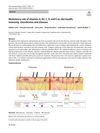
September 2023 in “Pharmacological Reports” In this review, researchers explored the roles of vitamins A, B3, C, D, and E in skin immunity, highlighting their potential as therapeutics for skin diseases due to their antioxidant, anti-inflammatory, and antimicrobial properties.
 38 citations
,
June 2005 in “Matrix Biology”
38 citations
,
June 2005 in “Matrix Biology” Minoxidil affects collagen-related genes, potentially helping treat fibrosis.
 35 citations
,
October 2017 in “Trends in Molecular Medicine”
35 citations
,
October 2017 in “Trends in Molecular Medicine” This research suggests that targeting the HIF-1α pathway via PHD inhibitors may enable regeneration similar to amphibians in mammals, potentially fast-tracking regenerative therapies from mice to humans.