 April 2026 in “Microsystems & Nanoengineering”
 This study developed HA-gel-dex hydrogels with enhanced ECM-like properties and functionality, showing promise for 3D bioprinting, tissue repair, and as wound dressings due to improved cell interaction, cytocompatibility, antimicrobial synergy, and wound healing in mice compared to traditional ECM bio-inks.
 6 citations
,
May 2012 in “Archives of Dermatological Research”
6 citations
,
May 2012 in “Archives of Dermatological Research” This study reports a novel missense mutation in the HR gene in a 68-year-old Hungarian woman with alopecia universalis and limb deformities, suggesting a need for further research on its role in these conditions.
 50 citations
,
May 2019 in “BioFactors”
50 citations
,
May 2019 in “BioFactors” This review discusses the impact of air pollution on skin health and suggests that targeting oxidative stress products like HNE could be a new strategy for treating related skin conditions.
22 citations
,
December 2013 in “Stem cells and development” This study found that treating skin wounds with a combination of epidermis-derived epithelial-like stem/progenitor cells and platelet-rich plasma improved tissue repair and increased vascularization and elastin content compared to platelet-rich plasma alone.
10 citations
,
February 2023 in “Archives of Dermatological Research” This study found that among a diverse sample of US adults, individuals with skin of color had a higher prevalence of alopecia areata compared to Whites.
 2 citations
,
December 2022 in “Journal of the European Academy of Dermatology and Venereology”
2 citations
,
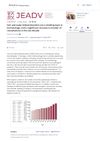
December 2022 in “Journal of the European Academy of Dermatology and Venereology” This article confirms a significant rise in hair and scalp-related disorders at tertiary outpatient dermatology centers, particularly in cases of androgenetic alopecia and frontal fibrosing alopecia.
 May 2023 in “The journal of investigative dermatology/Journal of investigative dermatology”
 This study found that baricitinib can counteract the cytokine-driven reduction of the enzyme PADI1 in human keratinocytes, which may help improve skin barrier function in atopic dermatitis by enabling epidermal differentiation.
3 citations
,
July 2009 in “Experimental and Clinical Endocrinology & Diabetes” In this study, Buserelin nasal spray significantly reduced hirsutism scores and suppressed ovarian steroid secretion in women with non-adrenal hirsutism over six months, with effects lasting post-treatment.
 June 2026 in “Zenodo (CERN European Organization for Nuclear Research)”
 This research highlights the various traditional uses of E. alba (bhringraj), noting its benefits for hair growth, liver function, and skin conditions such as eczema and pruritis, though results are not reported in this abstract.
2 citations
,
January 2005 in “PubMed” In this study, females with hirsutism showed higher levels of certain androgens and reported more frequent symptoms such as infertility and increased skin greasiness compared to those without hirsutism.
January 2011 in “Reactions Weekly”  2 citations
,
May 2013 in “The primary care companion for CNS disorders”
2 citations
,
May 2013 in “The primary care companion for CNS disorders” This case report suggests that long-acting injectable risperidone may induce hirsutism in some patients, and clinicians should monitor for this potential side effect when prescribing this antipsychotic.
92 citations
,
February 2005 in “Endocrinology” This study found that estrogen receptor beta plays a significant role in murine hair growth control, potentially acting as a silencer of estrogen receptor alpha's catagen-promoting effects.
January 2002 in “NCSU Libraries Repository (North Carolina State University Libraries)” This study found that skin is a significant site for estrogen production in mice, impacting both hair cycle regulation and sensitivity to chemical carcinogenesis.
4 citations
,
January 1991 in “Journal of dermatological treatment” This study found that GnRH-A treatment significantly reduced hirsuties scores in women with mild idiopathic hirsuties but did not affect hair growth rate or diameter.
 52 citations
,
October 1999 in “Developmental Dynamics”
52 citations
,
October 1999 in “Developmental Dynamics” This study found that the hairless gene in mice has a more extensive role in development than previously thought, as indicated by its expression in various tissues and associated abnormalities in hr/hr mutants.
 9 citations
,
November 2008 in “Journal of Womens Health”
9 citations
,
November 2008 in “Journal of Womens Health” This study found that recruiting healthy naturally menopausal women for a DHEA therapy trial was challenged by concerns about hormonal treatments and time constraints, impacting study feasibility.
 September 2004 in “Hair transplant forum international”
 This article summarizes a meeting of the American Board of Hair Restoration Surgery's Board of Directors to discuss future plans, but does not report new experimental results.
August 2026 in “Current Stem Cell Research & Therapy” This study found that extracellular vesicles from mesenchymal and outer root sheath stem cells may inhibit hair follicle stem cell apoptosis, suggesting potential therapeutic benefits for hair loss treatments.
2 citations
,
January 2020 in “Evidence-based Complementary and Alternative Medicine” This study found that Hataedock may alleviate atopic dermatitis symptoms in mice by maintaining skin homeostasis and improving skin barrier formation through the endocannabinoid system.
 1 citations
,
August 2023 in “International Journal of Molecular Sciences”
1 citations
,
August 2023 in “International Journal of Molecular Sciences” This review compiles evidence from 20 relevant studies and suggests that platelet-rich plasma-derived extracellular vesicles represent a promising therapeutic option in regenerative medicine, although the authors emphasize the need for standardized protocols due to inconsistencies across studies.
116 citations
,
December 2003 in “Acta Dermato Venereologica” This study reports that Iressa, an anti-cancer agent, commonly causes acneiform eruptions and xerosis as cutaneous side effects, similar to other agents targeting epidermal growth factor receptors.
 32 citations
,
January 2010 in “Dermatology”
32 citations
,
January 2010 in “Dermatology” This review discusses the combination of laser hair removal and topical eflornithine for managing resistant hirsutism, providing guidance based on existing clinical data, but reports no new results.
 5 citations
,
April 2021 in “Biomedicines”
5 citations
,
April 2021 in “Biomedicines” This study found that engineered skin substitutes made with skin-derived precursors and epidermal stem cells can regenerate hair follicles after grafting into nude mice.
 58 citations
,
March 2020 in “Scientific Reports”
58 citations
,
March 2020 in “Scientific Reports” This study mapped the safety profile of EGFR-TKIs by analyzing FDA adverse event reports, highlighting unexpected reactions like intestinal obstruction and hypokalaemia with gefitinib and erlotinib.
11 citations
,
November 2018 in “British Journal of Dermatology” In this study, adults with persistent facial erythema of rosacea showed significantly greater improvement when treated with once-daily oxymetazoline cream compared to a vehicle, and using baseline photographs in assessments enhanced the accuracy by reducing perceived vehicle effects.
 June 2026 in “Zenodo (CERN European Organization for Nuclear Research)”
 In this review, researchers highlighted E. alba (bhringraj) for its traditional uses in treating liver and hair growth issues, skin conditions, and digestive health, emphasizing its purported benefits like hair growth promotion and liver function enhancement.
 July 2003 in “Hair transplant forum international”
 PEMA handles on syringes improve comfort and efficiency in hair transplant procedures.
May 2021 in “Journal of the Endocrine Society” This case report highlights the adverse effects of unmonitored bioidentical hormone replacement therapy, emphasizing the need for patient education about its safety and efficacy compared to FDA-regulated hormones.
 May 2026 in “Zenodo (CERN European Organization for Nuclear Research)”
 In this study, researchers propose that the EDAR V370A allele's positive selection in East Asian populations may be linked to stable aquatic resources from Late Pleistocene ecosystems in northern China, suggesting a "nutritional niche construction" framework where these resources offset the allele's metabolic costs.