49 citations
,
August 1999 in “Journal of Investigative Dermatology” In this study, transgenic mice expressing Msx-2 developed flaky skin with hyperproliferation and misalignment in epidermal cells, suggesting Msx-2 plays a role in skin and appendage growth control.
 301 citations
,
May 1998 in “Genes & Development”
301 citations
,
May 1998 in “Genes & Development” Ets2 gene is crucial for placental development in mice.
 3 citations
,
May 2013 in “Pediatric Dermatology”
3 citations
,
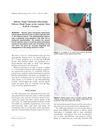
May 2013 in “Pediatric Dermatology” This case report documents the second known instance of a salivary gland choristoma on the chest wall of a newborn, highlighting its benign nature and the importance of accurate diagnosis.
7 citations
,
January 2013 in “Indian dermatology online journal” This report describes a rare case of a three-day-old male with ichthyosis hystrix type of epidermal nevus, featuring specific skin and hair symptoms but no nail or skeletal abnormalities.
This study suggests that exogenous retinoic acid can alter the morphogenesis pathway of developing skin appendages when applied during the placodal stage, leading to changes like feather formation in atypical regions of chick embryos.
 8 citations
,
April 2010 in “JEADV. Journal of the European Academy of Dermatology and Venereology/Journal of the European Academy of Dermatology and Venereology”
8 citations
,
April 2010 in “JEADV. Journal of the European Academy of Dermatology and Venereology/Journal of the European Academy of Dermatology and Venereology” This case report details the first pediatric occurrence of naevus trichilemmocysticus, a newly defined type of organoid naevus.
August 2016 in “Journal of the American Academy of Dermatology” This case study presents a 9-month-old male infant with symptoms suggesting a likely diagnosis of Hay–Wells syndrome, including severe scalp crusting, nail abnormalities, and partial syndactyly.
4 citations
,
January 2020 in “Dermatology Online Journal” In this report, a 1-year-old boy with congenital atrichia with papular lesions was found to have a complete absence of scalp and body hair and keratin-filled cysts due to a mutation in the hairless gene.
 2 citations
,
March 2022 in “Portuguese Journal of Nephrology & Hypertension”
2 citations
,
March 2022 in “Portuguese Journal of Nephrology & Hypertension” This manuscript describes two case reports of preterm newborns with a rare homozygous mutation in the epidermal growth factor receptor, leading to severe health issues and early mortality despite supportive care.
 February 2023 in “Cosmoderma”
 An infant with complete hair loss was diagnosed with a genetic disorder affecting hair growth.
January 2026 in “JDDG Journal der Deutschen Dermatologischen Gesellschaft” This case report describes a five-year-old boy diagnosed with nevus comedonicus syndrome, a rare skin condition, characterized by asymptomatic skin lesions and a congenital cataract of the right eye, without inflammation or typical signs of related conditions.
29 citations
,
December 2004 in “Developmental biology” In this study, forced expression of the transcription factor cDermo-1 in chicken dermis led to the formation of ectopic feather buds and enhanced feather growth, demonstrating its role in initiating skin appendage development.
2 citations
,
January 2014 in “Indian dermatology online journal” This report describes a case of isolated congenital atrichia combined with nevus flammeus.
February 2026 in “Immunity Inflammation and Disease” This study evaluated 386 patients with inborn errors of immunity and found that over half exhibited cutaneous, ocular, or hair manifestations, with bacterial skin infections and eczema being particularly prevalent. These findings may aid early diagnosis, especially in pediatric cases.
35 citations
,
April 1998 in “PubMed” This study found that activating the erbB-2 oncogene in transgenic mice led to severe skin abnormalities and fatal defects, indicating erbB-2's significant role in skin and hair follicle development.
 20 citations
,
July 2013 in “European Journal of Oral Sciences”
20 citations
,
July 2013 in “European Journal of Oral Sciences” This study found a novel PAX9 gene mutation that may cause tooth agenesis and trichodysplasia in a studied family.
November 2025 in “bioRxiv (Cold Spring Harbor Laboratory)” In this study, researchers engineered ventral skin organoids (vSkOs) with specific cellular compositions and signaling environments to generate human amnion-like tissues called Amnioids, offering new tools for studying human development and potential regenerative therapies.
3 citations
,
December 2013 in “American Journal of Dermatopathology” This case report describes a unique lesion in a 10-month-old girl, characterized by increased eccrine glands and hair follicles, leading to the proposed term "hybrid eccrine gland and hair follicle hamartoma".
10 citations
,
March 1997 in “Pediatric Dermatology” This case report describes a patient with trichothiodystrophy presenting with autism, mental retardation, and seizures, characterized by distinct hair abnormalities under microscopy.
56 citations
,
October 2010 in “Pediatric Clinics of North America” This article discusses various types of epidermal nevi and associated syndromes but presents no new research findings.
6 citations
,
January 1997 in “Pediatric dermatology” This case report highlights a 21-year-old man with severe nodulocystic acne resistant to conventional treatments, who showed moderate improvement with isotretinoin, and discusses its potential link to congenital digital abnormalities and Apert syndrome.
60 citations
,
August 2009 in “Journal of the American Academy of Dermatology” This study describes five patients with porokeratotic adnexal ostial nevus, a rare skin disorder, highlighting its clinical features and proposing a new encompassing term for related conditions.
11 citations
,
January 2010 in “Journal of oral and maxillofacial surgery”  November 2022 in “Journal of Investigative Dermatology”
 This study demonstrated that hiPSC-derived hair-bearing skin organoids lacked sufficient type VII collagen at the epidermal-dermal junction, indicating a need for further maturation to model certain forms of epidermolysis bullosa effectively.
 81 citations
,
June 2012 in “European journal of human genetics”
81 citations
,
June 2012 in “European journal of human genetics” This review outlines a diagnostic framework for clinicians to distinguish different types of inherited ichthyoses and suggests further testing and treatment strategies, but reports no new clinical results.
1 citations
,
December 2018 in “Sovremennye tehnologii v medicine” This study found that activation of a mother's immune system during early pregnancy in mice led to transient alopecia in their offspring, highlighting a link between epidermal and dermal histogenesis disorders and alopecia.
5 citations
,
August 1925 in “Archives of dermatology” This article presents a case of an 8-year-old boy with Recklinghausen's disease showing features such as café-au-lait spots, alopecia, and developmental anomalies, but reports no new findings beyond observation.
10 citations
,
October 2018 in “JDDG Journal der Deutschen Dermatologischen Gesellschaft” This review discusses the skin and systemic conditions associated with Down syndrome and reports no new clinical results, emphasizing the need for awareness of these manifestations in diagnosis.
10 citations
,
November 2008 in “Veterinary Dermatology” In this study, the misshaped and hairy ear phenotype in mutant mice was linked to mis-expression of certain Hoxc genes due to a chromosomal inversion.
 August 2018 in “Pediatric Dermatology”
 This case report describes a unique instance of an otherwise healthy infant with phylloid terminal hair nevus, a form of hypomelanosis without extracutaneous abnormalities.