 64 citations
,
July 1997 in “Journal of The American Academy of Dermatology”
64 citations
,
July 1997 in “Journal of The American Academy of Dermatology” This study found that eosinophils are a useful diagnostic feature for alopecia areata, especially when the typical "swarm of bees" lymphoid infiltrate is absent, helping differentiate it from trichotillomania.
24 citations
,
June 2012 in “Journal of Feline Medicine and Surgery” This case report describes three Devon Rex cats with papular dermatitis due to dermatophytosis, which resolved with antifungal treatment.
22 citations
,
February 2000 in “Journal of the American Academy of Dermatology” Eosinophils are not a reliable marker for diagnosing alopecia areata.
 21 citations
,
September 1990 in “Journal of The American Academy of Dermatology”
21 citations
,
September 1990 in “Journal of The American Academy of Dermatology” This study reports that six women developed scleroderma while taking L-tryptophan and showed improvement after stopping the supplement and/or starting corticosteroid therapy.
 20 citations
,
February 1991 in “Archives of dermatology”
20 citations
,
February 1991 in “Archives of dermatology” In this study, researchers found that high-dose tryptophan ingestion before symptom onset may be linked to clinical features resembling eosinophilia-myalgia syndrome in patients with eosinophilic fasciitis.
 19 citations
,
September 2014 in “JAMA Dermatology”
19 citations
,
September 2014 in “JAMA Dermatology” Eosinophilic infiltrate is not a reliable indicator for diagnosing chronic alopecia areata.
 18 citations
,
November 2018 in “Annals of the Academy of Medicine Singapore”
18 citations
,
November 2018 in “Annals of the Academy of Medicine Singapore” Sulfasalazine can cause severe allergic reactions leading to long-term autoimmune issues like hair loss and skin discoloration.
 11 citations
,
January 1993 in “Dermatology”
11 citations
,
January 1993 in “Dermatology” In this study, researchers found histopathological similarities between L-tryptophan eosinophilic myalgia syndrome and idiopathic eosinophilic fasciitis, with certain unique inflammatory features present in the former.
 11 citations
,
November 1990 in “Archives of Dermatology”
11 citations
,
November 1990 in “Archives of Dermatology” This case report describes a patient with eosinophilia-myalgia syndrome, likely linked to L-tryptophan use, who developed a skin rash characterized by cutaneous mucinosis.
9 citations
,
April 2020 in “Journal of Cosmetic Dermatology” This case report describes the first instance of eosinophilic folliculitis of the scalp occurring during nivolumab therapy, which responded partially to topical steroids and cream but did not require stopping the treatment.
 8 citations
,
November 1990 in “Archives of Dermatology”
8 citations
,
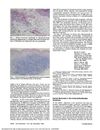
November 1990 in “Archives of Dermatology” This case report details a woman with eosinophilia-myalgia syndrome associated with L-tryptophan ingestion, highlighting skin lesions with abundant dermal mucin.
5 citations
,
January 2024 in “Therapeutic Advances in Hematology” This report suggests an association between eosinophilic folliculitis and sustained complete response in a Sézary syndrome patient treated with mogamulizumab, although regular monitoring is necessary to prevent relapse.
 5 citations
,
July 1991 in “Journal of The American Academy of Dermatology”
5 citations
,
July 1991 in “Journal of The American Academy of Dermatology” This case report describes a patient with eosinophilia-myalgia syndrome who experienced severe, persistent telogen effluvium.
 4 citations
,
January 2017 in “Ciência Rural”
4 citations
,
January 2017 in “Ciência Rural” This case report highlights that equine multisystemic eosinophilic epitheliotropic disease should be considered in horses presenting with skin lesions and gastrointestinal symptoms, as illustrated by the progression in a 5-year-old horse despite treatment.
4 citations
,
November 2015 in “The journal of investigative dermatology. Symposium proceedings/The Journal of investigative dermatology symposium proceedings” This case study highlights a patient with alopecia areata who also has eosinophilic esophagitis, suggesting it may be considered an atopic disease and a potential trigger for alopecia areata in affected patients.
 4 citations
,
March 2011 in “Korean Journal of Veterinary Research”
4 citations
,
March 2011 in “Korean Journal of Veterinary Research” This report documents the first diagnosed cases of canine eosinophilic granuloma in Korea, identified through histopathological examination of skin nodules in two dogs.
 4 citations
,
July 1994 in “Clinics in Dermatology”
4 citations
,
July 1994 in “Clinics in Dermatology” This review discusses the emergence and impact of eosinophilia-myalgia syndrome related to L-tryptophan and offers insights into environmental factors affecting sclerodermatous conditions, with no new research findings presented.
 4 citations
,
January 1987 in “Journal of The American Academy of Dermatology”
4 citations
,
January 1987 in “Journal of The American Academy of Dermatology” A man with both skin lesions and lung cancer improved quickly with chemotherapy, suggesting the skin condition might be a reaction to immune system injury.
2 citations
,
January 2024 in “BioMed Research International” This study found that alopecia areata patients with eosinophilia were more likely to have severe hair loss, atopia, and nail abnormalities compared to those without eosinophilia.
 2 citations
,
April 2022 in “PubVet”
2 citations
,
April 2022 in “PubVet” This case report discusses a 5-year-old Persian cat with feline eosinophilic granuloma complex, which responded positively to prednisone and topical corticosteroids, eliminating itching and promoting fur regrowth without relapse.
A woman's use of minoxidil for hair loss caused fluid buildup in her chest, which went away when she stopped using the product.
 2 citations
,
January 2014 in “Elsevier eBooks”
2 citations
,
January 2014 in “Elsevier eBooks” This review discusses drug-induced hypersensitivity syndrome and drug reaction with eosinophilia and systemic symptoms, highlighting clinical features, potential viral reactivations, and treatment, but reports no new clinical findings.
2 citations
,
July 2011 in “International Journal of Dermatology” This case report describes three instances of eosinophilic pustular folliculitis lacking visible pustules, which histopathology confirmed involve eosinophilic infiltration around hair follicles.
1 citations
,
June 2025 in “Journal of Veterinary Internal Medicine” In this case study, a miniature donkey with multisystemic eosinophilic epitheliotropic disease was euthanized due to laminitis despite treatment for pruritus, inappetence, hypertriglyceridemia, and alopecia.
 1 citations
,
February 2024 in “Medicine”
1 citations
,
February 2024 in “Medicine” In this case report, a 72-year-old man was initially misdiagnosed with a bladder tumor but was later accurately diagnosed with eosinophilic cystitis through pathological examination; transurethral resection and combined drug treatment improved his condition with no recurrence over six months.
 1 citations
,
April 2017 in “European Psychiatry”
1 citations
,
April 2017 in “European Psychiatry” This case study describes a patient who developed mild eosinophilia and a skin rash after starting clozapine, which resolved without discontinuing the medication.
1 citations
,
January 2013 in “Annals of Dermatology” This case report describes an 11-year-old girl with eosinophilic pustular folliculitis that showed significant improvement with naproxen after being unresponsive to other treatments.
February 2026 in “Bioscientia Medicina Journal of Biomedicine and Translational Research” This case report highlights the importance of considering eosinophilic pustular folliculitis in adolescent patients with persistent papulopustular eruptions to avoid misdiagnosis and ensure effective anti-inflammatory treatment.
July 2025 in “Journal of Investigative Dermatology” Resident memory T cells and necroptosis may drive fibrosis in eosinophilic fasciitis and morphea.
June 2025 in “Veterinary Sciences” In this case study, a neutered British Shorthair cat with diabetes mellitus showed fast remission of facial skin issues using off-label oclacitinib, with no recurrence for 17 months, but required surgery for eyelid cicatrization.