 September 2025 in “Clinical Cosmetic and Investigational Dermatology”
 This review highlights that while moderate physical activity benefits skin health by improving circulation and reducing stress, intense exercise or inadequate protective measures can harm the skin, emphasizing the need for sun protection and personalized care.
 June 2025 in “Medical academic journal”
 The study found that hybrid nanoparticles incorporating exosomes with cationic liposomes 2X3-DOPE significantly improved the delivery of both messenger RNA and small interfering RNA to rat cardiac mesenchymal stem cells in vitro, achieving up to 100% transfection efficiency for small interfering RNA.
 December 2024 in “Deleted Journal”
 This review explores the challenges of treating chronic wounds and highlights regenerative medicine as a promising approach, emphasizing the roles of growth factors, stem cell therapies, and novel regenerative treatments in improving wound healing and tissue regeneration.
This literature review reports that mesenchymal stem cell-derived secretome, including conditioned medium and extracellular vesicles, shows promise as an effective treatment for various diseases in animal and human in-vivo models, with ongoing clinical trials and recommendations for future research discussed.
 April 2024 in “Journal of cancer research and clinical oncology”
 This review discusses the isolation, characterization, and potential clinical applications of tissue-derived extracellular vesicles in cancer diagnosis, prognosis, and treatment, noting their significance but highlighting the risks and need for appropriate protocols.
 February 2024 in “Frontiers in physiology”
 In this review, the authors explore strategies for inducing scarless skin regeneration by modulating dermal signaling or specific fibroblast subsets to promote the formation of new hair follicles in wounds, particularly focusing on mimicking neonatal skin's regenerative capabilities.
 December 2023 in “Communications biology”
 This study found that inhibiting the HEDGEHOG-GLI1 pathway could reduce keloid size and gene expression, suggesting it as a potential therapeutic target for keloid pathogenesis.
 November 2023 in “Linköping University medical dissertations”
 This research presents a comprehensive workflow for producing EMA-compliant autologous keratinocyte-based therapies for wound healing and explores miRNA-mediated regulations in human keratinocytes and adipose-derived mesenchymal stem cells.
 September 2023 in “bioRxiv (Cold Spring Harbor Laboratory)”
 This study describes the use of a genetically engineered mouse model, mTurquoise2-Col4a1, to fluorescently label collagen IV and observe basement membrane dynamics during skin development, revealing its stability and pliability during rapid growth phases.
 August 2023 in “International journal of medical science and clinical research studies”
 This review discusses platelet-rich plasma (PRP) therapy for pediatric surgical wound care, evaluating its potential as an adjunctive treatment, but reports no new clinical results.
 January 2023 in “Discovery immunology”
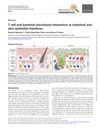
 T cells and bacteria in the gut and skin help maintain health and protect against disease.
 December 2022 in “bioRxiv (Cold Spring Harbor Laboratory)”
 This study found that inducing miR-205 reduces actin contractility and stiffness in hair follicle stem cells and progenitors, stimulating hair regeneration in both young and old mice.

This study demonstrated that cryogelation of human hair keratin allows the development of 3D scaffolds with tunable properties, supporting cell adhesion and proliferation for potential biomedical applications.
 November 2021 in “International Journal for Research in Applied Science and Engineering Technology”
 This review discusses the various applications of lyophilized platelet-rich plasma in treating different diseases and reports no new clinical results.

This Ph.D. project aims to evaluate the self-assembling potential of hair keratin extracts and study the cellular response to both crude and purified keratins, highlighting their potential applications from biomedical to water remediation.
 April 2018 in “The journal of investigative dermatology/Journal of investigative dermatology”
 This study describes a new method for isolating intact human eccrine glands from scalp follicular units, potentially advancing research on sweat gland physiology.
 April 2018 in “The journal of investigative dermatology/Journal of investigative dermatology”
 This study suggests that GATA6 is a key regulator of the upper pilo-sebaceous unit homeostasis and differentiation in human skin.
 March 2013 in “Molecular & Cellular Toxicology/Molecular & cellular toxicology”
 In this study, exposure to m-Aminophenol in human keratinocytes altered the expression of thousands of genes involved in inflammation and stress responses, suggesting potential biomarkers for MAP-induced skin toxicity.

This dissertation reported that the loss of Ovol2 impairs hair follicle regeneration and wound repair in mice, highlighting its role in regulating directional migration of epithelial cells.

This study suggests that hair follicle dermal stem/progenitor cells play a key role in both hair regeneration and skin wound healing, with potential implications for preventing hair follicle miniaturization linked to aging or alopecia.
 508 citations
,
February 2007 in “Cell”
508 citations
,
February 2007 in “Cell” This article reviews the biology of epithelial stem cells and their role in tissue self-renewal, maintenance, and regeneration, and it highlights the clinical implications of understanding their signaling pathways, but it presents no new clinical findings.
 417 citations
,
September 2005 in “PLoS biology”
417 citations
,
September 2005 in “PLoS biology” This study developed molecular signatures for dermal papilla cells and their niche, uncovering novel signaling regulators and genes linked to hair disorders, which may inform future hair development research.
 369 citations
,
June 2013 in “Biochimie”
369 citations
,
June 2013 in “Biochimie” This review discusses the potential benefits of myo-inositol supplementation for insulin resistance-related disorders and diabetic complications, but reports no new clinical results.
 359 citations
,
January 2015 in “Cold Spring Harbor Perspectives in Medicine”
359 citations
,
January 2015 in “Cold Spring Harbor Perspectives in Medicine” This article reviews the role of skin appendages in wound healing and appendage regeneration, discussing cellular and molecular mechanisms but reports no new experimental findings.
 355 citations
,
August 2013 in “Acta Biomaterialia”
355 citations
,
August 2013 in “Acta Biomaterialia” This study found that a nanoparticle-in-nanofiber system significantly accelerated wound healing in rats by promoting angiogenesis and tissue regeneration more effectively than a commercial wound dressing.
 239 citations
,
December 2013 in “Scientific Reports”
239 citations
,
December 2013 in “Scientific Reports” In this study, researchers developed a microfluidics-based method for creating uniform, size-controlled stem cell spheroids that enhance osteogenic differentiation when encapsulated in alginate-RGD microgels.
 211 citations
,
May 2018 in “Trends in cell biology”
211 citations
,
May 2018 in “Trends in cell biology” This review explores recent insights into the diverse cell populations involved in skin development, homeostasis, wound healing, and cancer progression but reports no new results.
 146 citations
,
July 2018 in “Regenerative Medicine”
146 citations
,
July 2018 in “Regenerative Medicine” This review updates the understanding of fibroblast heterogeneity in wound healing, discussing advancements in fibroblast roles and potential therapies, but it reports no new clinical results.
 82 citations
,
March 2016 in “Cell”
82 citations
,
March 2016 in “Cell” This review highlights various methods of stem cell communication that reflect the unique organization and function of different tissues and reports no new results.
 61 citations
,
December 2016 in “The EMBO Journal”
61 citations
,
December 2016 in “The EMBO Journal” This study established a new in vitro culture system that supports the growth and dynamic self-organization of hair follicle stem cells and their progeny, promoting a stable population equilibrium.