 32 citations
,
July 2018 in “Scientific Reports”
32 citations
,
July 2018 in “Scientific Reports” In this study, the authors reported that feeding cashmere goats with essential oil-cobalt significantly enhanced their growth, meat quality, and fiber quality, while stimulating immune-related physiological changes.
 20 citations
,
May 2000 in “Journal of The American Academy of Dermatology”
20 citations
,
May 2000 in “Journal of The American Academy of Dermatology” This report suggests that orf infections in Brussels often occur after the Islamic Feast of Sacrifice due to the ritual sheep sacrifice, affecting both men and women handling the animals.
November 2013 in “Journal of clinical & experimental dermatology research” This article describes the follicular unit extraction method for hair transplantation, discussing its application, candidate selection, technique, outcomes, and the authors' experiences in over several hundred cases, without presenting new clinical results.
16 citations
,
September 2021 in “Frontiers in Bioengineering and Biotechnology” In this study, chitosan-modified fucoidan/polyethylene oxide nanofibers were developed, showing promise as bio-scaffolds for tissue-engineered blood vessels by enhancing endothelial cell adhesion and inhibiting monocyte attachment.
 2 citations
,
July 2017 in “Deleted Journal”
2 citations
,
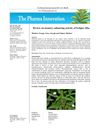
July 2017 in “Deleted Journal” This review discusses the memory enhancing activity of the ethanolic extract of Eclipta alba and reports no new clinical results.
This study observed that mesenchymal stem cell-conditioned medium accelerated burn wound healing in rats by enhancing epidermal growth factor presence, improving wound closure, collagen density, and re-epithelialization compared to the control.
 6 citations
,
January 2023 in “Medical Mycology Journal”
6 citations
,
January 2023 in “Medical Mycology Journal” In this case study of a 64-year-old woman with kerion celsi caused by Microsporum canis, treatment with the oral antifungal fosravuconazole resulted in symptom resolution without scarring or side effects over 12 weeks, suggesting its potential effectiveness for various dermatomycoses.
January 2026 in “Zenodo (CERN European Organization for Nuclear Research)” This document promotes an Erthwellness discount code that offers a 25% reduction on all their natural health products, without presenting any new research findings.
 August 1995 in “Journal of The European Academy of Dermatology and Venereology”
 New therapy helps treat hair loss.
 January 1994 in “European Journal of Cancer”
 The European School of Oncology organized various educational events in 1994, highlighting important cancer research findings.
 36 citations
,
August 2011 in “Experimental Dermatology”
36 citations
,
August 2011 in “Experimental Dermatology” In this study, researchers found no hypertrophy in axillary sweat glands of hyperhidrotic patients, with eccrine gland clear cells being the primary site of fluid transport and no evidence of apoeccrine glands.
April 2026 in “IntechOpen eBooks” The researchers presented a case study on Exo.Reset®, a cosmetic formulation using extracellular vesicle technology, demonstrating systematic application of recognized standards to ensure scientific rigor and regulatory compliance in skin rejuvenation product development, providing a practical model for EV-based cosmetic innovations.
 12 citations
,
April 2020 in “Facial Plastic Surgery Clinics of North America”
12 citations
,
April 2020 in “Facial Plastic Surgery Clinics of North America” This study reviews advancements in hair restoration surgery, noting that follicular unit excision significantly improves outcomes by enabling graft harvesting without scarring and reporting a graft transection rate under 4% when conducted with advanced equipment.

This study found that an exosome formulation with plant extracts significantly increased hair regrowth in men with male pattern alopecia compared to a placebo, without notable adverse effects.
21 citations
,
August 1991 in “Journal of the American Academy of Dermatology” This case report presents the first known instance of unilateral erythromelanosis follicularis faciei et colli in a white girl, contributing to the limited documented cases of this rare condition.
 9 citations
,
July 2002 in “Journal of the European Academy of Dermatology and Venereology”
9 citations
,
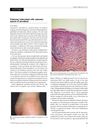
July 2002 in “Journal of the European Academy of Dermatology and Venereology” This article discusses multiple minute digitate hyperkeratosis in a dermatological context and reports no new clinical findings; the authors focus on a descriptive review.
 4 citations
,
January 2017 in “PubMed”
4 citations
,
January 2017 in “PubMed” This study found that adding epidermal growth factor to mesenchymal stem cells enhanced wound healing and hair follicle regeneration in rats compared to stem cells alone.
66 citations
,
June 2004 in “Development” This study found that FGF signaling is necessary for the initiation of feather placode development in chicken embryos, with FGF10 being implicated as an early dermal signal in the process.
 2 citations
,
January 2022 in “Hair transplant forum international”
2 citations
,
January 2022 in “Hair transplant forum international” This article introduces the Follicular Unit Excision-Linear Ellipse (FUE-LE) technique, which integrates both FUE and the linear ellipse method for optimal hair restoration, but presents no new clinical results.
September 2023 in “Facial Plastic Surgery” This article discusses safe planning and decision-making in follicular unit excision for beginner surgeons and reports no new clinical results.
 February 2026 in “Frontiers in Medicine”
 This study reported that trichoscopy can identify specific hair shaft abnormalities linked to increased serological activity, highlighting its use as a valuable non-invasive diagnostic tool in pediatric dermatology for neonates with ECS.
25 citations
,
May 2013 in “Experimental Dermatology” This study found that topical EGF-liposomal solution may protect hair follicles from chemotherapy-induced damage by inducing a catagen-like stage in a mouse model.
 1 citations
,
September 2025 in “International Journal of Drug Delivery Technology”
1 citations
,
September 2025 in “International Journal of Drug Delivery Technology” This randomized controlled study reported that combining Ecklonia cava with Diane-35 significantly improved weight, waist circumference, hormonal balance, and inflammation markers in women with polycystic ovary syndrome over three months compared to Diane-35 alone.
3 citations
,
January 2013 in “Türk veterinerlik ve hayvancılık dergisi/Turkish journal of veterinary and animal sciences” This report describes the first documented case of cutaneous asthenia in a crossbred spayed cat from Turkey, characterized by hyperelastic skin, alopecia, and an ulcerative wound.
83 citations
,
February 1991 in “Development” This study found that Fos protein expression is closely linked to epithelial cell differentiation, particularly during cornification and cell death, with overexpression observed in keratinization-blocked mutant epidermis.
425 citations
,
August 2002 in “BioEssays” This review discusses the structure and assembly of the cornified cell envelope in stratified squamous epithelial cells and various disorders leading to barrier defects, but reports no new findings.
4 citations
,
June 2024 in “Journal of Cosmetic Dermatology” In this study, fractional radiofrequency treatment was found to be effective, safe, and well-tolerated for patients with erythematotelangiectatic rosacea, with high satisfaction rates.
This study introduced the C-CAT, a new assessment tool for central centrifugal cicatricial alopecia, and found that established treatments improved symptoms in most patients over six months.
31 citations
,
January 2014 in “The Scientific World JOURNAL” This study found that the water extract of Eclipta prostrata L. may protect skin cells against UVB-induced damage, likely due to its antioxidant properties and absorption of UVA and UVB radiation.