 October 2025 in “Materials Today Bio”
 In this study, researchers developed an axolotl skin-derived extracellular matrix scaffold that enhanced wound healing in mice by promoting skin regeneration and reducing fibrosis, offering potential as a regenerative biomaterial for clinical use.
September 2025 in “International Journal of Biological Macromolecules” In an animal study with a skin defect model, this research reported that curcumin-loaded hydrogels made from recombinant humanized collagen and an eco-friendly crosslinker enhanced wound repair by promoting angiogenesis, granulation tissue formation, and hair follicle neogenesis, while providing antioxidant benefits.
 August 2025 in “International Journal of Research Publication and Reviews”
 In this review, researchers compiled and analyzed existing data on the traditional uses, chemical components, and biological activities of the plant Eclipta alba, commonly utilized in Ayurvedic and Unani medicine for treating various ailments including liver disorders, hair loss, and skin conditions.

This case report of a four-year-old girl with Nicolaides-Baraitser syndrome highlights severe atopic dermatitis and worsening alopecia, suggesting that SMARCA2 dysfunction may impact skin barrier integrity and hair health, necessitating aggressive dermatologic treatment.
 July 2025 in “International Journal of Allied Medical Sciences and Clinical Research”
 This review compiles current knowledge of Eclipta prostrata's botanical details, ethnomedical uses, phytochemical components, and various pharmacological activities, emphasizing its potential for modern pharmaceutical formulations based on its anti-inflammatory, antioxidant, anticancer, and other therapeutic properties.
 July 2025 in “JUNIOR RESEARCHERS”
 This review found that prolonged use of face masks during the COVID-19 pandemic increased the incidence of facial skin conditions like maskne and dermatitis, particularly affecting women and young people, and suggests prevention and management strategies including skincare routines, mask material choice, and therapeutic approaches.
July 2025 in “Case Reports in Dermatology” This case report highlights that early signs like pili torti may precede lichen planopilaris in some patients, emphasizing the importance of timely intervention to prevent permanent hair loss.
July 2025 in “Journal of Research in Siddha Medicine” This study investigated the sub-acute toxicity of Eclipta alba extract in Wistar albino rats, finding generally comparable hematological and biochemical parameters to controls, but noted mild morphological liver and kidney changes at the highest dose, highlighting a key area for further safety research.
 May 2025 in “The Journal of Rheumatology”
 In this case report, researchers detailed the clinical management and positive outcome of a 62-year-old woman with catastrophic antiphospholipid syndrome associated with systemic lupus erythematosus, highlighting the potential effectiveness of Eculizumab in achieving disease remission and maintaining stability over 18 months.
April 2025 in “The Journal of Agriculture and Development” In this study, researchers optimized the extraction conditions for polyphenols from the medicinal herb Eclipta prostrata, achieving the highest polyphenol content under specific conditions of temperature, solvent concentration, and time, and found the extract to have significant antioxidant activity.

This study explored Black Sea shark liver oil-based emulgels, finding that the addition of borage oil (Gel 2) enhanced the anti-inflammatory and wound healing properties compared to shark liver oil alone (Gel 1) and a reference diclofenac gel, suggesting promising eco-friendly applications in dermatocosmetics.
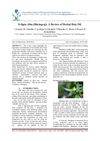
This review article underscores the benefits of herbal hair oil formulations, which include ingredients like Bhringraj leaves and coconut oil, in promoting hair health with fewer side effects compared to chemical products, offering nutrients for sebaceous gland function.
 January 2025 in “International Journal for Research in Applied Science and Engineering Technology”
 This review discusses the traditional medicinal uses of Eclipta alba (Bhringraj) in various systems, highlighting its phytochemical constituents and diverse biological activities, including potential benefits for hair growth, liver health, and immune function.
January 2025 in “Springer proceedings in earth and environmental sciences” The eco-friendly hair oil promotes healthy hair growth and is safe and effective.
December 2024 in “Applied Functional Materials” This study reported that a scalp serum containing Zanthoxylum ailanthoides extract effectively reduced inflammation and increased melanin production in cell assays, while demonstrating stable formulation and microbial safety, suggesting its potential to address scalp issues and enhance scalp health.
 September 2024 in “Journal of Cosmetic Dermatology”
 In this study, researchers found that Ectoin, derived from halophilic bacteria, can mitigate stress-related skin damage by reducing cortisone's inhibitory effects on essential skin proteins and decreasing UVB-induced glucocorticoid activity, highlighting its potential as a preventative agent for stress-induced skin issues.
August 2024 in “HAYATI Journal of Biosciences” This study assessed the therapeutic potential of Eclipta prostrata extracts in antibacterial and antioxidant applications, reporting that fractionated compounds showed enhanced efficacy and higher phenolic content compared to crude extracts, though some fractions also displayed high cytotoxicity, indicating a need for further evaluation.
In this laboratory study, the methanolic extract of Eclipta alba demonstrated significant anthelmintic activity against earthworms (Pheretima posthuma), causing paralysis and death at doses of 50-100 mg/ml, with stronger effects observed at higher concentrations compared to the standard treatment, albendazole.

This study identified a missense variant in the EDA gene of a male cat, which likely caused hypohidrotic ectodermal dysplasia, characterized by hair and teeth abnormalities; this represents the first report of such a genetic condition in cats.
May 2024 in “International journal of medicine and psychology.” This study found that patients with chronic-stage true eczema and comorbid depression experienced a more severe disease progression, marked by higher inflammation levels and significantly reduced quality of life compared to those without depression.

This review reports that extracts from the plant Eclipta alba, traditionally used in herbal medicine, may promote hair growth by inhibiting TGF-β1 expression and functioning as a 5α-reductase inhibitor, potentially benefiting androgenic alopecia treatment.
April 2024 in “Cosmetics” In this review, the authors explore how wigs can significantly improve the quality of life for individuals with alopecia areata by providing emotional benefits and serving as a coping mechanism for hair loss, while also addressing economic considerations and potential barriers to their use.

This study investigated the effects of ethanol leaf extracts from Ziziphus jujuba and Eclipta alba on cognitive impairments in diabetic rats, finding significant improvements in learning and memory with these treatments, along with decreased blood glucose levels over 21 days.
 February 2024 in “Oriental Journal of Chemistry/Oriental journal of chemistry”
 This review reports various ethnomedicinal uses, phytochemical components, and potential pharmacological effects of Eclipta alba, highlighting benefits like wound healing and neuroprotection, though it underscores the need for further mechanism-based studies and clinical trials.
 January 2024 in “International Journal For Multidisciplinary Research”
 This review examines existing studies on Eclipta prostrata, highlighting its diverse bioactive compounds and potential therapeutic benefits in traditional medicine, and underscores the need for further research to fully develop its medicinal promise.
 January 2024 in “Biomaterials Research”
 This study introduced a novel 3D co-culture system that effectively mimics in vivo extracellular matrix dynamics, supporting hair follicle biology research and providing a robust platform for evaluating hair loss treatments through enhanced epithelial-mesenchymal interactions.
 November 2023 in “South African journal of botany”
 This study found that Eclipta alba (L.) cultivated in France exhibited significant anti-inflammatory, antioxidant, and anti-collagenase activities, attributed mainly to compounds like wedelolactone and demethylwedelolactone, suggesting potential use as an anti-aging cosmetic ingredient.
 November 2023 in “Advanced Science”
 A specific hair protein variant increases the spread of breast cancer and is linked to worse survival rates.

This study reported that dupilumab successfully induced remission of chronic, disseminated eczema herpeticum in a six-year-old girl with DOCK8-deficiency hyper-IgE syndrome, achieving complete resolution of herpetic lesions and significant skin, hair, and nail improvement within three months.
August 2023 in “Apple Academic Press eBooks” This review highlights that various parts of Eclipta prostrata contain compounds with potential antioxidant, anti-inflammatory, hepatoprotective, and hair growth-promoting effects, among other activities.