 3 citations
,
January 2016 in “Chemical sciences journal”
3 citations
,
January 2016 in “Chemical sciences journal” This study found that ethanol and petroleum ether extracts of Tridax procumbens roots demonstrated significant antibacterial activity against various bacterial strains compared to benzene extracts.
 3 citations
,
April 2014 in “Journal of Dietary Supplements”
3 citations
,
April 2014 in “Journal of Dietary Supplements” This study found that CARI ONE, a herbal mixture, promotes hair growth in mice by inducing the transition from telogen to anagen phase and enhancing hair follicle development, compared to control and minoxidil treatments.
 3 citations
,
December 2013 in “Journal of Dermatology”
3 citations
,
December 2013 in “Journal of Dermatology” This study found that scanning electron microscopy can identify four specific hair morphology patterns in alopecia areata patients, offering a less invasive diagnostic option compared to punch biopsy.
 2 citations
,
August 2020 in “International Journal of Cosmetic Science”
2 citations
,
August 2020 in “International Journal of Cosmetic Science” This study suggests that Lindera strychnifolia root extract may help restore a healthy microbial balance on the scalp in men with androgenetic alopecia after 83 days of treatment.
 1 citations
,
December 2023 in “Scientific reports”
1 citations
,
December 2023 in “Scientific reports” This study investigated the use of 3D cell culture technology to explore hair follicle regeneration, examining the impact of the 3D cellular environment on hair follicle morphogenesis and the effects of microwell depth on spheroid formation.
 1 citations
,
January 2016 in “Hair therapy & transplantation”
1 citations
,
January 2016 in “Hair therapy & transplantation” In this study, male participants with early androgenetic alopecia experienced a significant increase in hair growth rate after applying topical lipoid cepharanthine lotion for six months.
 1 citations
,
January 2013 in “Mayo Clinic Proceedings”
1 citations
,
January 2013 in “Mayo Clinic Proceedings” This case study details a 31-year-old woman diagnosed with secondary syphilis that presented with chronic headaches and hair loss, ultimately attributed to neurosyphilis and alopecia syphilitica.
 June 2026 in “Frontiers in Bioengineering and Biotechnology”
 This review outlines the transition from simple hair follicle organoids to immune-competent microphysiological systems, addressing limitations in replicating native hair follicle immune features and discussing their applications in disease modeling and regenerative medicine.
 April 2026 in “Frontiers in Immunology”
 This study concluded that the CXCL12–CXCR4 signaling pathway significantly contributes to hair loss in androgenetic alopecia and alopecia areata by promoting inflammation and fibrosis, whereas inhibiting this pathway can restore hair growth and follicle health.
 January 2026 in “Journal of Sexual and Mental Health”
 This study reports that two oral hormonal agents, dimethandrolone undecanoate and 11β-methylnortestosterone dodecylcarbonate, may effectively suppress hormones to contraceptive levels in men with mild side effects, though longer-term trials are required to confirm their safety and efficacy.
 October 2025 in “Animal Bioscience”
 This study identified important lncRNAs and genes associated with cashmere shedding in goats and explored their regulatory interactions, providing insights into the molecular mechanisms that may underlie this phenomenon.
 October 2025 in “International Journal of Advanced Research in Science Communication and Technology”
 This source reviews recent data on topical minoxidil, evaluating its pharmacology, mechanism of action, clinical effectiveness, and side effects in treating hair loss, although its precise mode of action remains unclear.
 August 2025 in “Research Square (Research Square)”
 This study observed that among male patients who experienced telogen effluvium after platelet-rich plasma treatment for androgenic alopecia, there were elevated levels of TNF-α, androgen receptors, and altered 5α-reductase gene expression, suggesting these factors as potential contributors to this unintended outcome.

This study found that intrinsic feedback loops are crucial for maintaining the function of human dermal papilla cells during hair growth, highlighting the importance of autocrine signaling and niche reprogramming for advancing hair follicle biology and regenerative therapies for hair loss.
 May 2025 in “Animal Bioscience”
 This study found that inhibiting prolactin secretion during the telogen phase can reduce the number of activated secondary hair follicles and the width of hair bulbs.
 June 2024 in “Research Square (Research Square)”
 This study identified a network of interactions between miRNAs and mRNAs that involve key signaling pathways, suggesting new insights into the mechanisms behind androgenetic alopecia.
 March 2024 in “Journal of Microbiology and Biotechnology”
 This study suggests that phloroglucinol may enhance anagen signaling and reduce oxidative stress-induced damage in human dermal papilla cells, offering a potential therapy for hair loss.
 January 2024 in “Journal of applied biological chemistry”
 This study found that Glehnia littoralis and Andrographis paniculata may support hair growth by protecting against oxidative stress and increasing VEGF and Wnt/β-catenin signaling in human hair follicle dermal papilla cells, with enhanced effects when combined.
 January 2024 in “International Journal of Pharmacognosy and Pharmaceutical Research”
 This review highlights the potential of plant-derived molecules like Epigallocatechin-3-Gallate and Ginsenosides to promote healthy hair growth by enhancing nutrient supply and blood flow to the scalp, and notes their growing role in natural hair care product development.
 August 2020 in “Research Square (Research Square)”
 This study found that nanovesicles derived from ReNcell VM cells promoted hair growth in mice by activating the Wnt/β-catenin signaling pathway, suggesting they may serve as an alternative to extracellular vesicles for hair growth therapy.
 August 2019 in “Stem cells”
 This paper reviews the role of miRNAs in stem cell therapies and hair follicle growth, reporting no new findings but highlighting recent insights into fertility treatment and wound healing.
This study found that Biofield Energy Healing Treatment significantly increased the proliferation of human hair follicle dermal papilla cells in vitro, suggesting potential as a hair growth enhancer.
 April 2019 in “Journal of Investigative Dermatology”
 In this study, engineered mice with a mutation similar to that in Olmsted syndrome showed progressive hair loss due to impaired inner root sheath keratinocyte differentiation and stem cell exhaustion.
 April 2019 in “Journal of Investigative Dermatology”
 This study reported that gain-of-function mutations in TRPV3 lead to hair loss in mice by disrupting inner root sheath keratinocyte differentiation, ultimately causing follicular keratinocyte stem cell exhaustion and permanent follicle disruption.
 January 2018 in “Open access journal of pharmaceutical research”
 In this study, researchers found that Biofield Energy Healing Treatment significantly increased the proliferation of human hair follicle dermal papilla cells in vitro, suggesting potential hair growth benefits.
 September 2017 in “Journal of Investigative Dermatology”
 This study found that the expression levels of Siah1 and Siah2 in mice skin vary dynamically during postnatal hair follicle development, suggesting their specific roles in modulating the HIF pathway.
 September 2017 in “Journal of Investigative Dermatology”
 This study suggests that sweat glands may have an immune privilege similar to hair follicles, and disruptions in this could contribute to autoimmune skin diseases.
 September 2017 in “Journal of Investigative Dermatology”
 This study suggests that the newly characterized sebocytic progenitor cells HSGC1 and HSGC2 from different skin sites may have proliferative and differentiating potential in response to DHT.
 September 2017 in “Journal of Investigative Dermatology”
 This study found that certain circulating miRNAs in skin and plasma may serve as potential biomarkers for distinguishing frontal fibrosing alopecia from control cases, highlighting the need for further validation in larger cohorts.
 July 2016 in “Experimental Dermatology”
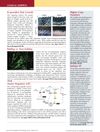
 This article provides clinical snippets from Experimental Dermatology and reports no new research findings.