April 2014 in “The FASEB journal” In this study, Rhododendron molle extract increased hair follicle length and growth factors while reducing mast cell and substance P expression in stressed mice, suggesting potential benefits for hair growth.
 July 2024 in “Journal Archives of Health”
 This study reviewed the medical literature on generalized woolly hair and reported that while there are no effective treatments, some narratives suggest that topical Minoxidil may help with hypotrichosis associated with the condition.
 7 citations
,
January 2012 in “International Journal of Trichology”
7 citations
,
January 2012 in “International Journal of Trichology” A man with Woolly Hair Syndrome had very curly, fragile hair, and doctors used a special scalp examination to diagnose him without invasive tests.
 September 2017 in “The journal of investigative dermatology/Journal of investigative dermatology”
 This study suggests that the outer root sheath of human hair follicles may act as a "metabolic center," capable of synthesizing glucose from lactate, which supports glycogen metabolism.
2 citations
,
March 2010 in “European journal of dermatology/EJD. European journal of dermatology” This case report describes a 5-year-old girl with trichorrhexis nodosa and highlights the presence of isolated curly hairs on her scalp despite hair loss over four months.
 19 citations
,
March 2012 in “Journal of experimental botany”
19 citations
,
March 2012 in “Journal of experimental botany” The researchers reported that in Arabidopsis collet hairs, nuclear positioning near the cell tip is not essential for hair growth, although it correlates with growth dynamics.
20 citations
,
February 1994 in “In vitro cellular & developmental biology. Animal” Wool follicles can grow in a lab with the right nutrients and conditions.
15 citations
,
July 2004 in “Journal of Wildlife Diseases” In this study, ivermectin treatment in affected Columbian black-tailed deer was associated with increased weight gain, reduced parasites, and faster hair regrowth compared to untreated deer.
37 citations
,
June 2000 in “Experimental dermatology” This study investigated a spontaneous mutation in mice resulting in hair abnormalities and elevated IgE levels, which resembles human Netherton's syndrome and monilethrix.
1 citations
,
May 2016 in “Journal of the American Academy of Dermatology” This case study describes a 43-year-old Hispanic man with cicatricial alopecia of the scalp, and suggests tufted folliculitis as the most likely diagnosis.
13 citations
,
January 2014 in “Zhongguo zhongyao zazhi” This study found that Dendrobium candidum polysaccharides might promote hair growth in mice, potentially by increasing VEGF mRNA expression.
 September 2021 in “Mağallaẗ al-Muẖtar li-l-ʿulūm”
 This report describes a case of two sisters with kinky, tangled hair diagnosed using trichoscopic and microscopic methods; they were treated with topical minoxidil.
56 citations
,
June 2010 in “Clinical and experimental dermatology” In this study, coudability hairs were identified as a useful marker for assessing disease activity in patients with alopecia areata and may serve as an alternative to the hair-pull test.
36 citations
,
July 1996 in “The journal of investigative dermatology/Journal of investigative dermatology” This research reports a new autosomal recessive mutation in mice, 'lanceolate hair', causing generalized alopecia and hair shaft abnormalities, which may serve as a model for Netherton's syndrome in humans.
22 citations
,
November 2016 in “International journal of molecular sciences” This study suggests that impaired VDR signaling in mice leads to dysregulated Ddit4 expression, impacting hair cycle progression and wound healing.
3 citations
,
April 2002 in “Animal Science” This study found that intradermal spermidine injections stimulated cell proliferation and increased fibre length growth rate in wool follicles of Merino lambs, without significantly affecting fibre diameter.
 December 2025 in “Zenodo (CERN European Organization for Nuclear Research)”
 In this review, researchers examined Tridax procumbens for its pharmacological and phytochemical potential, highlighting its diverse medicinal benefits, low toxicity, and the presence of bioactive compounds, positioning it as a promising candidate for developing safe and affordable plant-based therapeutics.
February 2013 in “Journal of the American Academy of Dermatology” Follicular red dots can appear where alopecia areata and vitiligo overlap.
10 citations
,
January 2021 in “Journal of Natural Medicines” Ent-kaurane-type diterpenoids from Isodonis Herba may promote hair growth by boosting cell proliferation.
August 2025 in “Skin Appendage Disorders” This case study observed that in a child with spontaneous trichonodosis, topical minoxidil and gentle hair care improved hair length and strength over two years, suggesting a potential genetic predisposition for the disorder.
 April 2017 in “Journal of Investigative Dermatology”
 This study found that anagen hair follicles can quickly regenerate after radiation damage by forming new progenitor cells outside the bulge, bypassing the need for telogen entry.
 April 2018 in “Journal of Investigative Dermatology”
 This study found that terminally differentiated effector memory Vδ1T-cells and their cytotoxic activation markers were elevated in alopecia areata patients, suggesting these cells may contribute to its early pathogenesis.
1 citations
,
May 2024 in “Communications Biology” This study found that Dab2 conditional knockout mice experienced delayed hair follicle cycles and reduced hair follicle stem cell activity, suggesting Dab2's crucial role in regulating stem cell activation and anti-aging process in hair follicles.

In this study, the researchers used a human hair follicle model to demonstrate that T cell stimulation can induce an alopecia areata–like phenotype, with cell proliferation and immune privilege collapse; however, the DHODH inhibitor farudodstat partially mitigated these effects by reducing T cell proliferation.
 11 citations
,
May 1990 in “Journal of Dermatological Science”
11 citations
,
May 1990 in “Journal of Dermatological Science” In this animal study, topical diazoxide treatment led to increased hair thickness and follicle growth in bald stumptailed macaques without causing notable systemic side effects.
21 citations
,
November 1980 in “PubMed” This study describes a newly identified mite species, Demodex zalophi, found on captive sea lions and highlights its unique traits, including being the first of its kind described in marine mammals.
5 citations
,
March 2016 in “Experimental and molecular pathology” In mouse models of alopecia areata, this study found increased dilation of lymphatic vessels in affected mice, with associated changes in gene expression related to vascular growth and immune cell movement.
12 citations
,
March 1981 in “International Journal of Dermatology” This case study reports that selenium shampoo, bacterial infection with trichomycosis axillaris, and possibly strongyloides larvae may have contributed to acquired hair shaft abnormalities resembling trichorrhexis nodosa in two patients.
 March 2026 in “Mammalogy Notes”
 In this report, the sighting of a maned wolf in a rural area of Brazil with severe hair loss, likely due to alopecia, was documented, and it was suspected that the condition resulted from disease transmission from domestic dogs.
 9 citations
,
November 2013 in “Dermatologic Surgery”
9 citations
,
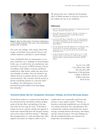
November 2013 in “Dermatologic Surgery” Hair transplant complications were likely due to deep graft placement and rough handling.