 235 citations
,
June 2021 in “International Journal of Molecular Medicine”
235 citations
,
June 2021 in “International Journal of Molecular Medicine” This review discusses five potential mechanisms for kidney stone formation, including urinary supersaturation, Randall's plaques, sex hormones, the microbiome, and immune responses, and reports no new results.
 233 citations
,
February 2018 in “Polymers”
233 citations
,
February 2018 in “Polymers” This review examines the roles and benefits of chitosan in cosmetics and oral hygiene, highlighting its potential in the cosmeceutical market, but it reports no new results.
 196 citations
,
March 2016 in “Nature Communications”
196 citations
,
March 2016 in “Nature Communications” In this study, researchers identified 18 genetic associations with scalp and facial hair traits in Latin Americans, including novel loci for hair greying and balding, with implications for understanding hair evolution.
 188 citations
,
October 2012 in “The AAPS Journal”
188 citations
,
October 2012 in “The AAPS Journal” This review discusses strategies for developing semi-solid topical generic products to match the quality of reference-listed drugs, using concepts like quality by design and reverse-engineering, but reports no new results.
 146 citations
,
May 2002 in “The American journal of pathology”
146 citations
,
May 2002 in “The American journal of pathology” This study found that cathepsin L deficiency in mice led to significant abnormalities in hair follicle development and cycling, including disrupted hair shaft outgrowth and premature hair growth phase entry.
 141 citations
,
August 2017 in “Developmental Dynamics”
141 citations
,
August 2017 in “Developmental Dynamics” This review discusses the cellular and molecular changes involved in cutaneous wound re-epithelialization and EMT, highlighting their similarities and differences, but reports no new clinical results.
 140 citations
,
December 2017 in “Journal of Controlled Release”
140 citations
,
December 2017 in “Journal of Controlled Release” This study reviews the evolution and modifications of microneedle drug delivery systems, initially designed for percutaneous use, now expanded for targeting a variety of tissues and organs such as ocular, oral mucosal, and gastrointestinal, suggesting widespread future applicability.
 140 citations
,
August 2011 in “Biomaterials”
140 citations
,
August 2011 in “Biomaterials” This study observed that keratose, derived from human hair, integrated well in mouse tissue and remodeled with collagen, suggesting potential as a non-toxic biomaterial for regenerative applications.
 137 citations
,
October 2009 in “The American journal of pathology”
137 citations
,
October 2009 in “The American journal of pathology” This study found that matriptase, a membrane serine protease, is crucial for maintaining multiple types of epithelial tissues in mice, with its absence leading to severe organ dysfunction and increased permeability.
 130 citations
,
August 2020 in “Drug Design Development and Therapy”
130 citations
,
August 2020 in “Drug Design Development and Therapy” This review discusses various nanoparticles used to enhance skin permeation and target delivery to skin organelles, but reports no new experimental results.
 130 citations
,
January 2017 in “International journal of nanomedicine”
130 citations
,
January 2017 in “International journal of nanomedicine” This study found that Na CMC hydrogel loaded with PEG-coated silver nanoparticles demonstrated superior antibacterial and wound-healing efficacy compared to commercial silver sulfadiazine cream in a wound-healing model.
 125 citations
,
December 2016 in “Molecules”
125 citations
,
December 2016 in “Molecules” This review discusses the extraction, purification, modification, and biological activity of polysaccharides from Traditional Chinese Medicine and reports no new research findings.
 124 citations
,
June 2020 in “Cell Stem Cell”
124 citations
,
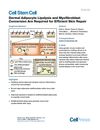
June 2020 in “Cell Stem Cell” This study found that in mice, dermal adipocytes initiate inflammation and aid repair after skin injury by releasing lipids, suggesting a role in managing inflammatory diseases and impaired wound healing.
 118 citations
,
May 2015 in “European journal of pharmaceutics and biopharmaceutics”
118 citations
,
May 2015 in “European journal of pharmaceutics and biopharmaceutics” This study found that the pH-sensitive hydrogel HECHA13, containing isoliquiritigenin, effectively inhibited the growth of Propionibacterium acnes and showed promise for transdermal delivery in acne treatment.
 105 citations
,
January 2010 in “Mediators of Inflammation”
105 citations
,
January 2010 in “Mediators of Inflammation” This article reviews the role of skin surface lipid in mediating environmental stressors and discusses potential therapeutic interventions, reporting no new experimental findings.
 103 citations
,
January 2009 in “Carbon”
103 citations
,
January 2009 in “Carbon” This study found that carbon nanotube impurities induced immunological toxicity in mice, whereas purified nanotubes showed good biocompatibility, suggesting high-temperature thermal treatment may improve nanotube biocompatibility.
 90 citations
,
May 1972 in “Clinical Pharmacology & Therapeutics”
90 citations
,
May 1972 in “Clinical Pharmacology & Therapeutics” Minoxidil quickly leaves blood, turns into urine metabolites, and has lasting blood pressure-lowering effects.
 89 citations
,
November 2014 in “International Journal of Nanomedicine”
89 citations
,
November 2014 in “International Journal of Nanomedicine” This study suggests that spironolactone-loaded nanostructured lipid carriers could enhance follicular delivery and offer a more localized treatment for androgenic alopecia, potentially reducing systemic side effects.
 88 citations
,
December 2018 in “Advanced Healthcare Materials”
88 citations
,
December 2018 in “Advanced Healthcare Materials” This review outlines the current state and future prospects of using layer-by-layer self-assembly for cell encapsulation in biomedical applications, such as cell-based biosensors, transplantation, and tissue engineering, while also discussing its limitations and potential advancements.
 85 citations
,
March 2002 in “Body & Society”
85 citations
,
March 2002 in “Body & Society” This article reviews the discourse around male cosmetic surgery patients and argues against the perception that cosmetic surgery will become as common among men as it is among women.
 81 citations
,
June 2012 in “European journal of human genetics”
81 citations
,
June 2012 in “European journal of human genetics” This review outlines a diagnostic framework for clinicians to distinguish different types of inherited ichthyoses and suggests further testing and treatment strategies, but reports no new clinical results.
 76 citations
,
July 2019 in “Scientific Reports”
76 citations
,
July 2019 in “Scientific Reports” This study found that baicalin delivery through polymeric nanocapsules significantly enhanced its anticancer activity in breast cancer cell lines MCF-7 and MDA-MB-231.
 68 citations
,
March 2018 in “Biomaterials”
68 citations
,
March 2018 in “Biomaterials” This study found that in vivo, a novel microneedle system for valproic acid delivery may improve hair regrowth efficacy by upregulating hair follicle development pathways more effectively than topical application.
 68 citations
,
May 2011 in “European Journal of Dermatology”
68 citations
,
May 2011 in “European Journal of Dermatology” Acne is caused by genetics, diet, hormones, and bacteria, with treatments not yet curative.
 67 citations
,
January 2022 in “Theranostics”
67 citations
,
January 2022 in “Theranostics” This review highlights how advanced nanocarrier and microneedle-based transdermal drug delivery strategies can potentially improve the treatment of skin diseases by enhancing site-specific drug delivery, increasing skin penetration, and reducing systemic toxicity compared to conventional methods.
 67 citations
,
January 2012 in “Biological and Pharmaceutical Bulletin”
67 citations
,
January 2012 in “Biological and Pharmaceutical Bulletin” This study found that nanoparticles did not permeate intact rat skin but could penetrate skin that had been artificially punctured, primarily through grooves or hair follicles.
 67 citations
,
September 2003 in “Journal of cutaneous pathology”
67 citations
,
September 2003 in “Journal of cutaneous pathology” This review discusses the various skin manifestations associated with end-stage renal disease and their potential causes but reports no new clinical findings; the authors emphasize pruritus as a significant condition.
 64 citations
,
May 2019 in “Materials Science and Engineering: C”
64 citations
,
May 2019 in “Materials Science and Engineering: C” This review outlines the development, applications, and challenges of microneedle-based drug delivery from 2000-2019, particularly highlighting fabrication techniques, but reports no new clinical results.
 61 citations
,
September 2016 in “NPG Asia Materials”
61 citations
,
September 2016 in “NPG Asia Materials” This study developed thermo-reversible glycol chitosan hydrogels that effectively form and maintain 3D cell spheroids within one day, offering a simplified method for creating biologically realistic cultures for tissue regeneration and drug screening applications.
 61 citations
,
June 2010 in “European Journal of Pharmaceutics and Biopharmaceutics”
61 citations
,
June 2010 in “European Journal of Pharmaceutics and Biopharmaceutics” This study found that liposomes coated with cationic polymers, chitosan and Eudragit EPO, showed improved physicochemical stability and enhanced skin diffusion of aciclovir and minoxidil compared to uncoated liposomes.