July 2023 in “Zenodo (CERN European Organization for Nuclear Research)” This case report describes a 6-year-old boy with a scalp infection caused by Candida parapsilosis, which was successfully treated with 2% ketoconazole ointment after other treatments failed; antifungal susceptibility testing showed variable drug resistance.
5 citations
,
January 1991 in “Drugs of The Future”  36 citations
,
November 1995 in “Clinical endocrinology”
36 citations
,
November 1995 in “Clinical endocrinology” This study found that a low dose of flutamide, both alone and combined with an oral contraceptive, effectively reduced hirsutism in women, with the combination showing more lasting effects post-treatment.
 115 citations
,
January 2001 in “American journal of clinical dermatology”
115 citations
,
January 2001 in “American journal of clinical dermatology” This study found that eflornithine 15% cream reduced unwanted facial hair growth more effectively than a placebo in women with hirsutism, but hair growth returned to pretreatment levels within 8 weeks of stopping treatment.
18 citations
,
November 1989 in “Clinical and experimental dermatology” This case report describes a 5-year-old girl with an extensive Microsporum canis scalp infection, highlighting griseofulvin as the preferred treatment and noting corticosteroids' benefit in severe inflammatory cases.
September 2019 in “Ukrainian Journal of Dermatology Venerology Cosmetology” In this study, 90 pediatric patients with scalp microsporia were treated with a combination of griseofulvin, Antral, sertaconazole nitrate cream, and Bion 3 Kid, resulting in complete recovery, reduced treatment duration, and prevention of disease recurrence and colds, with high drug tolerability.
 18 citations
,
January 2009 in “Journal of Endocrinological Investigation”
18 citations
,
January 2009 in “Journal of Endocrinological Investigation” This study concluded that flutamide alone is more effective than finasteride for reducing hirsutism in women, and the combination of both drugs is not superior to flutamide alone.
3 citations
,
January 2020 in “Acta veterinaria indonesiana” In this case study, a Persian cat with dermatophytosis showed a reduction in skin lesions after being treated with oral itraconazole and topical ketoconazole.
This case report highlights the effective treatment of tinea capitis with griseofulvin in a young girl, even when previous antifungal treatments were used.
 2 citations
,
January 2022 in “Eduvest”
2 citations
,
January 2022 in “Eduvest” This report of a 90-year-old girl with tinea capitis indicates that griseofulvin remains the main treatment, showing improvement after eight weeks of therapy.
 March 2023 in “Journal of the American Academy of Dermatology”
 This review summarizes evidence that pityrosporum folliculitis in immunocompromised patients responds well to topical antifungals and treatment of underlying conditions, based on a limited number of studies with small sample sizes.
3 citations
,
August 2023 in “Journal of Cutaneous Medicine and Surgery” In this randomized controlled study, topical Flutamide 1% gel, applied twice daily for eight weeks, significantly reduced papules and pustules in patients with mild to moderate acne vulgaris compared to baseline.
Flutamide helps with prostate cancer and some skin conditions but can harm the liver.
 6 citations
,
September 2017 in “Multiple Sclerosis and Related Disorders”
6 citations
,
September 2017 in “Multiple Sclerosis and Related Disorders” This study suggests that nail loss may be a new, reversible adverse event related to teriflunomide treatment, akin to its known effects on hair loss.
 108 citations
,
March 2006 in “Archives of Dermatology”
108 citations
,
March 2006 in “Archives of Dermatology” This study observed that 62% of premenopausal women with female pattern hair loss reported improvement when treated with oral finasteride and an oral contraceptive containing drospirenone and ethinyl estradiol.

This study found that dermoscopy combined with calcium fluorescent white staining effectively aided in the early diagnosis and treatment evaluation of tinea capitis by highlighting specific hair changes and fluorescent patterns associated with different dermatophyte infections in a sample of 20 patients.
September 2023 in “Journal of the American Academy of Dermatology” This study found that in participants with notalgia paresthetica, 8 weeks of treatment with difelikefalin significantly improved itch intensity and increased the rate of strict complete response compared to placebo, starting as early as week 3.
 January 2012 in “Yearbook of Dermatology and Dermatologic Surgery”
 Taking finasteride daily can effectively and safely increase hair density and thickness for women with hair loss.
 69 citations
,
August 2008 in “Journal of The European Academy of Dermatology and Venereology”
69 citations
,
August 2008 in “Journal of The European Academy of Dermatology and Venereology” Oral dutasteride and topical pimecrolimus can safely and effectively treat Frontal Fibrosing Alopecia, leading to significant hair regrowth.
2 citations
,
January 2013 in “Iraqi journal of Medical Sciences”  July 1996 in “Annals of Internal Medicine”
 This correspondence reported significant variability between quantitative PCR and bDNA assays for measuring Hepatitis C virus RNA in high-titer specimens, challenging the reliability of the Chiron assay.
 7 citations
,
May 2015 in “Journal of The American Academy of Dermatology”
7 citations
,
May 2015 in “Journal of The American Academy of Dermatology” Finasteride helps treat frontal fibrosing alopecia, improving or stabilizing the condition in many patients.
20 citations
,
December 1994 in “Fertility and sterility” In this study, treatment with flutamide combined with a low-dose oral contraceptive significantly improved hirsutism in women with polycystic ovarian disease who did not respond to oral contraceptive treatment alone.
 16 citations
,
April 2014 in “Expert Opinion on Pharmacotherapy”
16 citations
,
April 2014 in “Expert Opinion on Pharmacotherapy” This review discusses the pharmacological profile of teriflunomide for treating relapsing multiple sclerosis, highlighting its safety and effectiveness in reducing relapses and slowing disability progression, though direct comparisons with other oral medications are lacking.
July 2012 in “Reactions Weekly” Crushed finasteride tablets can harm pregnant and fertile women.
51 citations
,
May 2008 in “Mycoses” This study found that terbinafine HCl nail solutions with or without DDAIP HCl significantly outperformed ciclopirox nail lacquer in treating guinea pig dermatophytosis, suggesting potential effectiveness for human nail infections.
 54 citations
,
October 2019 in “Australian Journal of General Practice”
54 citations
,
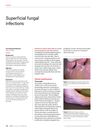
October 2019 in “Australian Journal of General Practice” This article provides an updated overview of the diagnosis and management of tinea infections but reports no new clinical findings.
 June 2017 in “Journal of The American Academy of Dermatology”
 Teriflunomide often causes mild to moderate hair thinning and loss in MS patients, which usually improves with or without treatment.
November 2022 in “International Journal of Trichology” This case study reports a 25-year-old male developing an extensive psoriasiform eruption within a week after starting finasteride 1 mg for androgenetic alopecia.