 2 citations
,
January 1992 in “Neurologia medico-chirurgica”
2 citations
,
January 1992 in “Neurologia medico-chirurgica” This study describes a new radiation method called three-dimensional moving field radiation therapy, which showed improved tumor targeting and reduced damage to surrounding tissues compared to traditional one-plane methods.
4 citations
,
November 2016 in “The Journal of Dermatology” This study found that the weak tensile strength of pili torti hair may result from loose keratin intermediate filaments due to abnormalities in disulfide bonds.
 3 citations
,
January 2004 in “Sen i Gakkaishi”
3 citations
,
January 2004 in “Sen i Gakkaishi” This study found that adding dithiodiglycolic acid to the hair straightening process decreased chemical damage and preserved the structural integrity of the hair matrix compared to using thioglycolic acid alone.
 January 2011 in “Journal of Society of Cosmetic Chemists of Japan”
 This study found that a conditioner containing 18-MEA and SPDA can improve hair's smoothness and reduce flyaways, enhancing hair manageability.
January 2026 in “Journal of Trace Elements in Medicine and Biology” This study found that living environment significantly influenced Fe concentrations in dog and cat hair, with outdoor animals showing higher levels than those kept indoors.
 5 citations
,
January 1998 in “Journal of Toxicologic Pathology”
5 citations
,
January 1998 in “Journal of Toxicologic Pathology” This study found that topical treatment with Maneb led to delayed epithelial cell degeneration in hair follicles of rats due to apoptosis.
43 citations
,
August 2021 in “Journal of Orthopaedic Translation” This study explored a dual-functional dressing with quaternized chitosan and magnesium, finding it enhanced wound healing and had strong antibacterial effects against drug-resistant bacteria in diabetic rat models with infected foot ulcers, suggesting promise for diabetic foot ulcer treatment.
1 citations
,
May 2016 in “Journal of nature and science” In this study, a method using nano-sized iron particles successfully captured images of sub-dermal hair follicles, showing comparable size and shape to those removed from the skin.
 4 citations
,
October 2012 in “Archives of Dermatology”
4 citations
,
October 2012 in “Archives of Dermatology” Hair diameter diversity is a key sign for diagnosing and managing male pattern baldness.
This study found that exposure to Prussian Blue caused significant detachment of cuticle segments from the hair shaft in both new and aged human hairs.
 18 citations
,
January 2008 in “Sen'i Gakkaishi”
18 citations
,
January 2008 in “Sen'i Gakkaishi” This study observed that repeated perm treatments decrease disulfide bonds in hair due to their conversion largely into cysteic acid, affecting the waving efficiency depending on the reduction agent used.
5 citations
,
February 1998 in “Polymer” Human hair keratin has a 40% α-helix structure that changes to a random coil in 8 M urea.
This study found that overlapping concentration imbalances of metals and proteins could provide new insights into the pathophysiological mechanisms of bipolar disorder and schizophrenia, highlighting ongoing oxidative stress and inflammation in both diseases despite treatment.
 5 citations
,
April 2018 in “Chem”
5 citations
,
April 2018 in “Chem” This study introduced a novel graphene-based hair dye that is non-reactive, non-invasive, and eliminates toxic chemicals, while providing durable color, antistatic properties, and efficient heat dissipation, even after 30 washes.
 7 citations
,
October 1963 in “Textile Research Journal”
7 citations
,
October 1963 in “Textile Research Journal” Merino wool fibers change shape with moisture, while human hair shape stays the same.
1 citations
,
January 2023 in “Chemical Engineering Journal” January 1994 in “Journal of the society of cosmetic chemists” 
This review discusses recent advances in polydopamine-based biomaterials and their growing potential in personalized medicine, but reports no new experimental results; the authors highlight both opportunities and challenges for future applications.
 19 citations
,
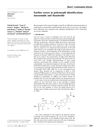
July 2006 in “Acta crystallographica”
19 citations
,
July 2006 in “Acta crystallographica” This study determined that previous reports mistakenly identified different polymorphs of furosemide and finasteride, which are actually identical, due to incomplete data collection in single-crystal X-ray diffraction analysis.
3 citations
,
December 2019 in “Biomaterials Research/Biomaterials research” This study found that the concentrations of major inorganic elements in human scalp hair increase with age up to 25 years, and calcium and magnesium concentrations are significantly associated with sex in individuals over 20.
 August 2025 in “Arabixiv (OSF Preprints)”
 This study suggests that male pattern baldness is primarily caused by heat stress in the brain rather than DHT toxicity, and personal experiments with menthol cooling have shown significant reduction in hair loss.
June 2026 in “Journal of Cosmetic Dermatology” This study found that patients with frontal fibrosing alopecia had higher hair shaft concentrations of titanium, zinc, aluminum, and iron, possibly linked to the use of metal-containing products.

Hair feels different when touched and rubs together in various ways.
July 1999 in “Proceedings of SPIE, the International Society for Optical Engineering/Proceedings of SPIE” In this study, researchers observed bright colored patches in the hair of diabetic patients under cross polarized light, suggesting a potential non-invasive diagnostic method for diabetes.
3 citations
,
August 2018 in “Zenodo (CERN European Organization for Nuclear Research)” This study found that when human hair follicles are immersed in hydrogen peroxide, the resulting oxygen bubbles indicate catalase activity, and their absence may suggest tissue death.
This study found that calcium, magnesium, and vitamin D supplementation altered hair calcium and magnesium content in perimenopausal women, suggesting an early indicator of metabolic changes linked to skeletal mineralization.
 3 citations
,
February 2005 in “Journal of Quantitative Spectroscopy & Radiative Transfer/Journal of quantitative spectroscopy & radiative transfer”
3 citations
,
February 2005 in “Journal of Quantitative Spectroscopy & Radiative Transfer/Journal of quantitative spectroscopy & radiative transfer” This study found that hair content of iron and zinc does not play a role in chemotherapy-induced alopecia in children with cancer.
 March 1963 in “Sangyo Igaku”
 Women generally have higher levels of iron, copper, and zinc in their hair than men, with differences increasing with age.
11 citations
,
January 1976 in “Dermatology” This study found that patients with alopecia areata atopica and other skin conditions had lower hair magnesium levels compared to healthy controls, although the differences largely overlapped.