 7 citations
,
September 2020 in “Journal of The American Academy of Dermatology”
7 citations
,
September 2020 in “Journal of The American Academy of Dermatology” This article describes the characteristics and management of hypertrichosis induced by low-dose oral minoxidil used for hair disorders, but reports no new clinical findings.
 12 citations
,
March 2018 in “Anais brasileiros de dermatologia/Anais Brasileiros de Dermatologia”
12 citations
,
March 2018 in “Anais brasileiros de dermatologia/Anais Brasileiros de Dermatologia” This article describes a case of frontal fibrosing alopecia in a patient with chronic lichenoid lupus erythematosus and notes the lack of similar documented cases in existing literature.
 May 2025 in “Journal of Clinical Images and Medical Case Reports”
 The study observed that patterned fibrosing alopecia, a type of scarring hair loss, appears in some patients after hair transplants, facelifts, and other surgical interventions, sharing features with lichen planopilaris and androgenetic alopecia.
 8 citations
,
July 2019 in “Cell Proliferation”
8 citations
,
July 2019 in “Cell Proliferation” In this study, researchers developed a chemical cocktail and suspension culture method to transform human dermal fibroblasts into dermal papilla-like cells capable of inducing hair follicle formation in vitro and in vivo.
 April 2023 in “Journal of Investigative Dermatology”
 This study suggests that linalool, a common allergen in personal care products, may contribute to frontal fibrosing alopecia pathogenesis by triggering immune responses and depleting hair follicle stem cells, especially in sensitized individuals.
 2 citations
,
March 2015 in “Dermatologic Therapy”
2 citations
,
March 2015 in “Dermatologic Therapy” Using too much minoxidil foam can cause a rare movement disorder with facial twitching, but symptoms go away when the correct dose is used.
2 citations
,
March 2023 in “Frontiers in Medicine” This case study presented a 16-year-old male with dermatosis neglecta and obsessive-compulsive disorder, where his skin condition improved after proper cleansing and psychiatric treatment, suggesting that DN may also indicate underlying psychiatric issues.
3 citations
,
January 2020 in “Indian Journal of Dermatology” This study found that certain VDR gene polymorphisms are more prevalent in female pattern hair loss patients than in healthy controls, suggesting these polymorphisms may increase disease risk.
48 citations
,
June 2000 in “Japanese Journal of Cancer Research” This study found that dimethylarsinic acid significantly accelerates skin tumor development in hair follicle-targeted K6/ODC transgenic mice.
 November 2023 in “Journal of cosmetic dermatology”
 This report describes three cases of erythromelanosis follicularis faciei et colli showing significant improvement in facial telangiectasia following treatment with a 595-nm pulsed dye laser, with minimal recurrence observed during follow-up.
 8 citations
,
October 2018 in “Journal of The American Academy of Dermatology”
8 citations
,
October 2018 in “Journal of The American Academy of Dermatology” This study evaluated treatments for frontal fibrosing alopecia and found hydroxychloroquine and 5a-reductase inhibitors to be most effective, with 70-72% of patients experiencing stabilization or improvement, but limitations in treatment consistency and assessment methods remain.
 August 2018 in “Journal of The American Academy of Dermatology”
  1 citations
,
January 2016 in “Journal of Microbial & Biochemical Technology”
1 citations
,
January 2016 in “Journal of Microbial & Biochemical Technology” This study found that the free androgen index (FAI) is a superior marker of hyperandrogenism in men with premature androgenetic alopecia compared to DHEAS and testosterone levels.
March 2023 in “Oxford University Press eBooks” 3 citations
,
November 2024 in “Journal of the European Academy of Dermatology and Venereology” January 2021 in “Social Science Research Network” In this study, researchers developed and optimized ethanol-free microemulsion systems for transdermal finasteride delivery, finding that the predicted formulations closely matched their physical and chemical characteristics, potentially reducing adverse effects compared to oral administration.
23 citations
,
October 2008 in “Journal of medicinal chemistry” This study suggests that PF-0998425 is an effective androgen receptor antagonist for sebum control and androgenetic alopecia with rapid metabolism reducing the risk of systemic side effects.
14 citations
,
September 2017 in “Clinical and Experimental Dermatology” In this report, a 26-year-old man with folliculitis decalvans unresponsive to standard treatments experienced significant disease clearance after 25 months of systemic photodynamic therapy, marking the first documented use of this therapy for this condition.
September 2024 in “Journal of Cosmetic Dermatology” This study found that the topical application of DA-OTC-002, a combination of synephrine and tyramine hydrochloride, significantly reduced immediate hair shedding in women by 62.5% compared to a placebo, without any observed adverse effects.
29 citations
,
December 2004 in “Developmental biology” In this study, forced expression of the transcription factor cDermo-1 in chicken dermis led to the formation of ectopic feather buds and enhanced feather growth, demonstrating its role in initiating skin appendage development.
 May 2019 in “Australasian Journal of Dermatology”
 The conclusion is that managing hair loss conditions like FFA and melanoma requires individualized approaches, considering new findings and balancing treatment benefits with potential risks.

In this thesis, researchers explored ways to enhance the management of myotonic dystrophy type 1 by investigating the genetic inheritance patterns, especially small-sized repeat expansions, and assessing cardiac care, energy expenditure, and body composition in affected individuals.
1 citations
,
June 2016 in “FEBS open bio” This study reports that topical fish oil treatment in GsdmA3 Dfl/+ mice increased cellular proliferation and macrophages but did not affect COX-2 expression related to psoriasis-like skin changes.
 6 citations
,
November 2017 in “Dermatologic Therapy”
6 citations
,
November 2017 in “Dermatologic Therapy” In this study, researchers found that applying mometasone furoate 0.1% cream combined with adapalene 0.1% gel resulted in significantly greater hair regrowth over 12 weeks compared to mometasone furoate cream alone in patients with alopecia areata.
 14 citations
,
October 2003 in “Annals of Oncology”
14 citations
,
October 2003 in “Annals of Oncology” In this study, the researchers observed that the severity of capecitabine-induced hand-foot syndrome in advanced gastric cancer patients was not linked to the IVS14+1G→A mutation in the DPYD gene.
 January 2018 in “Advances in Dermatology and Allergology”
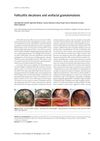
 Treatment with dapsone, topical corticosteroids, and antibiotics improved the man's skin conditions.
 2 citations
,
January 2021 in “Journal of The American Academy of Dermatology”
2 citations
,
January 2021 in “Journal of The American Academy of Dermatology” This commentary highlights the consistency of recent findings on low-dose oral minoxidil's tolerability for androgenetic alopecia, noting infrequent side effects except for hypertrichosis.
58 citations
,
April 1993 in “Developmental Biology” This study found that subcutaneous injections of basic fibroblast growth factor in neonatal mice delayed the development and hair growth cycles of hair follicles compared to controls.
 November 2020 in “International journal of contemporary pediatrics”
 This study reports two siblings with severe combined immunodeficiency due to a mutation in the FOXN1 gene, characterized by T-cell immunodeficiency, alopecia totalis, and nail dystrophy.
January 2023 in “Toxicological Research”