 July 2018 in “European Medical Journal”
 This meeting review discusses recent advances in systemic psoriasis treatments, emphasizing the impact of dimethylfumarate monotherapy on understanding psoriasis and treatment strategies; it reports no new clinical results.
1 citations
,
September 2024 in “Journal of the American Academy of Dermatology” Farudodstat may effectively treat alopecia areata without harmful side effects.
7 citations
,
December 2023 in “International Journal of Molecular Sciences” This study demonstrated that Forsythiaside A protected against oxidative stress in both cell models and a mouse model of liver damage, suggesting its potential as a liver-protective agent.
 6 citations
,
June 2019 in “International Journal of Dermatology”
6 citations
,
June 2019 in “International Journal of Dermatology” This article discusses familial frontal fibrosing alopecia in two male families and reports no new clinical findings.
 14 citations
,
April 2019 in “International Journal of Women's Health”
14 citations
,
April 2019 in “International Journal of Women's Health” This review highlights current treatment options for frontal fibrosing alopecia, noting that 5-α-reductase inhibitors, intralesional steroids, and hydroxychloroquine have the highest evidence of effectiveness, while other therapies show variable results and need further research.
 January 2007 in “El Servicio de Difusión de la Creación Intelectual (National University of La Plata)”
 This study found that combining D-004 with finasteride results in more significant prevention of testosterone-induced prostate enlargement in rats compared to using either treatment alone.
 1 citations
,
June 2022 in “International Journal of Dermatology”
1 citations
,
June 2022 in “International Journal of Dermatology” FFA in men shows unique features and treatment results vary widely.
 47 citations
,
June 2009 in “Journal of Biological Chemistry”
47 citations
,
June 2009 in “Journal of Biological Chemistry” This study found that finasteride competitively inhibits the enzyme AKR1D1 with low micromolar affinity but does not act as a mechanism-based inactivator.
4 citations
,
January 2021 in “Acta Dermato Venereologica” This study found that patients with frontal fibrosing alopecia had significantly more titanium-containing nanoparticles in their hair compared to healthy controls, suggesting a potential environmental influence.
 32 citations
,
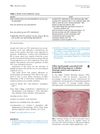
September 2017 in “Journal of the American Academy of Dermatology”
32 citations
,
September 2017 in “Journal of the American Academy of Dermatology” In this study, researchers reported that oral isotretinoin effectively treated facial papules in frontal fibrosing alopecia, with histopathologic findings suggesting the involvement of elastic fibers and sebaceous glands in papule formation beyond perifollicular inflammation.
 February 2015 in “Dermatologic Surgery”
 This article discusses various affiliations of the authors with no reference to new research findings.
 April 2023 in “Journal of Investigative Dermatology”
 This study found that dimethyl fumarate improved delayed wound healing in Il36rn-/- mice by reducing neutrophil extracellular trap formation and oxidative stress.
3 citations
,
March 2017 in “Pediatric Dermatology” This case report documents the first known instance of FOXN1 duplication linked to congenital hypertrichosis.
April 2005 in “World Journal of Pharmaceutical and life sciences” This article discusses the formulation and evaluation of hair gels that may improve the treatment and prevention of dandruff by providing longer-lasting effects compared to traditional shampoos and lotions, but it reports no new clinical findings.
 14 citations
,
August 2018 in “Frontiers in Cellular and Infection Microbiology”
14 citations
,
August 2018 in “Frontiers in Cellular and Infection Microbiology” This study found that dengue virus infection caused inflammation and cell death in human hair-follicle dermal papilla cells, which may contribute to increased hair shedding observed during the epidemic in Taiwan.

This article discusses the features and increasing prevalence of frontal fibrosing alopecia, a type of scarring hair loss, and reports no new clinical results.
475 citations
,
October 2006 in “Proceedings of the National Academy of Sciences” This study suggests that folliculin, mutated in Birt–Hogg–Dubé syndrome, and its partner FNIP1 may play a role in energy and nutrient sensing through the AMPK and mTOR pathways.

This study found that new methods for isolating human dermal papilla cells were more efficient than traditional methods, maintaining higher levels of specific markers and improving the cells' research potential.
 8 citations
,
August 2011 in “Journal of Medicinal Food”
8 citations
,
August 2011 in “Journal of Medicinal Food” In this study, D-004 did not affect androgen-dependent development in rats exposed in utero, while finasteride caused significant changes in male offspring's androgen-dependent tissues.
7 citations
,
January 2009 in “DOAJ (DOAJ: Directory of Open Access Journals)” This study found that D-004, a hexanic extract from the Cuban royal palm fruit, did not cause genotoxic effects in male germ cells of mice over an 8-week period.
 July 2021 in “British Journal of Dermatology”
 This case report describes a novel instance of scarring alopecia with features of frontal fibrosing alopecia in a patient with systemic sclerosis, suggesting a potential link between the two conditions not previously reported.
June 2024 in “Ecotoxicology and Environmental Safety” This study observed that chronic and acute exposure to finasteride negatively impacted development, reproduction, and gene expression in Daphnia magna, highlighting the environmental risks of this pharmaceutical for freshwater ecosystems.
 38 citations
,
January 2019 in “International Journal of Women's Dermatology”
38 citations
,
January 2019 in “International Journal of Women's Dermatology” This review discusses potential therapeutic options for frontal fibrosing alopecia by exploring distinct signaling pathways and cellular players, but reports no new clinical findings and emphasizes the need for further trials.
January 2026 in “Elsevier eBooks”  July 2015 in “Journal of the Dermatology Nurses’ Association”
 This review covers the clinical presentation and challenges in treating frontal fibrosing alopecia in postmenopausal women and concludes that more research is needed to understand its etiology and develop effective treatments.
 2 citations
,
January 2011 in “Springer eBooks”
2 citations
,
January 2011 in “Springer eBooks” Finasteride is a medicine used to treat enlarged prostate and prostate cancer, and it works by changing how testosterone works in the body.
November 2025 in “Contact Dermatitis” In this case study, a 34-year-old woman experienced facial allergic reactions to SPF-containing products, and patch tests identified sensitization to salicylates, which when avoided, stabilized her symptoms and her existing frontal fibrosing alopecia, highlighting a possible link to investigate further.
 3 citations
,
October 1995 in “International Journal of Dermatology”
3 citations
,
October 1995 in “International Journal of Dermatology” This study confirms that finasteride inhibits the conversion of testosterone to dihydrotestosterone in human dermal fibroblasts, suggesting potential therapeutic use for androgen-related skin disorders.
April 2024 in “Journal of clinical medicine” This review discusses various therapeutic options for frontal fibrosing alopecia and highlights the need for more research, as existing data are largely retrospective and lack precise treatment guidelines.
 1 citations
,
March 2023 in “Frontiers in Cardiovascular Medicine”
1 citations
,
March 2023 in “Frontiers in Cardiovascular Medicine” A specific gene variant is linked to heart disease, increased heart muscle, curly hair, and thick skin on palms and soles.