 2 citations
,
February 2021 in “Brain Research”
2 citations
,
February 2021 in “Brain Research” This study found that testosterone replacement in castrated male rats counteracted endotoxemia-induced arterial baroreflex dysfunction without significantly affecting neuroinflammation.
 1 citations
,
April 2022 in “Journal of The American Academy of Dermatology”
1 citations
,
April 2022 in “Journal of The American Academy of Dermatology” This study found that decreased pressure sensitivity and 2-point discrimination at the scalp's vertex were significantly associated with androgenetic alopecia in men.
 48 citations
,
November 1992 in “International Journal of Dermatology”
48 citations
,
November 1992 in “International Journal of Dermatology” This article discusses the history and terminology of toxic epidermal necrolysis but reports no new clinical results.
1 citations
,
April 2025 in “Behavioral Sciences” In a study of 435 undergraduate medical students, researchers found that rejection sensitivity was linked to increased loneliness and problematic internet use, with loneliness mediating this relationship and self-control moderating its impact, highlighting pathways and conditions that could inform interventions.
 12 citations
,
June 2019 in “Psychoneuroendocrinology”
12 citations
,
June 2019 in “Psychoneuroendocrinology” This study found that in rodent models, the ability of D1 dopamine receptor activation to impair sensory gating is facilitated by 5α-reductase type 1, which produces allopregnanolone.
1 citations
,
January 2013 in “Digital Scholarship - UNLV (University of Nevada Reno)” This study hypothesized that finasteride administration may increase stress-induced amphetamine locomotor sensitization due to its impact on brain reward systems involving the neurosteroid allopregnanolone.
December 2013 in “Pump Industry Analyst” This study found that using particle-based antigen delivery in combination with cyanoacrylate skin surface stripping is an effective needle-free method for targeting HIV-1 p24 protein to skin cells, enhancing transcutaneous vaccination potential.
11 citations
,
October 2002 in “Pharmacology Biochemistry and Behavior” This study found that formalin-induced pain in rats nearly eliminates testosterone in the brain and spinal cord by likely increasing 5α-reductase activity, but normalizes serum levels after 24 hours.
February 2024 in “Cancers” This review highlights recent progress in developing androgen receptor degraders, such as PROTACs, for treating castration-resistant prostate cancer, and notes that several have entered phase I or II clinical trials, showcasing potential to address drug resistance challenges.
10 citations
,
April 1999 in “British journal of dermatology/British journal of dermatology, Supplement” This study found that anthralin and sodium dodecyl sulfate accelerated hair growth in mice, potentially involving different skin protein kinase C isoform responses.

This paper introduces a framework attributing Post-SSRI, Post-Finasteride, Post-Retinoid, and an unnamed sexual dysfunction syndrome to downregulated estrogen receptor activity, potentially guiding future treatments in sexual medicine.
 63 citations
,
October 1989 in “Journal of The American Academy of Dermatology”
63 citations
,
October 1989 in “Journal of The American Academy of Dermatology” This study reports that erythematous, infiltrated plaques can develop in patients receiving subcutaneous heparin therapy, indicating a possible delayed hypersensitivity reaction to heparin or its constituents.
12 citations
,
January 1987 in “Carcinogenesis” This study found that a single application of TCDD on the skin of hairless mice altered epidermal differentiation, changing keratin expression patterns similarly to a known tumor promoter.
1 citations
,
January 2025 in “International Journal of Dermatology” This study found that in patients with alopecia areata and atopic dermatitis, 61.5% showed improvement with dupilumab treatment, but 38.5% experienced worsened or new-onset alopecia areata, with higher baseline IgE levels linked to better responses.
 5 citations
,
December 2015 in “Dermatologic Therapy”
5 citations
,
December 2015 in “Dermatologic Therapy” In this study, topical phenylephrine significantly reduced hair shedding and increased the force needed to pluck hair in women undergoing cosmetic procedures, suggesting its potential utility for traction alopecia.

In this study, researchers observed that atopic dermatitis may alter the appearance of allergic patch test reactions, demonstrating specific patterns like perifollicular erythema and yellowish areas that could aid in interpreting patch tests using dermoscopy, particularly in ambiguous cases.
1 citations
,
January 2025 in “Therapeutic Advances in Drug Safety” This case report highlights the rare overlap of DRESS and Stevens-Johnson syndrome following antituberculosis treatment, emphasizing the critical importance of timely diagnosis and intervention to manage severe symptoms and prevent organ damage.
September 2016 in “한국임상약학회지” In this study, ibuprofen, menthol, and cetirizine were found to potentially prevent or slow down damage to human dermal fibroblast cells caused by intermittent fever in early alopecia.
October 2025 in “The Sri Lanka Journal of Dermatology” This report describes two cases of toxic epidermal necrolysis with long-term mucosal scarring and liver issues, underscoring the complexities of recovery and chronic effects of this severe drug reaction.
 13 citations
,
April 2001 in “Journal of The American Academy of Dermatology”
13 citations
,
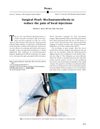
April 2001 in “Journal of The American Academy of Dermatology” Using a vibrating device during injections can help reduce pain.
 January 2024 in “Annals of Dermatology”
 This study found that DPCP immunotherapy effectively treats alopecia areata, identifying factors that influence treatment response and patient satisfaction, which may aid in standardizing the treatment for improved outcomes.
1 citations
,
April 2015 in “Neurology” This study found that hyperpigmented skin changes resembling Schamberg’s purpura occur in areas affected by CRPS and can also appear on mirror-image locations of unaffected limbs, potentially improving with the condition's treatment.
 16 citations
,
March 2006 in “The American journal of psychiatry”
16 citations
,
March 2006 in “The American journal of psychiatry” This report describes five cases where sudden akathisia occurred in female patients with bipolar disorder after a ziprasidone dose reduction, emphasizing potential unexpected side effects of second-generation antipsychotics.
 8 citations
,
May 2018 in “The Journal of Allergy and Clinical Immunology”
8 citations
,
May 2018 in “The Journal of Allergy and Clinical Immunology” This study found that activating the Nrf2 pathway in human mast cells effectively suppresses degranulation and inflammation induced by substance P.
 April 2026 in “bioRxiv (Cold Spring Harbor Laboratory)”
 This study found that distinct neurons in the nucleus accumbens lateral shell regulate scratching behavior differently; D1R neurons promote scratching while D2R neurons help stop it, with elevated dopamine levels during chronic itch potentially enhancing persistent scratching.
260 citations
,
January 2020 in “Nature” Stress can cause hair to turn gray by depleting stem cells.
 7 citations
,
October 2019 in “Annals of palliative medicine”
7 citations
,
October 2019 in “Annals of palliative medicine” This review examines the incidence and management of dermatologic adverse effects from FDA-approved oral targeted cancer therapies, highlighting frequent occurrences like rashes and rarer severe conditions such as Stevens-Johnson Syndrome.
5 citations
,
May 2018 in “Cancer Cell” This study found that melanoma cells develop resistance to therapies through dedifferentiation but become vulnerable to ferroptotic cell death, suggesting a potential therapeutic approach to target resistant forms of melanoma.
This study in adult mice found that somatosensory axons innervating Merkel cells in the skin are highly plastic, with significant remodeling in response to epithelial turnover, and that Merkel cells play a role in limiting axonal branching and promoting their maturation.
12 citations
,
March 2021 in “JAAD Case Reports” This study reported that immunotherapy in cancer patients can lead to skin-related immune adverse events, such as rashes, pruritus, and vitiligo, affecting a substantial proportion of patients.